
Campers with Air Conditioning refers to self-propelled Class A or large towed systems over 8 meters in length, consisting of multiple interconnected subsystems, aiming to maintain a comfortable temperature and humidity inside the vehicle regardless of external temperatures.
This is the critical aspect of a large RV’s air conditioning system and must be planned before anything else.
Battery Capacity: It must match the total power of the air conditioning system. For example, two 1500W inverter air conditioners, operating at medium speed, have a total power of approximately 2000W. To operate without external power for one night (10 hours), a 2000W * 10h / 12V ≈ 1666Ah 12V lithium battery is needed. In practice, considering depth of discharge (80%) and other power consumption, the battery pack should not be less than 800-1000Ah (12V lithium battery).
Inverter: If the air conditioning is AC-driven, the inverter’s continuous power must be greater than the total power of the Rv Ac System, with a peak margin. A common solution is two 3000W inverters connected in parallel.
Charging Capacity: Must be able to quickly replenish the massive amounts of electricity consumed by the air conditioning. A combination of a high-power on-board charger (at least 100A) + a large-area solar panel (1500W or more) + a high-efficiency AC charger is required.

Campers With Air Conditioning – Golden Rules for Buying and Using
First Ask About Power, Then Air Conditioning: When evaluating a large RV, first look at battery capacity, inverter power, solar panels, and charging configuration. Insufficient power renders even the best air conditioning useless.
Pursue Redundancy and Zoning: Prioritize configurations with “dual air conditioning + dual battery system + dual inverters.” Zoning control is key to comfort.
Emphasis on System Brand and Integration: Choose brands like Truma and Dometic that provide integrated “heating + cooling + hot water” solutions for higher system compatibility and reliability.
Usage Tips
Pre-cooling/Pre-heating: After connecting to mains power, turn on the air conditioning in advance to avoid using the vehicle battery for the most power-consuming initial cooling/heating.
Utilize Zoning Effectively: Turn off vents or air conditioning in unoccupied areas.
Regular Maintenance: Clean the air filter quarterly, clean the roof-mounted air conditioning radiator annually, and have the refrigerant pressure checked by a professional every two years.
Campers With Air Conditioning – Key Checklist (For Purchase or Inspection)
Electrical System: Lithium battery capacity ≥ ______ Ah; Inverter power ≥ ______ W; Solar panel power ≥ ______ W.
Cooling System: Number of air conditioners ______; Inverter type ______; Independent zone control ______.
Heating System: Brand and model of fuel-fired heater ______; Air conditioning heat pump ______; Electric auxiliary heating power ______.
Air System: Fresh air system ______; Reasonable layout of air vents/return vents ______.
Warranty and After-Sales Service: Air conditioning system warranty period ______ years; Brand’s nationwide service network distribution ______.
Summary: A top-of-the-line large RV’s air conditioning system should function like an intelligent, silent, and powerful “climate fortress.” It not only provides robust cooling and heating, but also meticulously manages the temperature, humidity, and air quality inside the vehicle, while seamlessly integrating with the vehicle’s energy system. Investing in an excellent environmental control system is investing in ease and comfort for every moment of your future journey.
Related posts:
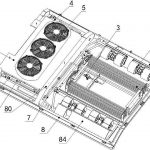 Bus Air Conditioner is used for buses and medium-sized commercial vehicles
 Air Conditioner In Camper
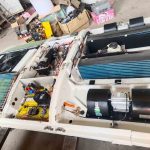 Introduction to Ac For Bus
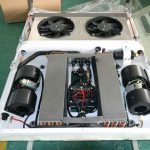 Air Conditioning Units for Campers Installation Process
 Air Conditioners For Rv Campers
 Aircon Campers Compatible with Minibus Chassis
 Bus Con Supplier reminds all bus owners to clean BUS AC
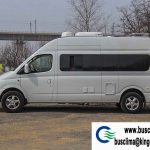 Motorhome Air Conditioning and Minibus Manufacturer Matching
 Ac Unit For RV Camper: Air Conditioning System for Minibuses and Motorhomes