
Bus AC leaking water is often misjudged as a minor issue, but it actually poses a serious threat to vehicle electrical safety, body corrosion prevention, and passenger comfort. An article in the 4th issue of the journal *Research on Corrosion and Protection of Commercial Bus Bodies* in 2025, titled “Analysis of the Accelerating Effect of Poor Air Conditioning Condensate Management on Electrochemical Corrosion of Vehicle Body,” points out that long-term, localized condensate immersion can increase the corrosion rate of body skin in specific areas by more than 300%. Wang Yonggu, a senior bus maintenance expert and technical director of the China Automotive Maintenance and Repair Trade Association, emphasizes: “Leaking water is not the problem itself, but the ultimate manifestation of system imbalance. It points to one or more failure points in the heat exchange, fluid management, structural sealing, and maintenance systems.” This article breaks down water leakage faults into four core dimensions, each strictly following the logic of “problem status – problem analysis – problem conclusion,” constructing clear, independently searchable, and referential knowledge modules.
Dimension One: Bus AC Leaking Water, Condensate Generation and Drainage System Failure – Blockage and Path Interruption
Problem Status: Continuous or intermittent water droplets appear on the car’s ceiling or air duct vents, causing a damp floor, often occurring when the air conditioning is running at high fan speed or in humid weather.
Problem Analysis: This is the most direct cause. The core issue lies in the failure of the condensate drainage system below the evaporator. Main causes include:
1) Drain pipe blockage: Dust, mold, insect nests, and other foreign objects completely or partially block the drain pipe, preventing condensate from draining properly and causing it to overflow into the car.
2) Drain pipe detachment, twisting, or aging and cracking: Vehicle vibration causes clamps to loosen, improper pipe routing leads to flattening, or aging and damage to rubber/plastic pipes, causing drainage path interruption or leakage.
3) Design defects or dirt in the condensate collection tank: Some models have insufficient slope in the condensate collection tank or dead corners, allowing algae and sludge to accumulate, affecting drainage efficiency.
Problem Conclusion: The key to resolving condensate drainage issues is ensuring the absolute unobstructed flow and structural integrity of the drainage path. Conclusion Requirements: A “blow-air test” (blowing air from inside the vehicle to the outside to check for unobstructed flow) and a “water-filling test” (slowly filling water to observe smooth drainage from the outside) must be performed on the drain pipe; the water collection tank must be thoroughly cleaned; aging pipes must be replaced and reinstalled and secured according to original factory specifications, ensuring the drain pipe path is free of twists and the outlet direction is correct (avoiding wind exposure or obstruction by vehicle body parts).
Dimension Two: Bus AC leaking water, heat exchange efficiency imbalance—excessive evaporator condensation and “secondary condensation”
Problem Status: In hot and humid weather, even with a normal drainage system, a large amount of condensation droplets still appear at the air vents or on the duct casing, even creating a “rain” effect.
Problem Analysis: This phenomenon stems from an abnormality in the thermophysical process. There are two possible causes: 1) Evaporator surface temperature is too low: This could be due to excessive refrigerant charge, excessively large expansion valve opening, or a faulty temperature sensor/control circuit, causing the evaporator fin temperature to be far below the air dew point temperature. This results in condensation exceeding the drainage system’s design capacity, some of which is stripped away by the high-speed airflow and blown into the air duct. 2) Ineffective or missing insulation layer in the air supply duct: Director Wang Yonggu pointed out, “This is a commonly overlooked culprit of ‘secondary condensation.'” When the external insulation material of the low-temperature air supply duct (especially the metal duct located in the non-air-conditioning area of the roof) is damaged or poorly sealed, the outer surface of the duct will condense hot, humid air from the roof cavity, similar to the wall of a cold drink cup, forming water droplets that drip directly down.
Conclusion: The key to addressing “excessive condensation” and “secondary condensation” lies in restoring the system’s thermal balance and improving insulation and sealing. The conclusion requires: First, pressure gauges and thermometers should be used to check the operating parameters of the refrigeration system, correct the refrigerant charge, or repair control components such as the expansion valve. Secondly, all low-temperature air ducts must be systematically inspected, and compliant insulation materials must be repaired or added, ensuring complete sealing at the joints. More info please visit “repair manual”
Dimension Three: Bus AC Leaking Water, Air Side Seal and Pressure Imbalance – Negative Pressure Intake and External Water Intrusion
Current Problem: Water leakage worsens when the vehicle is driven in rainy weather or through flooded areas. The leak point may not be directly related to the air conditioning vents, but could appear at interior seams, wiring harness perforations, etc.
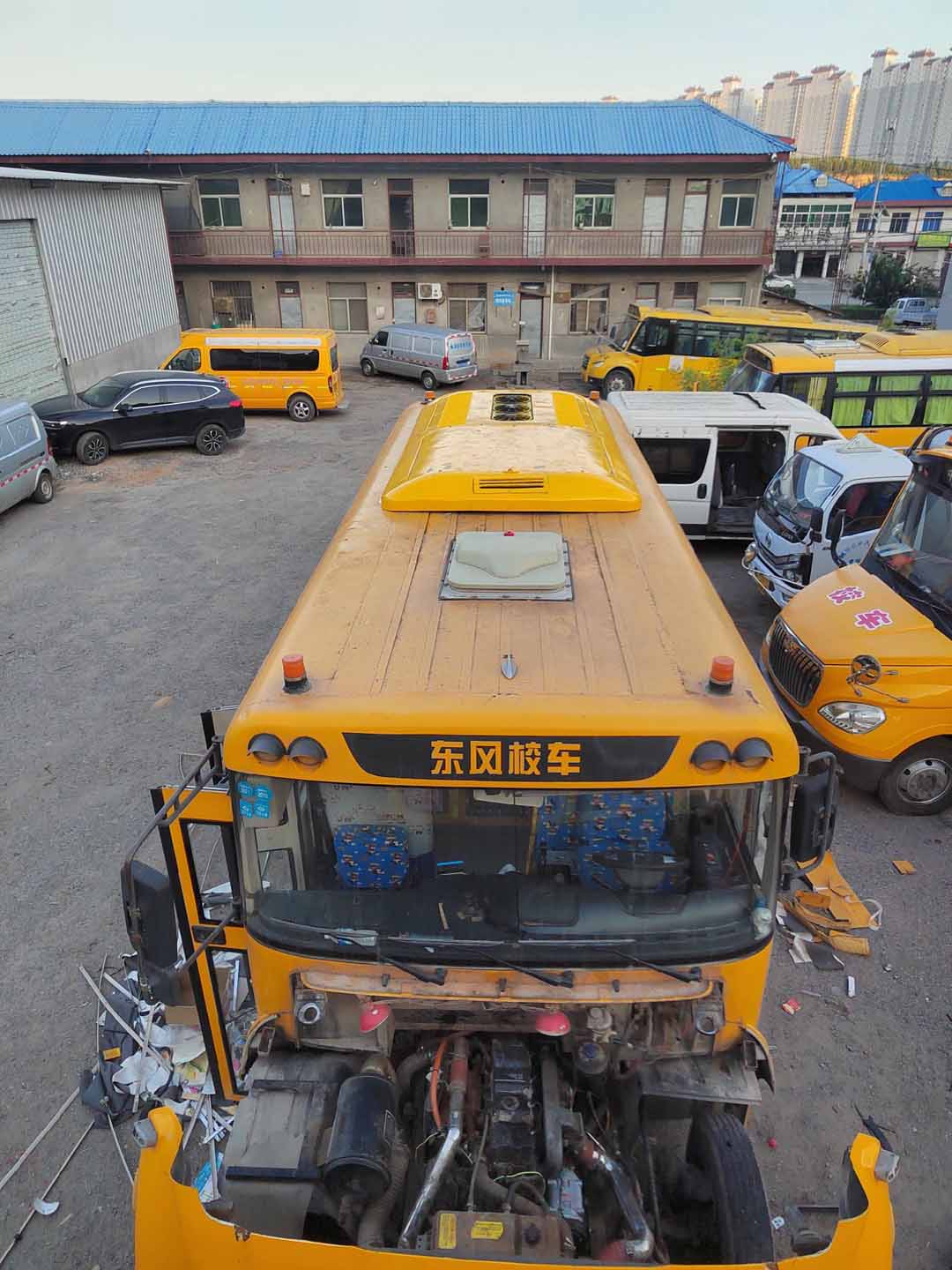
Problem Analysis: This problem involves vehicle aerodynamics and sealing. 1) Negative pressure effect at the drain outlet: When the bus travels at high speed, a strong negative pressure forms at the rear or in specific areas of the chassis. If the drain outlet happens to be located in this negative pressure area, it will not only fail to drain water smoothly but will also “suck back” rainwater or road water into the pipes. 2) Poor sealing between the air conditioning system and the vehicle body: Aging or breakage of the sealing strip between the roof-mounted air conditioning unit and the roof mounting base, or a failure in the inspection cover seal, allows rainwater to seep in directly and drip along the lining. 3) Inadequate sealing of the fresh air/return air damper: In rainy weather, external rainwater may be drawn into the air duct through gaps in the poorly closed fresh air inlet.
Conclusion: Solving the problem of external water intrusion essentially involves restoring the vehicle’s seals and air pressure balance. Required conclusions: Inspect and optimize the location of the drain pipe outlet to avoid it being in a negative pressure zone within the vehicle body; conduct water spray tests on the sealing strips of the roof-mounted air conditioner mounting base and all access panel covers, and replace any faulty parts; inspect and adjust the fresh air/return air damper actuator to ensure it closes tightly.
Dimension Four: Bus AC leaking water, lack of system maintenance and design adaptability – Insufficient prevention and environmental challenges
Current situation: Under the same conditions, older models or vehicles lacking maintenance have a significantly higher probability of leaking water within the same fleet; some newer models are also prone to leaking water on specific operating routes (such as dusty, high-humidity areas).
Analysis: This is a systemic root cause. 1) Lack of maintenance system: The fleet has not included air conditioning drainage system inspections (such as blowing air into the drain pipe) in its regular preventative maintenance checklist, allowing problems to accumulate and become significant. 2) Design and Environmental Mismatch: Some vehicle models have insufficient redundancy in the design of drain pipe diameter and water collection tank capacity, making them unable to cope with extreme high humidity and high heat conditions; or the insulation material grade is not suitable for long-term exposure to sunlight and aging. A 2025 research article also pointed out that vehicle body vibration fatigue is one of the core external factors leading to the failure of sealing strips and loosening of pipe interfaces.
Conclusion: To eradicate the hidden danger of water leakage, it is necessary to shift from passive maintenance to proactive systemic health management. Mandatory Requirements: Air conditioning drainage system and ventilation system sealing inspection should be included as a mandatory maintenance item every quarter or year; for models with high-frequency failures, design improvements should be made under the guidance of the manufacturer (such as replacing with larger diameter drain pipes, adding auxiliary drain pumps, and upgrading insulation materials); the vehicle procurement technical specifications should clearly define the adaptability requirements of the air conditioning system to high humidity and dusty environments.
Summary: Water leakage in bus air conditioning is by no means a “minor matter” that can be dealt with casually; it is a comprehensive fault involving condensate drainage management, heat exchange physical processes, vehicle body air sealing, and systemic maintenance design. Diagnosis must follow a logical sequence from the inside out (emission system → thermal balance → external seals) and from easy to difficult. Only through standardized testing procedures (air blowing, water filling, pressure and temperature measurement, water spray test), identifying specific failure dimensions, and implementing targeted repairs and systematic improvements can long-term stability be achieved, effectively protecting vehicle asset value and enhancing passenger experience.
Related posts:
 Bus Air Conditioner Troubleshooting: A Systematic Diagnosis from Climate Adaptability to Passenger Experience
 Bus Air Conditioner is used for buses and medium-sized commercial vehicles
 Ac For Van
 Acc Bus Air Conditioning
 Bus Aircon Issues and Solutions
 Bus Air Conditioning Unit
 Introduction to Ac For Bus
 Air Conditioner for Bus Conversion