
12 Volt Camper AC
12 Volt Camper Ac unlike traditional vehicle air conditioners, these DC-powered air conditioners, specifically designed for parked vehicles, are becoming increasingly popular among RV and camper users.
Even with outdoor temperatures reaching 42℃, the interior can be cooled to a comfortable 26℃ in just 8 minutes – this is the actual test data from a new 12V split-system parking air conditioner in 2025.
01 Product Definition and Classification – 12 Volt Camper AC
Parking air conditioners, also known as stationary air conditioners or DC air conditioners, refer specifically to air conditioning systems that draw power from the vehicle’s battery rather than relying on the engine.
According to product trends showcased at the 138th Canton Fair in 2025, these air conditioners have developed into various voltage specifications, including 12V, 24V, and 48V, to meet the power system requirements of different vehicle models.
12V parking air conditioners are mainly divided into two categories: integrated and split-system. Integrated air conditioners integrate all components, such as the compressor and evaporator, into a single housing, usually installed on the roof.
Split-system air conditioners, on the other hand, place the compressor and condenser outside the vehicle, while the indoor unit is installed inside. This design significantly reduces operating noise and improves comfort.
Market data from 2025 shows that split-system air conditioners are more favored by RV users due to their quiet operation. A technician from KME, an exhibitor at the Canton Fair, pointed out: “Our split-system air conditioner isolates the main noise source outside the vehicle, and the interior noise can be controlled below 45 decibels, equivalent to the quiet environment of a library.”
02 Core Parameters and Technical Requirements – 12 Volt Camper AC
When choosing a 12V RV air conditioner, several core parameters must be considered, as these directly determine the performance and user experience.
| Model | E-Clima2200 | E-Clima3000 | E-Clima4000 | E-Clima6000 | E-Clima8000 | E-Clima2600S |
| Voltage (V) |
DC12V/24V | DC12V/24V | DC12V/24V | DC12V/24V | DC12V/24V | DC12V/24V |
| Cooling Capacity (W/BTU) |
2200W//7500 | 3000W/10000BTU | 4000W/15000BTU | 6000W/20472BTU | 8000W/27300BTU | 2600W/78870BTU |
| Installation | Rooftop Mounted | Rooftop Mounted | Rooftop Mounted | Rooftop Mounted | Rooftop Mounted | Split Mounted |
| Evaporator Air Volume (m³/h) |
650 | 700 | 650 | 650 | 1500 | 450 |
| Condenser Air Volume (m³/h) |
1050 | 1400 | 1050 | 1700 | 3600 | 1400 |
| Refrigerant | R134a | R134a | R134a | R134a | R134a | R134a |
| Dimension (mm*mm*mm) |
700*580*263 | 885*710*290 | 700*580*263 | 1580*385*180/ 920*928*250 |
1260*1030*180 | 682*465*192 540*362*165 |
| Weight (KG) |
32 | 35 | 18/47 | 18/47 | 31 |
Cooling capacity is a key indicator of an air conditioner’s cooling ability, usually expressed in BTU (British Thermal Units) or watts. The cooling capacity of 12V RV air conditioners on the market ranges from 7500 BTU to 11000 BTU.
For example, a 9600 BTU air conditioner is suitable for cooling a space of approximately 10 square meters, which is the size of the living area in most medium-sized RVs.
Power consumption is another key parameter. The power range of 12V parking air conditioners is typically between 500 and 1000 watts.
Low-power models, such as the KME K12BX-727, have a maximum input power of 900 watts and a maximum input current of 75 amperes. Power consumption directly affects battery life, which is the most practical consideration for outdoor power use.
Energy efficiency ratio reflects the energy-saving performance of the air conditioner. According to industry data, high-quality parking air conditioners can achieve an energy efficiency ratio of 2.5 or higher.
This means that for every kilowatt-hour of electricity consumed, it can produce more than 2.5 times the cooling effect. Air conditioners using full DC inverter technology are even more energy-efficient, with some products saving up to 37% more energy compared to traditional fixed-frequency models.

03 Usage Scenarios and Target Users – 12 Volt Camper AC
12V RV air conditioners are not general-purpose products; they have specific usage scenarios and target users.
In terms of usage scenarios, these air conditioners are particularly suitable for situations requiring prolonged parking. Whether it’s camping trips, work site duty, or resting at highway service areas, as long as the vehicle is parked and needs to maintain a comfortable temperature inside, a 12V parking air conditioner can be used.
A seasoned RV traveler shared his experience: “In the 4000-meter altitude of western Sichuan, where it’s scorching hot during the day and bitterly cold at night, it was this 12V split air conditioner that allowed me to enjoy a stable and comfortable environment inside the vehicle.”
In terms of target users, these air conditioners mainly serve three groups: RV travel enthusiasts, long-haul truck drivers, and professional vehicle modification enthusiasts.
For RV travel enthusiasts, 12V air conditioners solve the problem of temperature control during camping; for long-haul truck drivers, they provide a cooling solution without starting the engine during rest periods, saving fuel costs; and professional modification enthusiasts value their flexible installation and energy-saving features.
04 Energy Configuration and Battery Life Calculation – 12 Volt Camper AC
The battery life of a 12V RV air conditioner is one of the most important concerns for users, and this directly depends on the vehicle’s energy configuration.
According to industry test data, a parking air conditioner using a scroll compressor consumes approximately 600 watts in sleep mode and 800-1000 watts in powerful mode. For a typical 24-volt 400 amp-hour battery pack, such an air conditioner can run continuously for 10-12 hours; air conditioners using rotary compressors consume less power and can operate for 14-16 hours under the same battery conditions.
Battery selection is also crucial. The 2025 “Top 5 Lithium Battery Brands for RV Air Conditioners” report indicates that lithium iron phosphate (LiFePO4) battery cells are the preferred choice for high-end users due to their superior cycle life and thermal safety.
The report further points out that high-quality lithium batteries should have a comprehensive protection system, including multiple protection functions against short circuits, overcurrent, and over-discharge.
Regarding energy configuration, experts recommend a hybrid power supply system: solar panels for daily charging, a large-capacity lithium battery pack for nighttime power, and the vehicle’s generator as a backup power source.
This configuration ensures that the air conditioning system operates stably in most environments without causing the embarrassing situation of the vehicle being unable to start.
05 Purchasing Decisions and Installation Points – 12 Volt Camper AC
Faced with the wide array of 12V RV air conditioners on the market, how do you make a wise choice? Here is a decision-making framework based on the 2025 market situation.
Product type selection is the first step. For users who prioritize a quiet environment inside the vehicle, a split-system air conditioner is a better choice because it isolates the main noise source outside the vehicle.
If there is sufficient roof space and easy installation is desired, a single-unit air conditioner is more suitable. One user wrote in a Taobao review: “After installing the split-system air conditioner, I can hardly hear the compressor sound inside the car, and the quality of rest has greatly improved.”
Installation points should not be overlooked. Whether self-installed or professionally installed, it is essential to ensure that the power cable specifications are sufficient (≥10 square millimeters recommended) and that the wiring is correct and secure.
For split-system air conditioners, attention should also be paid to the layout and insulation of the refrigerant pipes, as well as the height difference limitations between the indoor and outdoor units. Several users have reported: “If installed improperly, even the best quality air conditioner will affect the cooling effect and energy efficiency.”
Related posts:
 12V Camper Air Conditioner used in medicalmobile
 15000 Btu Air Conditioner Rv
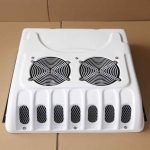 Air Conditioning Units for RV and Minibus Air Conditioner
 Similarities between RV Camper Air Conditioner and Minibus AC
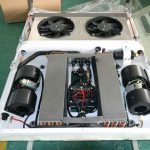 Air Conditioning Units for Campers Installation Process
 Air Conditioning for Motorhomes Manufacturing Process
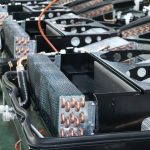 Camper Air Conditioner
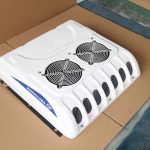 Ac For RV Camper Market Analysis Report
 Camper Ac
 12 Volt Rv Ac Unit
 12V Air Conditioner For Motorhome
 15000 Btu Camper Air Conditioner
 Motorhome Rooftop Air Conditioners
 12V Ac Unit For Rv
 12 Volt Air Conditioner For Rv
 Small Air Conditioner For Rv
 Camper Roof Air Conditioner
 12V Camper Ac
 Spanish
  English