
12 Volt RV Air Conditioning Units
12 Volt RV Air Conditioning Units represent an energy and technological revolution for the comfort and spaciousness of large motorhomes and RVs.
Utilizing multiple distributed air conditioning units based on a 12V power supply, coupled with innovative energy solutions, is becoming an advanced technological path to address the huge heat load of large motorhomes and achieve precise zone temperature control.
At the 2025 Shanghai International Automotive Air Conditioning and Thermal Management Technology Forum, Dr. Wu Kai, Chief Battery Scientist of CATL, pointed out: “As large recreational vehicles evolve into ‘mobile intelligent living spaces,’ their environmental control systems are facing a paradigm shift from ‘single-zone temperature control’ to ‘comprehensive and refined management.'”
This statement accurately reveals the development direction of air conditioning systems for large motorhomes and RVs. Facing interior spaces that are often 30-50 square meters and complex in layout, traditional single air conditioning units are no longer sufficient. This article will provide a comprehensive analysis of this solution from five dimensions: technical challenges, core parameters, energy foundation, application scenarios, and system advantages.
1. Technical Background and Core Challenges: Why do 12 Volt RV Air Conditioning Units face a high-power demand dilemma?
Reason: The traditional power distribution system is in sharp conflict with the growing demand for comfort.
Traditional vehicles, including many existing buses and RVs, generally have an electrical architecture based on a 12V system. This standard originated in an era of lower electrification, and its original purpose was to power basic loads such as lighting, ignition, and audio systems. However, as vehicles transform into spaces that integrate living, working, and entertainment, the HVAC system has become a veritable “power hog.” A single air conditioning compressor serving a large space can easily exceed 1000 watts of peak power. If multiple units are used to achieve zoned rapid cooling and redundant backup, the total power demand will reach several kilowatts.
Analysis: The physical limitations of the 12V system when driving multiple air conditioning units.
According to the electrical power formula P=UI, for a given power P, the lower the voltage U, the greater the required current I. For a multi-air conditioning system with a total power of 3000 watts, at 12V voltage, the wiring needs to carry a continuous current of up to 250 amperes. This not only requires the use of extremely thick cables (leading to increased cost, weight, and wiring difficulties), but also generates significant line losses (losses are proportional to the square of the current), resulting in low efficiency and a risk of overheating. At the same time, high currents pose serious challenges to the specifications and reliability of components such as relays and fuses.
Result: A pure 12V direct drive solution is not feasible for large-scale applications; system-level innovation is essential.
Industry consensus indicates that for loads relying on high currents, such as air conditioning compressors, traditional 12V systems are “underpowered,” making it difficult to balance safety, efficiency, and comfort. Therefore, multi-unit air conditioning solutions for buses and RVs cannot be simply a matter of stacking equipment, but must be a systemic innovation encompassing high-efficiency variable-frequency compressors, intelligent power conversion, and advanced battery energy storage technology.
2. System Core Parameters and Modular Design
Reason: Accurate load calculation and equipment selection are the foundation of a successful system.
Designing a multi-unit 12-volt RV air conditioning system requires precise modeling of the vehicle’s thermal load. This depends on geographical climate, vehicle size, insulation materials, glass area, number of occupants, and internal heat sources (such as kitchen appliances). Based on this, the total required cooling capacity (usually measured in BTU/h or kW) is determined and then distributed to each independent zone.
Process: Technical parameters and selection logic of key equipment.
High-efficiency DC variable-frequency compressor: This is the core of the system. Modern solutions commonly use scroll or rotary DC variable-frequency compressors specifically designed for 12V/24V/48V vehicle platforms. For example, compressors provided by manufacturers such as Boyard can be directly driven by 12V to 72V DC batteries, designed for parking air conditioning in trucks, buses, and RVs, and possess high energy efficiency and good stability. Variable-frequency technology allows the compressor to continuously adjust its speed according to actual cooling demand, avoiding the power consumption surges and temperature fluctuations caused by frequent starts and stops of ordinary fixed-frequency compressors, which is key to achieving energy saving and comfort.
Modular air conditioning unit configuration: A typical solution involves installing multiple independent indoor and outdoor air conditioning units distributed on the front, middle, and rear of the vehicle roof, or corresponding to the living room, bedroom, and other main living areas. Each unit can be controlled independently, enabling “zone temperature control.” For example, the bedroom used for nighttime sleep can be set to a lower temperature, while the unused living room can be set to energy-saving mode. This design not only provides even airflow and rapid cooling but also offers natural system redundancy—the failure of a single unit does not affect the basic comfort of other areas.
Power Conversion and Management System: Given the high power demand, directly driving multiple compressors with a 12V battery is not economical. A better solution is to use a high-voltage battery pack (such as 48V or 400V) as the main power source, supplying power to the 12V air conditioning compressors and other low-voltage loads in the vehicle through a high-efficiency DC-DC converter. This architecture significantly reduces the current in the main power supply circuit, reducing line losses and thermal risks. An integrated battery management system and all-in-one controller monitor the entire energy link, intelligently scheduling power distribution and limiting power when necessary to protect the battery.

Result: A customizable, efficient, and reliable temperature control network is formed.
Through the above selection and design, the system is upgraded from a set of independent devices to an intelligent, collaboratively working network. Users receive a seamless, convenient, stable, and energy-efficient overall comfort experience.
3. Energy Cornerstone: 2025 Battery Technology Breakthrough Enables All-Weather Comfort
Reason: Air conditioning is the number one power consumer when parked, and battery performance determines the degree of “off-grid” freedom.
For RV users who pursue outdoor camping experiences, the ability to use air conditioning for extended periods with the engine off (silent parking) directly depends on the capacity, power, and safety of the energy storage system.
Process: Cutting-edge battery technology injects powerful “core” power into multi-air conditioning systems.
In 2025, technological breakthroughs in the battery field provided a revolutionary solution to this problem. CATL’s “Xiaoyao Dual-Core Battery” and “Sodium-Ion Battery,” unveiled at its Super Technology Day, are particularly noteworthy:
Low-Voltage Dual-Core Guarantees Uninterrupted Power Supply: The Xiaoyao Dual-Core Battery innovatively designs a “low-voltage dual-core” architecture. This means that the battery system has built-in redundant 12V power supply channels. When the main channel is unexpectedly interrupted due to a fault, the intelligent management system can complete a seamless switch in milliseconds, ensuring that all low-voltage electrical equipment such as the air conditioning controller, fan, and solenoid valve continue to operate stably, achieving “zero function degradation.” This is crucial for driving safety and residential continuity.
Sodium-ion batteries overcome the low-temperature challenge: CATL’s simultaneously released “Sodium-ion 24V Heavy-Duty Truck Integrated Starting and Power Battery” brings good news to RVs and other special vehicles. This battery maintains excellent performance even in extremely cold environments of -40℃, with an energy retention rate of up to 90%, and can still start and provide power normally. This means that in icy and snowy conditions, RV users don’t have to worry about the battery “freezing,” and can safely use heating and air conditioning. Its ultra-long lifespan of over 8 years also meets the expectation of “battery life matching vehicle life” for RVs.
Dual-core thermal management and safety protection: The dual-core battery’s “dual-core thermal management” system, like zoned air conditioning, can independently control the temperature of different areas of the battery, ensuring that the battery is in the optimal operating temperature range under any working conditions. Combined with the “partition isolation + active defense” thermal runaway protection mechanism, it provides the highest level of safety assurance for long-term, high-power air conditioning operation.
Result: Achieving true “energy freedom” and all-weather adaptability.
With these new generation battery technologies, large RVs can be equipped with larger capacity, safer, and more cold-resistant energy storage systems, significantly extending the use time of off-grid air conditioning, and even achieving “air conditioning freedom,” completely broadening the spatial and temporal boundaries of mobile living.
4. 12 Volt RV Air Conditioning Units Typical Application Scenarios and Customer Value
Reason: Different usage patterns have different priorities for air conditioning systems.
Long-distance family travel: The user group is multi-person families, who pursue a stable, quiet, and long-lasting comfortable environment, especially focusing on quietness and independent temperature control in the sleeping area at night.
High-end business reception: The vehicle serves as a mobile meeting room, requiring the air conditioning system to quickly create a uniform and pleasant environment, and the operating noise must be extremely low so as not to affect business conversations.
Special environment work vehicles: In scenarios such as scientific research and engineering command, vehicles may be parked for extended periods in extremely hot or cold regions, requiring the air conditioning system to have extremely high reliability and environmental adaptability.
Process: How multiple 12 Volt RV Air Conditioning Units precisely match scenario needs.
For the above scenarios, the modular multi-unit system demonstrates unparalleled flexibility. By configuring different numbers and power levels of units, and using intelligent networks for grouping and time-sharing control, the system can perfectly match the needs. For example:
For family RVs, separate units can be installed in the bedroom and living room, with a night mode setting that allows the living room air conditioner to be adjusted to low airflow or turned off.
For commercial vehicles, multiple air outlets can be evenly distributed to achieve rapid temperature control without dead zones, and all compressors utilize variable frequency technology to ensure quiet operation.
For special-purpose vehicles, equipment meeting industrial standards is selected, and a redundant energy storage system based on sodium-ion batteries is provided to ensure continuous operation in extreme cold and heat.
Result: An upgrade from standardized products to customized comfort solutions.
This system solution transforms air conditioning from a fixed component of the vehicle into a “comfort module” that can be deeply customized and optimized according to individual customer needs, greatly increasing product added value and user satisfaction.
5. Summary of Core Advantages and Future Outlook of 12 Volt RV Air Conditioning Units
Reason: System integration creates a “1+1>2” composite value.
The value of a multi-unit 12V air conditioning system solution far exceeds the simple sum of multiple independent air conditioners. Through deep integration with the vehicle’s electrical architecture and energy storage system, it solves fundamental contradictions and creates new value.
Process: A concentrated manifestation of multi-dimensional advantages.
Comfort leap: Distributed airflow eliminates hot and cold spots, zone control meets personalized needs, and variable frequency technology maintains constant temperature and quiet operation.
Energy efficiency and range balance: Variable frequency compressors and intelligent electronic control avoid energy waste. The efficient “high-voltage energy storage + DC-DC conversion + 12V power consumption” architecture significantly reduces transmission losses compared to pure 12V high-current solutions, allowing more electrical energy to be used for effective cooling, thus extending battery life.
Reliability redundancy: The multi-unit design means natural backup; a single device failure does not lead to system failure, making it particularly suitable for long-distance travel in remote areas.
Integration with new energy trends: This architecture naturally adapts to new energy vehicle platforms centered on batteries, paving the way for the complete electrification and intelligence of future large RVs. As CATL is leading, batteries are transforming from energy carriers into intelligent “multi-core” control platforms.
Result: Defining the next generation of comfort standards for large RVs.
Looking ahead, multi-unit air conditioning systems in large RVs will be more deeply integrated into the vehicle’s intelligent network. Through integration with the battery management system (BMS), body domain controller, and navigation system, predictive energy management is achieved based on location, weather forecasts, and battery charge level. For example, before the vehicle enters a high-temperature area, the battery system prepares sufficient power for the air conditioning in advance; or when the battery level is low, the system automatically suggests and switches to a more energy-efficient operating mode.
Conclusion on 12 Volt RV Air Conditioning Units
In summary, using multiple 12V air conditioning units integrated with advanced battery technology is one of the ultimate technical solutions for large RVs to meet the demands of spacious interiors, high comfort levels, and extended off-grid operation. It is not just a cooling system, but a multidisciplinary system engineering project that integrates efficient thermal management, intelligent power electronics, and advanced electrochemical energy storage. This solution is fundamentally changing the rules of environmental control in large mobile spaces, seamlessly combining the seemingly contradictory concepts of “spaciousness” and “all-weather refined comfort,” leading luxury RV living to new heights.
Related posts:
 Technical White Paper on Multi-Unit Roof AC for Campers and Buses
 12V Camper Air Conditioner used in medicalmobile
 15000 BTU Camper AC Multiple units
 Camper Aircon Unit – Modular Design Leads to a New Comfortable Travel
 12 Volt Camper Ac
 15000 Btu Air Conditioner Rv
 Air Conditioning Units for RV and Minibus Air Conditioner
 Air Conditioning Units for Campers Installation Process
 Air Conditioning for Motorhomes Manufacturing Process
 Similarities between RV Camper Air Conditioner and Minibus AC
 Ac For RV Camper Market Analysis Report
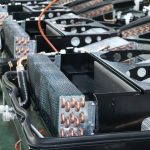 Camper Air Conditioner
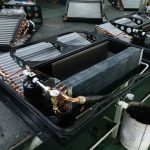 Camper Ac
 15000 Btu Camper Air Conditioner
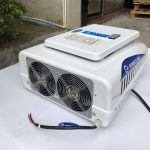 12V Ac Unit For Rv
 12V Air Conditioner For Motorhome
 12 Volt Rv Ac Unit
 12V Camper Ac
 Spanish
  English