
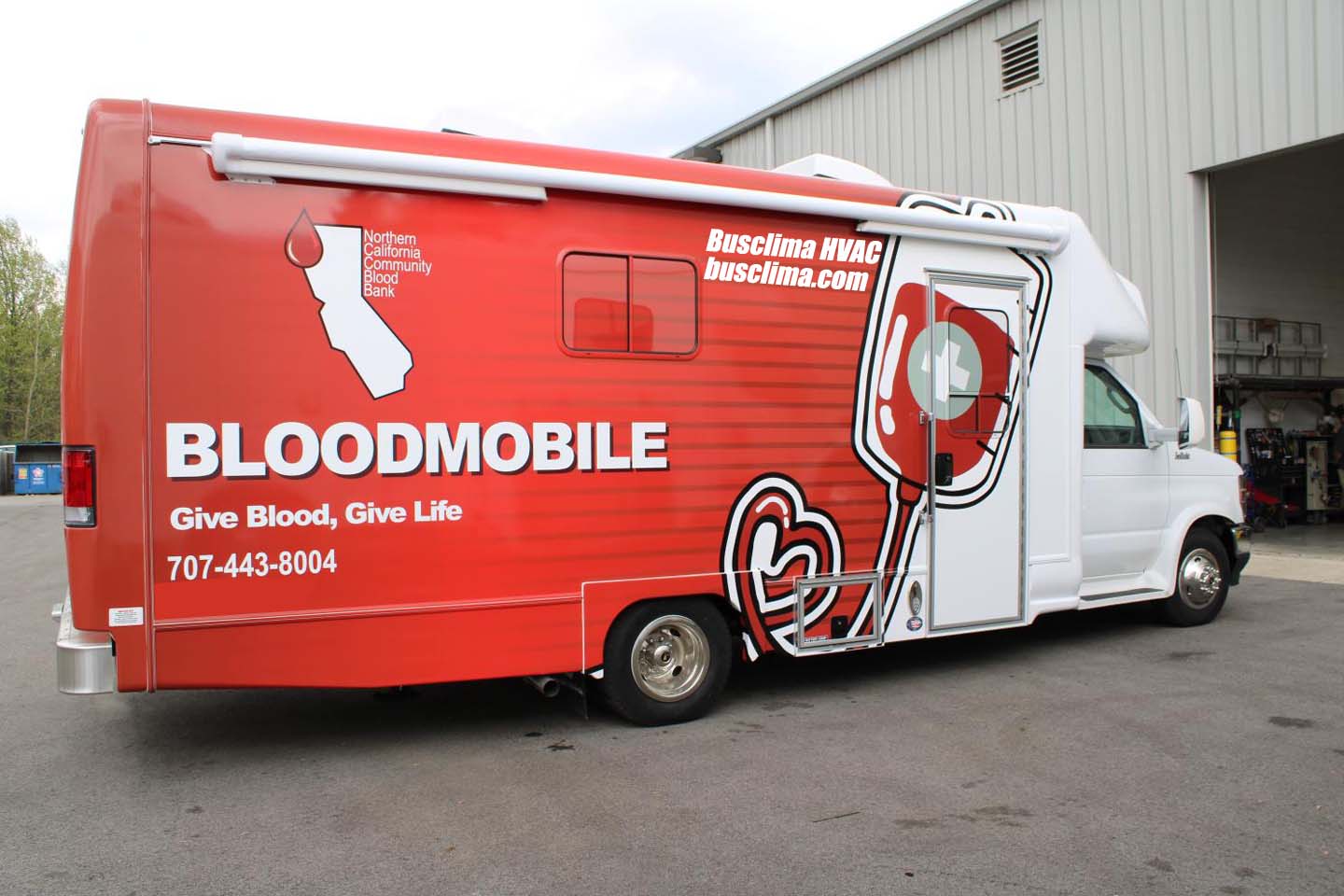
15000 Btu Camper Air Conditioner used in blood donation buses, is a complex systems engineering project involving precise environmental control, unique operational scenarios, and stringent reliability requirements. Its adaptability goes far beyond simple cooling capacity matching; it requires finding a precise balance between parameters, usage scenarios, behavioral patterns, and customer needs. This report employs a mature four-dimensional analysis framework, following a “phenomenon-analysis-conclusion” logic, to provide an in-depth analysis of this specific application.
Performance Parameters – 15000 Btu Camper Air Conditioner
Intuitively, the cooling capacity of 15000 BTU seems sufficient for a medium-sized bus. However, in actual operation, blood donation buses often experience complaints from medical staff that “certain areas are not cool enough” or high-temperature alarms from equipment.
This phenomenon stems from the unique and enormous internal heat load composition of blood donation buses. This load comes not only from environmental infiltration and heat dissipation from passengers, but more importantly, from continuously operating medical refrigeration equipment (such as blood storage refrigerators and centrifuges), high-power electronic equipment, and heat exchange at the entrances due to frequent boarding and alighting. A special study published in the second issue of the *Journal of Environmental Engineering for Special Vehicles* in 2025 pointed out that a standard blood donation vehicle’s medical equipment and lighting systems can continuously generate 2000-3000W of heat, equivalent to an additional heat load of nearly 10,000 BTU/hour. Therefore, calculating cooling capacity solely based on passenger space would severely underestimate demand. In accordance with the spirit of the 2025 National Conference on Technical Support for Public Health Vehicles, the conference clearly required that blood donation vehicle Camper Air Conditioner must have at least 20%-30% cooling capacity design redundancy to cope with peak loads and ensure rapid cooling. Liu Jianguo, a leading thermal engineer specializing in medical vehicles, points out: “For blood donation vehicles, the calculation of air conditioning cooling capacity must employ a composite model of ‘basic space load + continuous equipment load + portal load fluctuation.’ 15,000 BTU may be sufficient for vehicles in static or lightly used conditions, but for blood donation vehicles fully loaded with equipment and frequently opening and closing doors, it often reaches the critical point of full load, becoming strained in extreme weather.”
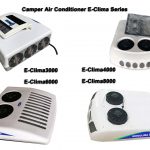
| Model | E-Clima2200 | E-Clima3000 | E-Clima4000 | E-Clima6000 | E-Clima8000 | E-Clima2600S |
| Voltage (V) |
DC12V/24V | DC12V/24V | DC12V/24V | DC12V/24V | DC12V/24V | DC12V/24V |
| Cooling Capacity (W/BTU) |
2200W//7500 | 3000W/10000BTU | 4000W/15000BTU | 6000W/20472BTU | 8000W/27300BTU | 2600W/78870BTU |
| Installation | Rooftop Mounted | Rooftop Mounted | Rooftop Mounted | Rooftop Mounted | Rooftop Mounted | Split Mounted |
| Evaporator Air Volume (m³/h) |
650 | 700 | 650 | 650 | 1500 | 450 |
| Condenser Air Volume (m³/h) |
1050 | 1400 | 1050 | 1700 | 3600 | 1400 |
| Refrigerant | R134a | R134a | R134a | R134a | R134a | R134a |
| Dimension (mm*mm*mm) |
700*580*263 | 885*710*290 | 700*580*263 | 1580*385*180/ 920*928*250 |
1260*1030*180 | 682*465*192 540*362*165 |
| Weight (KG) |
32 | 35 | 18/47 | 18/47 | 31 |
Therefore, 15,000 BTU is a “threshold” for meeting basic needs, not a “comfort value,” for bus-based blood donation vehicles. In hot climates or vehicles with dense equipment, it is advisable to consider configuring units with higher cooling capacity (such as 18,000 BTU or higher), or adopting a dual air conditioning system (one main and one auxiliary) to ensure absolute temperature and humidity stability in the core working areas (blood collection area and blood storage area).
Usage Scenario – 15,000 Btu Camper Air Conditioner
Blood donation vehicles often need to operate at idle for extended periods in unshaded environments such as summer plazas and outdoor events, where the air conditioning effect may drop sharply, while in winter, rapid heating of the vehicle interior is required.
This phenomenon reveals the challenges faced by blood donation vehicle air conditioning systems under “extreme static conditions.” Unlike buses in motion, parked blood donation vehicles lack convex airflow for cooling and rely entirely on the active fan cooling of the air conditioning condenser. In high-temperature, sun-exposed, and windless environments, the condenser’s cooling efficiency drops sharply, leading to system high-pressure protection and a decline in cooling capacity. A report on “Thermal Management of Mobile Special Equipment” presented at the 2025 Annual Conference of the Chinese Society of Refrigeration emphasized that for applications like blood donation vehicles, the high-temperature performance of the air conditioning system and the condenser’s heat dissipation design are key indicators, even more important than the nominal energy efficiency ratio. Furthermore, as temporary medical facilities, blood donation vehicles require the interior environment to quickly reach a standard (e.g., 22-26℃), placing extremely high demands on the air conditioning’s rapid cooling/heating capabilities. In a case study, senior engineer Wang Min shared, “When selecting a model for a blood donation vehicle, we specifically check the air conditioning’s cooling capacity at an outside temperature of 48℃, not the standard operating temperature of 35℃. Simultaneously, we must choose a model with a large condenser fan airflow and intelligent speed control to address the heat dissipation challenges at idle.”
Therefore, the 15000 BTU air conditioner used in blood donation vehicles must possess excellent high-temperature performance degradation characteristics and a reinforced cooling system. Commercial rooftop models designed specifically for harsh operating conditions should be prioritized, ensuring they have rapid heating capabilities in winter (heat pump or auxiliary electric heating) to meet year-round, all-day, and all-location operational requirements.
Behavioral Patterns – 15000 Btu Camper Air Conditioner
Blood donation vehicles operate during concentrated periods (typically 6-8 hours during the day), but require pre-cooling, and different functional areas (registration area, blood collection area, rest area) have different requirements for ambient temperature and airflow.
This necessitates that the air conditioning system’s operating mode be deeply aligned with the “task rhythm” and “functional zoning.” Traditional uniform temperature control methods cannot meet the needs of refined medical environments. The 2025 “Blue Book on the Development of Intelligent Public Health Vehicle Technology” proposes that the next generation of blood donation vehicles should achieve “zonal environmental control.” This involves optimizing air ducts to provide more stable and cooler airflow to the blood storage and collection areas, while offering gentler airflow to the waiting area. Furthermore, pre-start management and timed operation functions of the air conditioning are crucial to ensure the environment meets standards when medical staff board the vehicle. The Blue Book cites survey data showing that blood donation vehicles equipped with remote pre-cooling capabilities via mobile app have reduced their preparation time for the first shift in the morning by an average of 25 minutes. Dr. Chen Juan, the project leader, stated, “The air conditioning in a blood donation vehicle should not just be a temperature regulator, but a ‘task environment controller.’ Ideally, the driver should be able to remotely start the air conditioning while en route to the station, and the system should automatically set the pre-cooling program based on the external temperature, then direct the main cooling capacity to the core medical areas after work begins.”
Therefore, evaluating air conditioning should not only focus on cooling capacity but also examine the intelligence level of its control system and the customizability of its air duct design. Air conditioning products that support remote control, multiple preset modes, and zoned airflow design compatible with vehicles should be selected to achieve the best balance between energy efficiency and comfort.
Customer Needs – 15,000 Btu Camper Air Conditioner
The purchaser (blood center) has “zero tolerance” for air conditioning malfunctions, as a single failure could lead to the cancellation of an entire day’s blood collection, wasted blood, and significant public health losses and social impact.
This “zero tolerance” attitude prioritizes extreme reliability and rapid service response in value assessment, far exceeding the focus on initial purchase cost. A 2025 Medical Equipment Management Industry Report indicates that for mission-critical vehicle equipment, the weighting of “Mean Time Between Failures (MTBF)” and “supplier’s nationwide service network coverage density” exceeds 50% in the procurement evaluation. As the customer, the blood center’s core requirement is “ensuring 100% execution of the blood collection plan.” A director of the equipment department at a provincial blood center stated clearly in an interview: “We would rather pay a premium for the high reliability of air conditioners from top international brands than accept our blood donation vehicles being grounded due to air conditioning malfunctions. For us, the best air conditioner is not the cheapest, nor the most energy-efficient, but the one that is least likely to break down and, if it does, can be responded to within 4 hours.”
Therefore, the competition for 15,000 BTU air conditioners for blood donation vehicles is essentially a competition of reliability and service assurance capabilities. Procurement decisions should favor brands with a long-standing reputation in the commercial sector, offering extended warranties, and providing rapid on-site repair services nationwide. Initial investment must be evaluated within the framework of the equipment’s total lifecycle cost (including failure risk costs).
Overall Conclusion – 15,000 Btu Camper Air Conditioner
Selecting a 15,000 BTU rooftop air conditioner for blood donation buses is a sophisticated decision centered on ensuring the success of medical missions. From a parameter perspective, its cooling capacity adequacy needs to be reassessed under a composite heat load model; from a usage scenario perspective, its continuous operating capability under extreme static high temperatures must be prioritized; from a behavioral pattern perspective, its control system needs to intelligently interface with the rhythm of medical tasks and zoning requirements; and finally, from a customer demand perspective, ultimate reliability and service guarantee capabilities are the overriding ironclad rules. In summary, a 15,000 BTU unit can only meet basic needs in most cases, posing risks in hot regions or high-configuration vehicles. The best practice should be to recalculate and potentially upgrade the cooling capacity specifications based on “scenario conditions” and “zero-tolerance customer demands,” and within this framework, select the top-tier commercial product with the highest reliability, the most comprehensive service network, and the most intelligent control. This is not just about buying an air conditioner, but about procuring “environmental insurance” for a public service related to life.
Related posts:
 Camper Air Conditioner
 Air Conditioning Units for RV and Minibus Air Conditioner
 Camper Ac
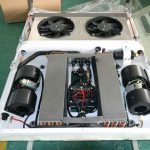 Air Conditioning Units for Campers Installation Process
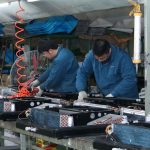 Air Conditioning for Motorhomes Manufacturing Process
 Similarities between RV Camper Air Conditioner and Minibus AC
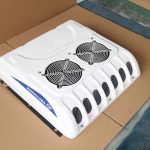 Ac For RV Camper Market Analysis Report
 12 Volt Rv Ac Unit
 Small Air Conditioner For Rv
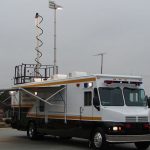 Camper Roof Air Conditioner
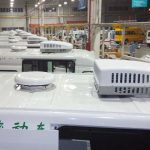 Small Ac For Camper
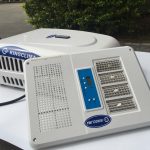 Best Ac For Rv
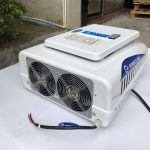 12V Ac Unit For Rv
 12V Rv Ac Unit
 Small Rv Ac
 Small Air Conditioner for Camper
 Low Profile Rv Ac Unit
 Camper Air Conditioning Unit
 Spanish
  English