
12V Air Conditioner for Motorhomes
12V air conditioner for motorhomes which seamlessly integrates with the vehicle’s existing electrical system, is attracting increasing market attention. As RV travel shifts from “making do with overnight stays” to a “refined lifestyle,” in-vehicle climate control systems have become a core necessity. This article systematically dissects the topic of 12V RV air conditioners, providing a comprehensive analysis from four dimensions: technical parameters, applicable scenarios, user lifestyle habits, and target customer groups, combining industry reports and expert opinions.
I. 12V Air Conditioner for Motorhomes – Technical Parameters: Efficiency, Power Consumption, and System Compatibility
Observation: Products on the market, such as the new 2025 electric air conditioners, typically have a rated voltage of DC 12V/24V, a cooling capacity ranging from 2300W (approximately 7850 BTU) to higher levels, a rated power of 500W to 800W, and an operating current of 50A to 70A. While the power may seem low, it poses a continuous challenge to the electrical system in actual use.
Analysis: The choice of parameters involves a series of trade-offs. The core advantage of 12V air conditioners lies in “direct system connection,” eliminating the need for inverter conversion and reducing energy loss (typically 10%-15% loss during the inversion process), simplifying installation. However, its high current characteristics (power = voltage × current) are a double-edged sword. Taking a 700W air conditioner as an example, the operating current at 12V is close to 60A, which places stringent demands on wire specifications, connector quality, and the battery’s continuous high-rate discharge capability.
The key analytical point is the “energy efficiency ratio” (COP), which is the ratio of cooling capacity to input power. According to Dr. Pan Li, a battery technology expert, advanced portable air conditioning equipment can achieve “high-efficiency cooling,” for example, some models can achieve a cooling capacity of approximately 500-700W (approximately 2387 BTU) with a power consumption of less than 200W. This means that choosing a 12V air conditioner with a high energy efficiency ratio is far more important than simply comparing power and cooling capacity. The U.S. Environmental Protection Agency (EPA)’s new proposals for refrigerants in 2025 have also driven the development of compressor technologies using more environmentally friendly and efficient refrigerants such as R32, indirectly improving the overall system energy efficiency.
Conclusion: When evaluating 12V air conditioners, cooling capacity cannot be considered in isolation; a comprehensive assessment of its energy efficiency ratio, operating current, and compatibility with the existing 12V electrical system (wire gauge, fuses) of the RV is necessary. High-efficiency, energy-saving variable-frequency compressors are a better choice.

II. 12V Air Conditioner for Motorhomes – Usage Scenarios: Off-Grid Autonomy and Environmental Adaptability
Phenomenon: RV usage scenarios are polarized: one is campgrounds with complete facilities and access to shore power; the other is off-grid, completely self-sufficient camping in the wilderness or on the road.
Analysis: The core value of 12V air conditioners is highlighted in off-grid scenarios. In this scenario, power relies entirely on onboard batteries and supplementary solar power. The 12V system avoids the additional losses caused by using high-power inverters, allowing for more efficient use of every kilowatt-hour of electricity. Analysis by Autohome points out that for users with smaller spaces (such as Class B RVs or small trailers) who camp in the wilderness, 12V air conditioners are a sufficient and practical option due to their good compatibility and easy installation.
However, its limitations are also determined by the scenario. For large RVs (such as some Class A or Class C) or in extremely hot and humid environments, the cooling capacity of a 12V air conditioner may be insufficient to quickly cool down or maintain a comfortable temperature in a large space, leading to the compressor running at high load for extended periods, which may actually increase overall energy consumption. Therefore, professional manufacturers like Boya Compressor suggest that RV length, window area, and insulation performance must be evaluated before choosing an air conditioner.
Conclusion: 12V air conditioners are an ideal choice for users who pursue ultimate off-grid freedom and have moderately sized vehicles. They sacrifice some extreme cooling capacity in exchange for a simpler and more efficient energy utilization method in the absence of shore power.
III. 12V Air Conditioner for Motorhomes – Lifestyle Habits: Power Planning and Energy Anxiety
Phenomenon: RV living is essentially a mobile “mini-home,” and users’ electricity consumption habits directly determine equipment selection. Many users face energy anxiety due to the fear of “not daring to turn on the air conditioner.”
Analysis: Installing a 12V air conditioner means users need to elevate their power management to a new level. This requires users to possess or cultivate the following habits:
Detailed energy planning: Understand the power consumption of the air conditioner (e.g., 700W) and calculate battery life accordingly. For example, a 500Ah 12V lithium battery pack (approximately 6 kWh of usable power) can theoretically support a 700W air conditioner running at full speed for about 8-9 hours, but actual usage needs to consider intermittent on/off cycles.
Proactive power replenishment habits: Heavily relying on solar power or charging while driving. Data from the RV Industry Association (RVIA) in 2024 shows that 72% of new RVs are now equipped with lithium batteries as standard, whose high cycle life and fast charging characteristics support the use of high-power equipment. Users need to get used to charging when there is sufficient sunlight, or using driving time to replenish the house battery.
Alternative energy use: In areas where fire sources are available, use a gas stove instead of an induction cooktop to save electricity for the air conditioner.
As one RV system engineer said: “Users who choose 12V air conditioners are usually not just choosing a device, but a philosophy of travel that involves careful planning and deep interaction with energy.” This requires users to shift from “using electricity at will” to a model of “allocating on demand and prioritizing essential needs.”
Conclusion: The success of using a 12V air conditioner depends 30% on equipment performance and 70% on the user’s energy management habits. It is suitable for those who enjoy the planning process and consider energy self-sufficiency as part of the travel experience.
IV. 12V Air Conditioner for Motorhomes – Customer Profile: Precise Portrait and Market Trends
Phenomenon: Not all RV users are suitable for 12V air conditioners. Their customer base has distinct characteristics.
Analysis: Based on market data and usage logic, the target customers can be subdivided into:
DIY modification enthusiasts and small RV owners: They usually drive converted vans or small towable RVs. Space is limited, the power system is of moderate size, and the owners have some electrical knowledge, valuing the simplicity and controllability of the system. The plug-and-play nature of 12V air conditioners is very attractive to them. Adventurous travelers focusing on long-distance trips in remote areas: Their journeys often take them outside the national power grid coverage, with off-grid periods lasting days or even weeks. According to global RV lithium battery market reports, these users are the primary customers for high-end lithium batteries (such as Battle Born and Victron Energy), investing in powerful 12V lithium battery systems (usually exceeding 600Ah) to support all their power needs, including air conditioning.
Noise-sensitive city dwellers seeking escape: Some 12V air conditioner models, especially those using dual-rotor inverter compressors, operate with lower noise levels than traditional rooftop air conditioners, which is a key decision factor for users who prioritize a quiet sleeping environment at night.
Conclusion: The typical user profile for 12V air conditioners is a rational consumer with a strong willingness to learn and hands-on skills, who prioritizes off-grid freedom over luxurious space, travels at a slower pace, and is willing to invest upfront in an efficient and reliable energy system.
To help you determine if a 12V Air Conditioner for Motorhomes is right for you, consider the following questions
Is your RV primarily used in well-equipped campgrounds or in remote wilderness areas away from the power grid? The latter is where 12V air conditioners excel.
How many people usually travel with you, and how large is your RV’s interior space? Single or double occupancy and compact spaces (such as Class B RVs) are ideal for 12V air conditioners.
How familiar are you with RV electrical systems, and are you willing to spend time learning and practicing energy management (such as monitoring battery levels and planning charging)?
Is your travel style fast-paced sightseeing or leisurely, extended stays? The latter requires a consistently comfortable environment while parked.
If you’d like to know how to calculate air conditioner runtime based on your existing battery capacity, or if you’d like to see a comparison of the actual energy efficiency of different brands of 12V air conditioners, I can provide a more detailed analysis.
Related posts:
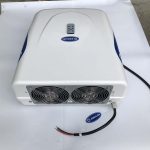 12V Rv Ac Unit
 12V Camper Air Conditioner used in medicalmobile
 12V Camper Ac
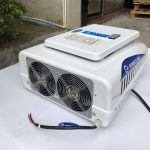 12V Ac Unit For Rv
 12 Volt Rv Ac Unit
 Small Air Conditioner For Rv
 Camper Roof Air Conditioner
 Best Ac For Rv
 Small Ac For Camper
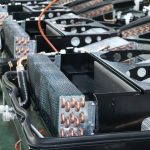 Camper Air Conditioner
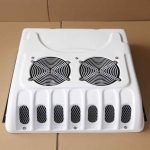 Air Conditioning Units for RV and Minibus Air Conditioner
 Small Rv Ac
 Low Profile Rv Ac Unit
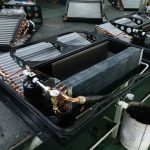 Camper Ac
 Similarities between RV Camper Air Conditioner and Minibus AC
 Air Conditioning for Motorhomes Manufacturing Process
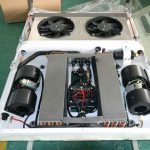 Air Conditioning Units for Campers Installation Process
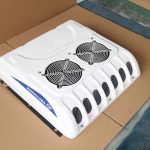 Ac For RV Camper Market Analysis Report
 Spanish
  English