
12 Volt DC RV Air Conditioner: Assembly and Application in Motorhomes
In the trend of RV travel pursuing ultimate off-grid freedom and efficient energy utilization, traditional air conditioning solutions relying on engines or high-power inverters are gradually being replaced by more independent and integrated 12V DC air conditioning systems.
Especially for motorhomes, where space and energy management are more complex, the assembly of a 12V DC air conditioning unit is not simply a matter of replacing components, but a system engineering project involving the reconstruction of the entire vehicle’s electrical architecture, thermal management optimization, and personalized scenario adaptation.
12 Volt DC RV Air Conditioner – Core Technical Parameters and Selection Logic
Reason: The fundamental contradiction of large space, high heat load, and limited power resources in motorhomes.
The large interior space of a motorhome means a higher cooling capacity (BTU) is required, but at the same time, it is limited by battery storage, requiring a precise balance between cooling capacity and energy consumption.
Traditional 220V AC air conditioners operate through inverters, resulting in approximately 15%-30% conversion losses, which is an unbearable waste in off-grid scenarios.
Process: High-efficiency technical path based on direct DC drive and precise calculations.
The core advantage of 12V DC air conditioners lies in “eliminating the inverter,” allowing core components such as the compressor and fan to be directly powered by the battery’s DC power, significantly improving system efficiency. The key to selection lies in two data points:
Cooling Capacity (BTU) and Energy Efficiency Ratio (EER)
Motorhomes typically require a cooling capacity of 10,000 BTU or more.
The more critical parameter is EER, which directly represents the amount of cooling (BTU) provided per watt of electricity consumed.
A higher EER value means that under the same cooling effect, less current is “drawn” from the battery, which is crucial for extending battery life.
Current and Power Dynamic Management
A 12V air conditioner rated at 1,800 watts (approximately 12,000 BTU) has a peak operating current of up to 150 amperes (calculation: 1800W ÷ 12V = 150A).
Therefore, modern high-end 12 Volt Rv Air Conditioner is generally equipped with multiple operating modes (such as strong cooling/ECO/sleep mode). For example, the Nomadic Cooling X2’s ECO mode current can be as low as 27A, while the Zero Breeze Mark 3 portable air conditioner has a power range between 150W and 500W, achieving a flexible balance between performance and power consumption.
Result: Correct Selection Logic
The correct selection logic starts with estimating the total vehicle heat load, prioritizing models with the highest EER value at the target cooling capacity, and featuring intelligent variable frequency and multi-stage adjustment functions.
This ensures system efficiency at the source, reducing pressure on subsequent energy system design.
| Comparison dimensions | 12V | 220V |
|---|---|---|
| System compatibility | Extremely efficient, it utilizes the vehicle’s 12V battery/circuit directly, making it plug-and-play. | The voltage is low, and the DC power must be converted to AC power through a high-power inverter, which results in conversion losses. |
| Installation complexity | Low cost, minimal circuit modifications, and easy installation. | It’s complex, requiring the installation of heavy-duty inverters and modifications to the wiring, demanding a high level of expertise. |
| Energy efficiency | High efficiency, no inverter losses, and high efficiency of the DC inverter compressor. | The efficiency is relatively low, there are energy losses during the inversion process, and the overall efficiency is greatly affected by the quality of the inverter. |
| Cooling power and speed | Medium size, relatively low cooling capacity, and potentially slower cooling speed. | Powerful, with a large cooling capacity, it can quickly lower the temperature in large spaces. |
| Energy storage system | It relies on high-capacity low-voltage batteries (such as 12V/24V lithium batteries), resulting in simple battery management. | Because it relies on inverters and large-capacity batteries, it requires high instantaneous discharge capability from the batteries. |
| Optimal use cases | Off-grid, long-lasting battery life, and zoned temperature control – perfect for sophisticated camping or business hospitality. | Suitable for campsites with easy access to city power and where fast cooling is required, for parking or short-term use. |
12 Volt DC RV Air Conditioner Energy System Reconstruction and Battery Pack Configuration Plan
Reason: Instantaneous currents of 150 amperes pose a serious challenge to traditional RV electrical circuits.
Such a large current, if improperly wired, can lead to severe overheating of the wiring, voltage drops (affecting other appliances), and even fire hazards.
Ordinary lead-acid batteries also cannot withstand prolonged high-rate discharge.

Process: Building a high-standard independent circuit centered on lithium batteries.
Assembling a 12V DC air conditioning unit essentially adds an independent “high-power power supply system” to the RV:
Dedicated Cables and Safety Protection
Based on the aforementioned 150A current, cables with a sufficiently large cross-sectional area must be used (e.g., American Wire Gauge AWG 1/0 or thicker), and an independent 200A high-current fuse or circuit breaker must be installed, with sufficient current carrying capacity (e.g., 250A) to ensure absolute safety.
Battery Chemistry and Capacity Revolution
Lithium iron phosphate batteries have become the absolute mainstream for supporting 12V air conditioning operation due to their higher energy density, deeper discharge depth (up to over 80%), and excellent high-rate discharge performance.
Capacity configuration needs to be calculated based on usage habits: for example, a 400 amp-hour (Ah) LiFePO4 battery can theoretically support a 100A air conditioner in ECO mode for about 4 hours.
Matching Charging Ecosystem
After consuming the large-capacity battery, efficient replenishment methods are needed.
In addition to charging while driving, a high-power solar panel array and external AC power charging while parked form a reliable “energy triangle.” Result: A reliable 12V air conditioning energy system, characterized by the trinity of “high-capacity LiFePO4 battery + independent high-current circuit + diversified fast charging solutions.” This is not just about power supply, but an upgrade in the overall vehicle energy management capabilities.
12 Volt DC RV Air Conditioner – Installation Practices and System Integration Art
Reason: The diversity of bus-based RV structures and the comprehensive demands for aesthetics, space, and noise reduction.
Unlike standard models, every bus-based RV is a unique custom conversion. The installation location of the air conditioning unit requires personalized design to balance cooling efficiency, space utilization, and overall vehicle aesthetics.
Process: The evolution of installation paradigms from “roof-mounted” to “concealed.”
Traditional roof-mounted installations are common, but they have problems with wind resistance, noise, and susceptibility to damage. Therefore, more integrated installation solutions are emerging:
Underbody/Side-mounted
The condenser assembly is installed between the vehicle’s skirt or chassis beams, and the cold/hot air is introduced into the interior through air ducts.
This solution completely frees up the roof (for solar panel installation), lowers the center of gravity, and achieves a “stealth” effect.
One owner who undertook this type of modification shared that their motivation was to eliminate the obtrusive appearance of roof-mounted air conditioners and the worry about low-hanging branches.
Split System
Using a split design similar to home air conditioners, the noise source (compressor) is placed outside, and only the quiet evaporator fan is placed inside, significantly improving quietness and comfort.
Air Duct Design and Insulation Foundation
Regardless of the installation method, scientific air duct layout and excellent vehicle insulation are “multipliers.”
Good insulation can reduce cooling loss by up to 30%, allowing the air conditioner to operate without continuous high load.
Result: The Best Assembly Solution
Is to integrate the air conditioning unit as part of the vehicle structure, achieving a balance of efficient cooling, space saving, visual aesthetics, and low operating noise.
This requires converters to have comprehensive capabilities across electrical, sheet metal, and air duct design.
12 Volt DC RV Air Conditioner – Target Customer Profile and Product Value Proposition
Reason: Market segmentation and differentiation of value propositions.
Not all RV users need a 12V DC air conditioner; its high initial investment (batteries and system) requires matching specific needs.
Target Audience: “Pioneer users” who pursue the ultimate off-grid experience.
Deep Off-Grid Travelers
They frequently travel to natural campsites without water or electricity supply, and have a strong need for energy self-sufficiency.
A 12V DC air conditioning system is key to achieving their core freedom: “sleeping comfortably in the wilderness during hot weather.”
Long-Term Nomadic Lifestylers
Such as retired couples or digital nomads, their trips may last for months, with uncertain itineraries.
The system’s stability and reliance on sunlight give them great autonomy in their travel plans.
Technically-Oriented Modification Enthusiasts
They enjoy the technical challenges and the sense of accomplishment from customization, viewing efficient, integrated energy systems as the core highlight of their projects.
The forums are full of such users sharing detailed processes of purchasing units from Chinese suppliers and designing and installing them themselves.
Result: The assembly and popularization of 12V DC air conditioning units in bus-based RVs
Marks the evolution of RV life from “makeshift wilderness accommodation” to “uncompromising mobile home.”
It is no longer a comfort option, but a signature configuration and fundamental support for a high-end off-grid RV lifestyle.
12 Volt DC RV Air Conditioner Conclusion
In summary, successfully assembling a 12V DC air conditioning unit in a bus-based RV is a system solution that combines precise calculations, safety engineering, and personalized design.
Its core value lies in solving the problem of maintaining comfort and energy independence in large RVs during hot weather through the combination of “high-efficiency direct current drive” and “high autonomy of lithium battery energy storage.”
As battery technology costs continue to fall and high-efficiency DC inverter compressors become more widespread, this solution is moving from high-end modification to the mainstream, becoming a key technological pillar defining the next generation of smart, independent, and comfortable RV living.
Ultimately, it allows users, wherever they are, to enjoy truly free scenery in the cool and quiet environment they control.
Related posts:
 12 Volt Rv Air Conditioner
 Best Rv Ac
 Motorhome Ac Unit
 Motorhome Roof Air Conditioner
 Small Rv Air Conditioner
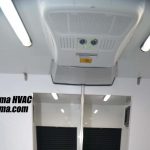 Best Rv Ac Unit
 12 Volt RV Air Conditioning Units represent an energy and technological revolution
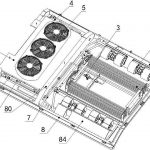 Bus Air Conditioner is used for buses and medium-sized commercial vehicles
 Air Conditioning Units for Motorhomes: A Distributed Temperature Control System
 Camper Air Conditioner 12V
 12V Air Conditioner For Motorhome
 Modular Temperature Control Solution for Motorhomes
 12 Volt Rv Ac Unit
 Technical White Paper on Multi-Unit Roof AC for Campers and Buses
 Acc Bus Air Conditioning
 4 sets of Rooftop AC Units for Campers for a 15m bus
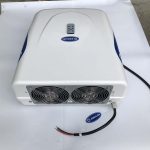 12V Rv Ac Unit
 Camper Rooftop Air Conditioning Units
 Spanish
  English