
Air Conditioner For Bus Factory is exhibiting a competitive landscape dominated by domestic brands and rapid technological iteration. Leading companies have built significant competitive advantages through customization capabilities, breakthroughs in new energy technologies, and extensive service networks.
I. Leading Domestic Companies: Full Industry Chain Layout and Technological Leadership
Chinese manufacturers are rapidly rising by leveraging their domestic advantages in bus manufacturing, with SONGZ and BUSCLIMA being typical examples.
1. SONGZ
As the largest supplier of Air Conditioner For Bus Factory in China, SONGZ has long held a market share of over 50% in the bus air conditioning market. In the first half of 2024, its bus air conditioner sales exceeded 17,000 units, with a production capacity of 95,000 units per year.
echnology Adaptability
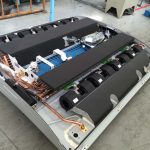
A leader in the Electric Bus Air Conditioner field, offering a liquid-cooled battery thermal management system compatible with high-voltage platform models. Battery thermal management revenue increased by 138% year-on-year in 2024.
Customer Coverage
Serves major bus manufacturers such as Yutong, King Long, and BYD. End customers include over 330 bus companies such as Beijing Public Transport and Shanghai Bus.
Dual-Mode Sales
Employs a “standard configuration mode (connecting with vehicle manufacturers) + end-user mode (directly connecting with bus companies)” to quickly respond to regional needs, such as customizing independent fuel-fired water heating systems for the Northeast market.
2.BUSCLIMA
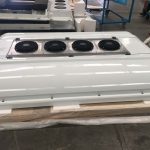
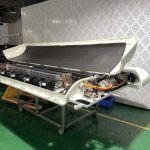
Focuses on vertical integration, providing core components such as roof-mounted air conditioners and duct systems to multiple domestic bus manufacturers. Exports to the Middle East, South America, and Europe are planned for 2025.
Extreme Environment Optimization
-30℃ extreme cold start technology (compressor preheating circuit), 60℃ high-temperature heat dissipation solution (parallel flow microchannel condenser).
Cost Control
Leveraging supply chain collaboration, achieves integrated design of the air conditioning system and the vehicle chassis, reducing assembly time by 20%. Visit www.busclima.com or contact busclima@kingclima.com

II. Foreign Brands: High-End Market Penetration and Technological Competition
International brands such as Denso and Valeo leverage their technological expertise to dominate the high-end bus market, primarily supplying European and American imported models, for example, providing air conditioning systems for the Toyota Coaster.
Industry Trends: New Energy and Technological Upgrades
Electrification drives product innovation
Competition through localized service networks
Policy-driven technological iteration
Air Conditioner For Bus Factory advantages lie in its high-efficiency compressors and environmentally friendly refrigerants. In the future, with the increasing penetration rate of new energy buses (sales are projected to increase by 33% year-on-year in 2024), companies with battery thermal management technology will further expand their leading advantage.
 Spanish
  English