
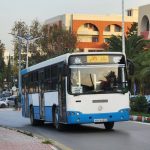
SNVI Bus Con operates city buses in Algeria. A non-air-conditioned bus ticket costs 10 dinars, while an air-conditioned bus ticket costs 15 dinars. For a middle-class worker, the extra 5 dinars for daily commuting has a negligible impact. However, for a poor person earning only a few hundred dinars a day, the extra 10 dinars for daily commuting adds up to a significant monthly expense. This might force them to make a difficult choice.
If a route offers both air-conditioned and non-air-conditioned buses, the poor will undoubtedly choose the cheaper non-air-conditioned bus, even if it means enduring heat, crowds, and discomfort. They trade physical endurance for financial savings.
Intercity travel is almost entirely by air-conditioned buses, as this is a strict requirement for safety and operation. When the poor must travel long distances for essential purposes (such as visiting relatives or seeking medical treatment), they are forced to pay higher fares, a one-time “heavy burden” for them.
Under the pressure of high transportation costs, the poor may reduce non-essential travel such as leisure and visiting friends, thus limiting their social activities and quality of life. The government should find ways to equip all public transportation with air conditioning. This issue ultimately boils down to social equity and public policy.
A responsible government needs to find a balance.
On key routes, a certain percentage of non-air-conditioned or low-priced buses should be retained to ensure basic transportation for low-income groups.
Subsidies could be provided to public transportation operators to ensure they offer air conditioning without significantly raising prices; or direct transportation subsidies could be provided to low-income families.
For example, in extremely hot midday hours or in southern desert regions, air conditioning should be considered a necessity, not a luxury.
This dilemma reveals that in the process of social development and service upgrades, protecting the interests of the most vulnerable groups and ensuring that the benefits of technological progress and improved comfort are shared equitably by the entire society is a crucial issue.
SNVI Bus Con should be installed on the vast majority of commercial vehicles used for passenger transport, such as City buses, Coach buses, Minibuses, and Midibuses.
If SNVI Bus Con is installed, and City buses are equipped with air conditioning as an option, there is no need to consider too many critical aspects or from the perspective of fluid dynamics and engineering integration.
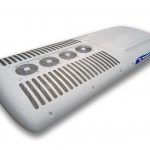
Busclima engineers select the appropriate cooling capacity for the SNVI 100 L6/V8, typically within the 32-36kW range.
| Model | Current (A) |
Cooling Capacity (KW/BTU) |
Installation | Evaporator Air Volume (m³/h) |
Condenser Air Volume (m³/h) |
Refrigerant | Dimension (mm*mm*mm) |
Weight (KG) |
Application of Bus |
| Airsuper250 | 32 | 25/85000 | Rooftop | 4000 | 5700 | R134a | 3038*1820*189 | 170 | 6-8M |
| Airsuper320 | 36 | 32/108000 | Rooftop | 4000 | 5700 | R134a | 3335*1820*187 | 170 | 8-10M |
| Airsuper360 | 48 | 36/122000 | Rooftop | 6000 | 7600 | R134a | 3804*1902*205 | 215 | 9-11M |
| Airsuper400 | 48 | 42/143000 | Rooftop | 7000 | 9500 | R134a | 4435*1902*210 | 263 | 11-13M |
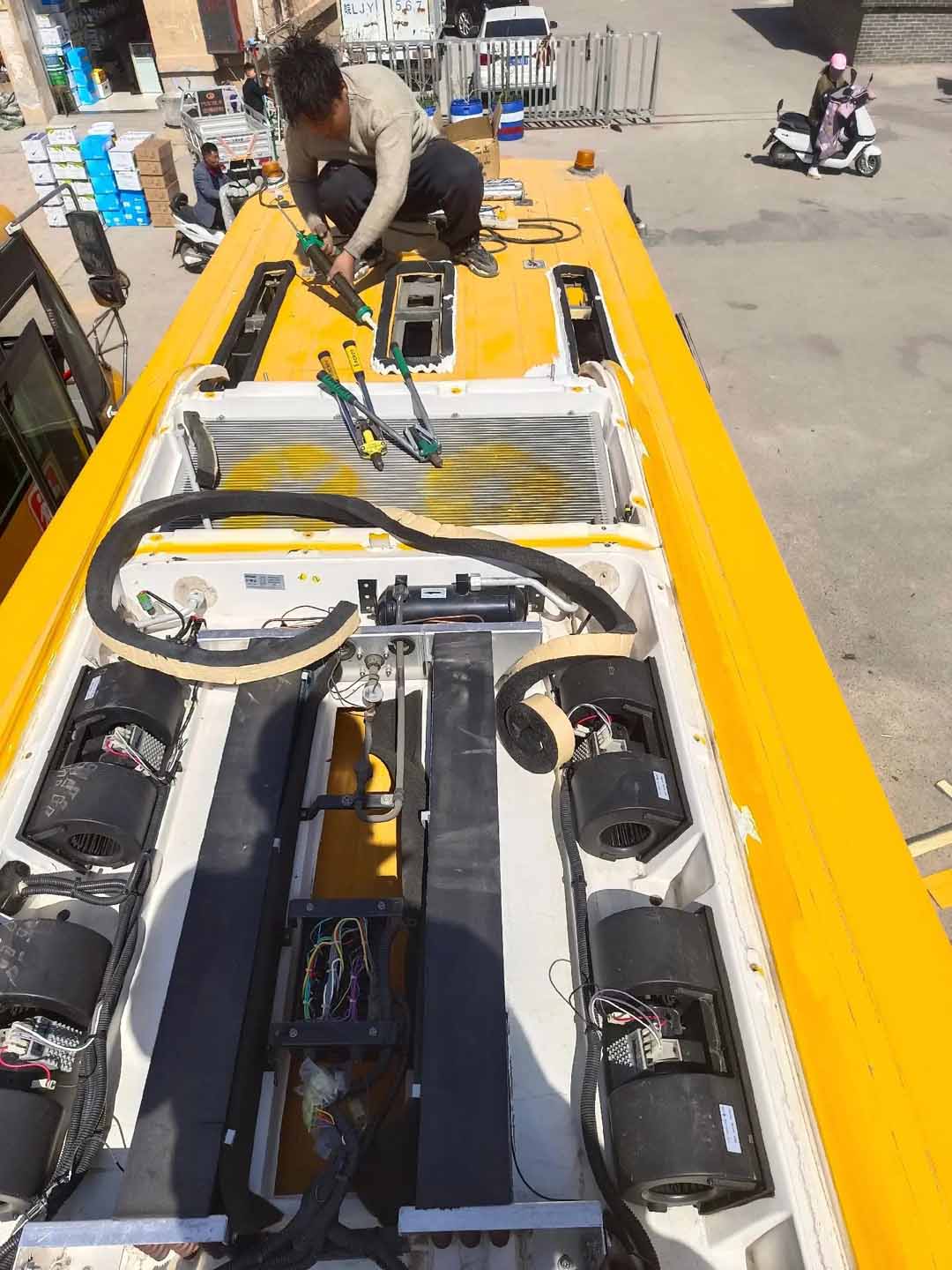
Busclima engineers caution that installing bus con through a hole in the roof weakens the vehicle’s structure. Reinforcing beams must be added to distribute stress and vibration.
The connection between the mounting base and the roof must be sealed with high-quality sealant for both water and air tightness to prevent leaks and noise. For any questions, please contact busclima@kingclima.com for more installation options.
The SNVI Bus Connect should be installed in a well-ventilated area of the roof. It is typically located in the front-middle section of the roof, but should be avoided directly above the driver (to prevent noise interference).
When the vehicle is traveling at high speeds, the airflow velocity over the roof is very high. A good installation location and airflow design can utilize dynamic pressure to assist cooling, reducing fan energy consumption and noise. Conversely, poor design will create resistance.
The cool air from the air conditioning unit needs to be delivered to all parts of the passenger compartment through ducts installed on both sides of the roof.
The duct design must ensure uniform airflow distribution. Otherwise, the airflow will be greater at the air vents closer to the air conditioner and less at the vents farther away, resulting in uneven heating and cooling in the front and back of the vehicle.
Related posts:
 Why Install SONACOME SNVI Bus Con?
 Bus Air Conditioner is used for buses and medium-sized commercial vehicles
 Finite Element Analysis of MTC MAN Bus Hvac
 MTC MAN Bus Aircon System
 Air Conditioner For Bus
 SONACOME SNVI Bus Air Conditioner
 SNVI Bus Air Conditioner New Supplier
 China Higer Bus Air Conditioner
 SONACOME Bus Air Conditioner
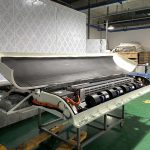 Carrier Bus Air Conditioner
 Bus Con Unit Price differs significantly from that in the Chinese market
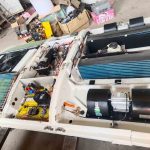 Introduction to Ac For Bus
 Bus Con Supplier reminds all bus owners to clean BUS AC
 Why Install 100 V8 Bus Air Conditioner?
 Where to purchase Algeria Bus Con?
 Thermo King Bus Ac Unit
 Bus Air Conditioning Supplier explains why Bus AC has poor cooling performance
 Bus Aircon Manufacturer
 Spanish
  English