
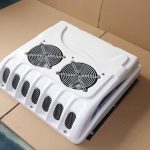
Air Conditioning for Motorhomes and Minibus AC are interchangeable. As a specialized type of air conditioning, motorhome air conditioners are manufactured in workshops that combine precision manufacturing, strict quality control, and customized production.
BUSCLIMA, leveraging the rise of the global minibus, mid-bus, and motorhome markets, has rapidly expanded its global business to Central Asia, the Middle East, Southern Europe, and North America.
Motorhome air conditioning production workshops are typically not a single large space, but rather composed of multiple functional areas with different environmental requirements to ensure the reliability, efficiency, and safety of the final product.
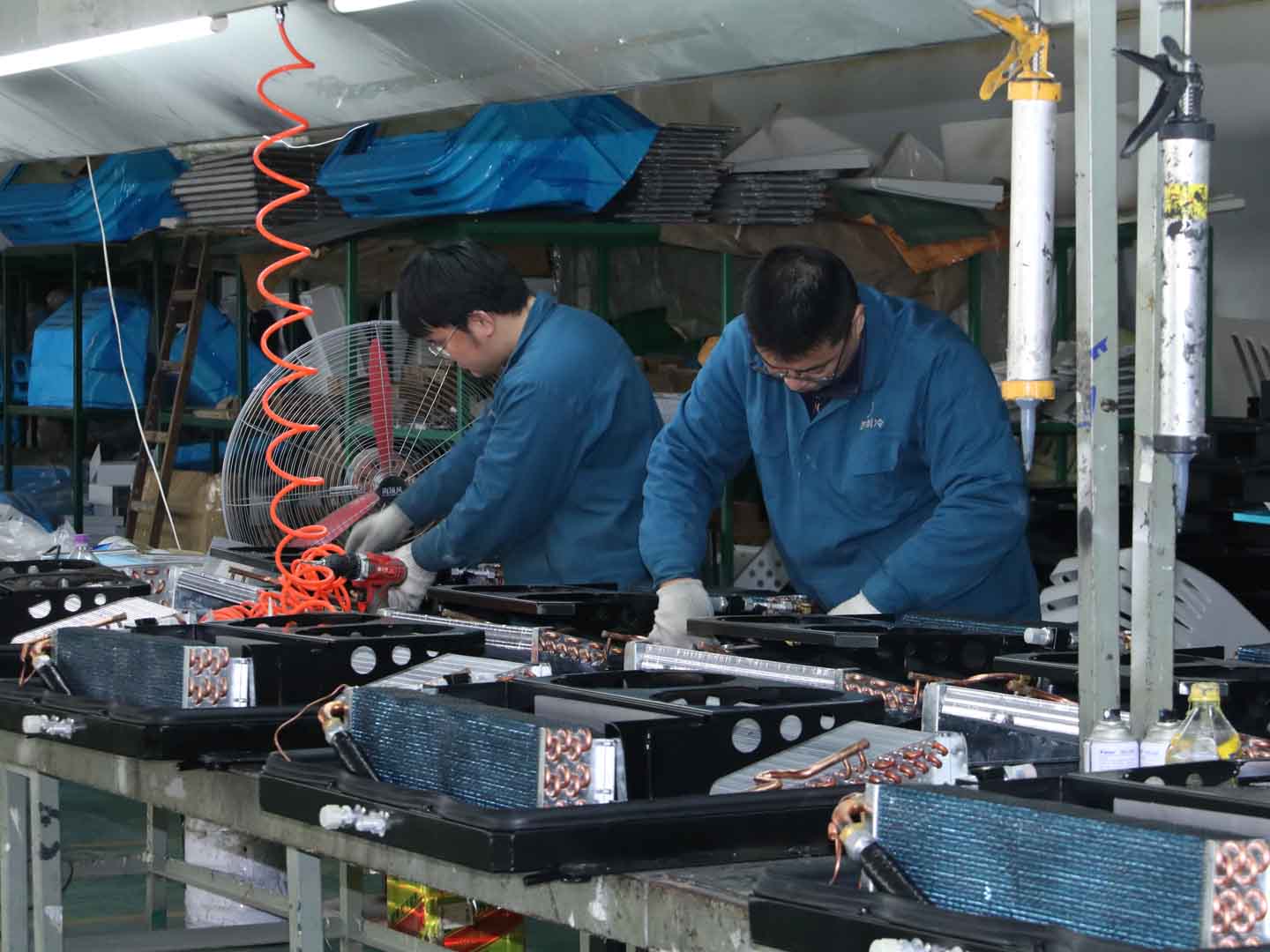
Main Functional Areas of the Air Conditioning for Motorhomes Production Workshop: Raw Materials and Components Storage Area
1. Stores core raw materials and components, such as copper pipes, aluminum foil (for heat exchangers), sheet metal parts, compressors, motors, control boards, PCBs, refrigerants, etc.
2. Implements strict material management (e.g., FIFO), with anti-static and constant temperature and humidity requirements for temperature and humidity sensitive components (such as control boards).
Sheet Metal and Casing Processing Area
1. Manufactures the AC for Rv casing and internal structural components.
2. Laser cutting machine, CNC punching machine, bending machine, welding equipment (argon arc welding, laser welding), and spray painting line (or outsourced).
3. Cut, punch, bend, and weld steel or aluminum plates into shape, and perform surface treatment (such as powder coating) to achieve corrosion resistance and aesthetic appeal.
Electrical Assembly Area
1. Install heavy components such as compressors and fan motors.
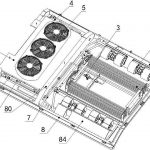
2. Install the main control board, frequency converter module, etc. Wiring must be standardized and secure, and wire clips must be used to prevent loosening due to vehicle bumps.
3. Install the evaporator and condenser in place.
4. Connect the refrigerant piping inside the air conditioning system, and use nitrogen-purged shielded welding to ensure that there is no oxide scale inside the weld to prevent system blockage.
5. Install the assembled core system into the casing.
Vacuuming & Charging Station
1. Evacuate the system to a high vacuum to remove moisture and air, preventing ice blockage and oxidation.
2. Charge the refrigerant to the specified amount using a precision electronic scale according to strict standards. These are crucial steps affecting air conditioner performance and energy efficiency.
Testing and Inspection Area
1. Start the air conditioner under simulated power (12V/24V/48V) and test whether it operates normally at each speed setting.
2. Conduct tests in an enthalpy difference laboratory or environmental simulation chamber to accurately measure its cooling capacity, heating capacity, energy efficiency ratio (COP/EER), noise level, etc. This is the core step in verifying whether the product meets standards.
3. Perform tests on insulation resistance, electrical strength (withstand voltage test), grounding resistance, etc., to ensure electrical safety.
4. Use a vibration test bench to simulate the operating conditions of a motorhome driving on rough roads. After a period of testing, check for loose or damaged screws, wiring, and solder joints. This is the most unique test that distinguishes motorhome air conditioners from household air conditioners.
Air Conditioning for Motorhomes and Minibus ACs are no longer simple assembly, but a comprehensive manifestation of fluid mechanics, thermodynamics, electronic control, and precision manufacturing. The application of automated equipment (such as robotic arms) is becoming increasingly common, especially in highly repetitive processes such as welding and handling.
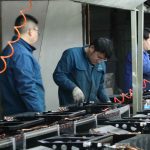
Workers meticulously assembled the rigorously leak-tested silver heat exchanger, the sound-insulating compressor, and the precision inverter control board, step by step, into a sturdy chassis at their respective workstations.
All wiring harnesses were neatly secured with cable ties and wire clips.
Then, robotic arms performed precise pipe welding, sparks flying.
After completion, the product was transported to a sealed testing chamber, where it underwent simulated tests of extreme heat and cold amidst a deafening roar.
Finally, the qualified products were labeled, packed into boxes bearing the brand logo, and awaited their new journey—to be installed in a motorhome, bringing coolness or warmth to a distant home.

 Spanish
  English