
Air Conditioning Units for RV and minibus AC are based on vehicle-specific air conditioning technology, sharing common features such as vibration resistance, reliance on vehicle power, and roof mounting.
Minibus air conditioners primarily target public services, providing rapid cooling/heating for numerous passengers in a short time, emphasizing efficiency and reliability.
Air Conditioning Units for RV primarily aim to create comfortable living spaces, providing a quiet, stable environment for a small number of people (usually families) while parked, emphasizing comfort and low energy consumption.
They quickly offset the heat/cooling loads caused by frequent passenger boarding and alighting and frequent door opening and closing. Minibuses have relatively small but densely packed spaces, requiring air conditioners with significantly higher power than those in similarly sized motorhomes.
| Features | RV Air Conditioning | Minibus Air Conditioning |
| Core Objectives | Comfort and Living | Operational Efficiency and Rapid Temperature Control |
| Use Scenarios | Primarily for use when parked, secondary use while driving | Used Almost exclusively while in motion |
| Energy Consumption and Power Supply | Extremely energy-efficient | Power Priority |
| Noise Control | Extremely quiet operation | Acceptable Noise Levels |
| Performance Focus | Precise temperature control, stable operation | Large Airflow, Rapid Cooling |
| Installation and Air Ductwork | Integrates into home environment, gentle airflow | Functionality First, Comprehensive Coverage |
| Control System | Intelligent and integrated | Simple, Centralized Control |
Therefore, when choosing an Air Conditioning Unit for RV, high-power units should be selected. The air conditioner’s power must be strictly matched to the minibus’s cabin volume and the expected number of passengers. Insufficient power will result in poor performance, while excessive power will lead to increased energy consumption and wasted costs.
Minibus air conditioners are efficient and powerful tools designed for “public services.” Its entire design revolves around the core goal of quickly and evenly regulating the temperature for mobile users. This contrasts sharply with the “quiet, energy-efficient, and home-like comfort” pursued by RV air conditioners. Understanding this is key to grasping all the characteristics of minibus air conditioners.
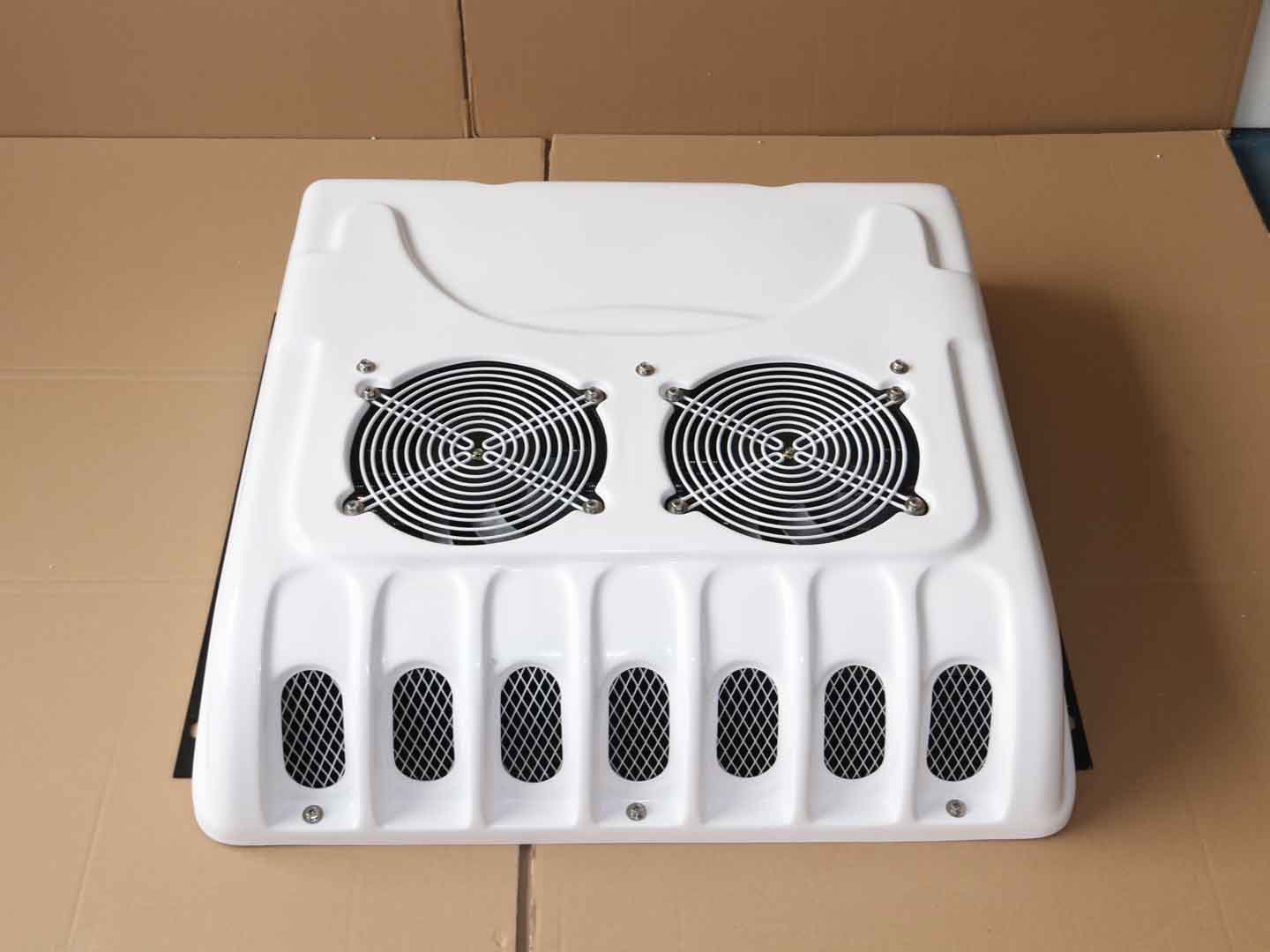
Choosing between an Air Conditioning Unit for RV and a minibus air conditioner depends entirely on the vehicle’s intended use.
If you’re converting a minibus for camping, you’ll face a choice: keep the original minibus air conditioner (advantages include powerful cooling, but disadvantages include it only working while driving and being noisy), or install an AC for Rv (advantages include quietness and energy saving when parked, but disadvantages include potentially lower cooling capacity and additional cost).
For pure RV manufacturers and users, an RV air conditioner is the only correct choice, as its entire design revolves around the core principle of “livability.”
For commercial minibuses, a minibus air conditioner is a highly efficient tool designed for operational use.
Related posts:
 Similarities between RV Camper Air Conditioner and Minibus AC
 Air Conditioning for Motorhomes Manufacturing Process
 Ac For RV Camper Market Analysis Report
 Camper Air Conditioner
 Camper Ac
 Ac For Camper and Mini Bus Ac Installation Steps
 Air Conditioner for RV Installation Steps
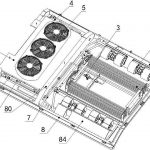 Bus Air Conditioner is used for buses and medium-sized commercial vehicles
 Spanish
  English