
RV Ac Air Conditioners represent a specific and well-defined area of application. In the hot, dry, and dusty environment of North Africa, air conditioning systems in buses and RVs require high cooling capacity and resistance to sandstorms.
North African summer temperatures often exceed 45°C, necessitating the selection of air conditioners with a higher rated capacity than those for temperate regions. It is recommended to visit www.busclima.com or contact busclima@kingclima.com for heat load calculations.
Check the upper limit of the operating temperature range for your air conditioner; high-quality products can operate stably at 55°C or even higher.
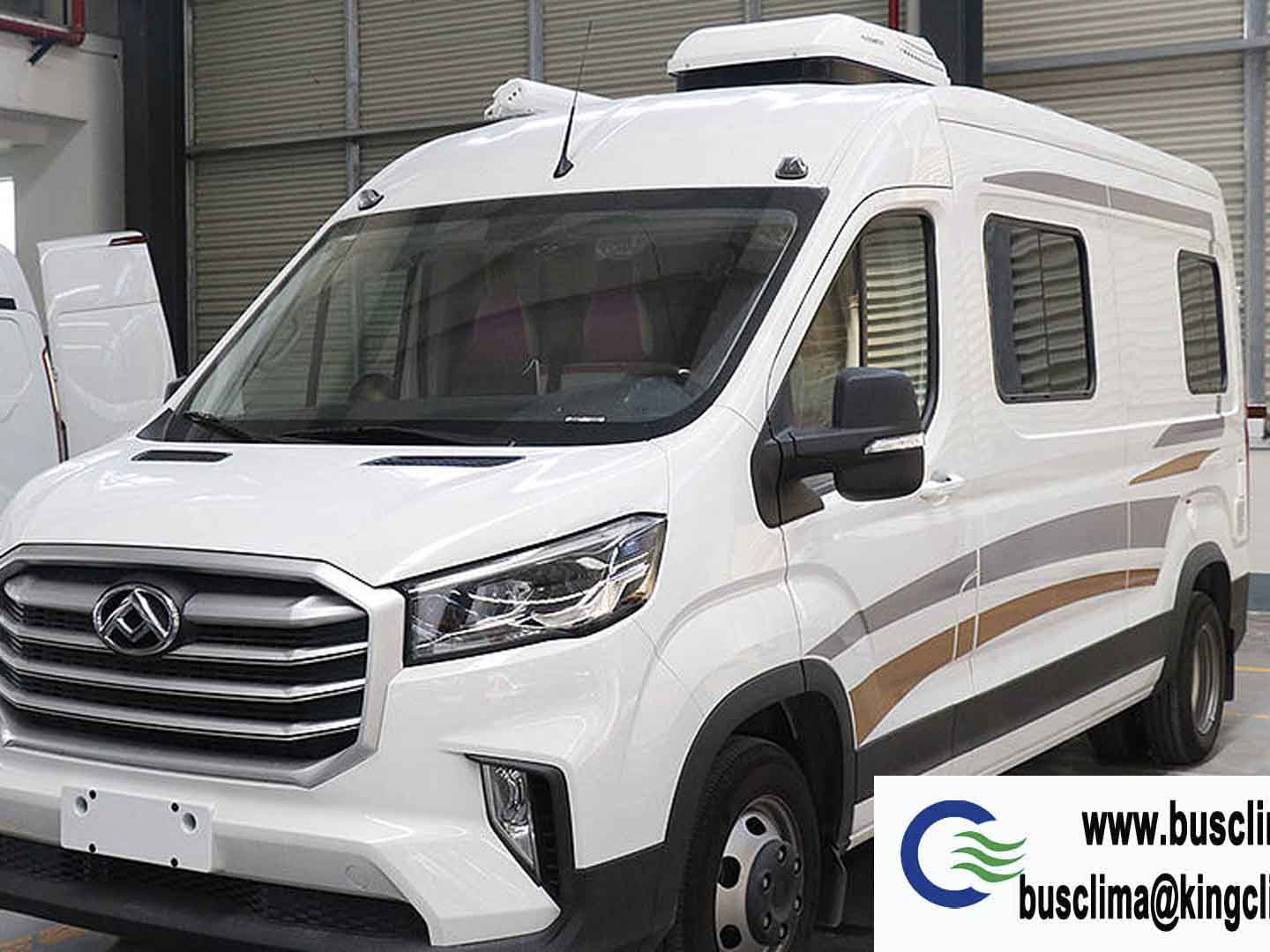
Design Requirements for RV Ac Air Conditioners in North Africa
The condenser/evaporator needs to be designed to resist fouling and be easy to clean. Copper tubes with hydrophilic aluminum foil heat exchangers are the mainstream choice.
High-efficiency washable or replaceable filters are essential, and multi-layer filtration (primary sand filter + high-efficiency PM2.5 filter) is even necessary.
All casing seams and air vents require excellent sealing to prevent sand and dust from entering the machine and damaging the circuitry and fan. North Africa’s coastal regions have high air salinity, while inland areas experience significant diurnal temperature variations. Ac For Rv casings and internal components should be corrosion-resistant, rust-proof, and UV-resistant.
Given the scarcity of electricity (especially in motorhomes), high energy efficiency means greater energy savings.
Determine whether your vehicle’s power supply system is 12V/24V DC, 220V AC, or a hybrid system. Buses typically have independent generators, while motorhomes require more flexible configurations.
RV Ac Air Conditioner Usage and Maintenance Recommendations
1. Installation is paramount. Installation must be performed by a professional to ensure proper sealing, insulation, and drainage.
2. Regular cleaning: Clean or replace the filter weekly. Clean the condenser (outdoor side) and evaporator (indoor side) monthly with a soft brush and low-pressure air to remove dust and lint. In North Africa, this frequency may need to be increased.
3. Pre-operation inspection: After long journeys, check the exterior of the air conditioner for obstructions, especially for under-floor units.
4. Power management (for motorhomes): Use batteries and generators efficiently to avoid over-discharge. Solar panels are a perfect match for North African motorhomes.
For large converted buses or luxury motorhomes: Undermount or high-performance RV AC air conditioners are the first choice, with brands like SONGZ and BUSCLIMA considered. Key features include high cooling capacity, high-temperature operation, and sand-proof design.
For medium-sized/standard motorhomes, the mainstream choice is a high-performance RV AC air conditioner. Sufficient lithium batteries and a solar system are strongly recommended.
For economy vehicles or vehicles with limited electrical systems, a 12V DC inverter air conditioner + large battery + large solar panel is an ideal combination. Although the initial investment is high, it is the most convenient and quietest option in the long run.
Prepare a backup plan, such as carrying a portable fan or a 12V ventilation fan as an auxiliary solution, or in case of air conditioner failure.
 Spanish
  English