
RV Air Conditioning Systems can be used in minibuses, caravans, and minibus transport vehicles. While dedicated bus air conditioners offer high cooling capacity, they are inexpensive. Although they don’t reach a perfect 22 degrees Celsius, they can maintain an interior temperature of around 29 degrees Celsius, keeping passengers comfortable. For example, the Busclima KK-50ir Conditioning Systems.

| Model | KK-30 | KK-50 | KK-100 | KK-120 | KK-140 | |
| Cooling Capacity | 3KW/10300BTU | 5KW/17166 | 10KW/34121 | 12Kw/42000BTU | 14KW/48000BTU | |
| Voltage | DC12V/24V | DC12V/24V | DC12V/24V | DC12V/24V | DC12V/24V | |
| Driven Type | Engine Driven | Engine Driven | Engine Driven | Engine Driven | Engine Driven | |
| Installation | Rooftop | Rooftop | Rooftop | Rooftop | Rooftop | |
| Condenser | Fan Qty | 1 | 2 | 2 | 2 | 2 |
| Air Flow Volume | 600m³/h | 680m³/h | 3800m³/h | 3200m³/h | 3800m³/h | |
| Evaporator | Blower Qty | 1 | 1 | 2 | 2 | 4 |
| Air Flow Volume | 750m³/h | 850m³/h | 2000m³/h | 2000m³/h | 2000m³/h | |
| Condenser Fan | Axial Flow | Axial Flow | Double axle and centrifugal flow | Double axle and centrifugal flow | Double axle and centrifugal flow | |
| Compressor | KC 5H14, 138cc/r | 5H14, 138cc/r | HL22, 212cc/r | Valeo TM21, 215 cc/r | HL32, 313cc/r | |
| Refrigerant | R134a, 0.8KG | R134a, 0.9KG | R134a | R134a | R134a | |
| Dimensions (mm) | 750*680*196mm | 755*745*190 | 1010*975*180 | 1660*1240*210 | 1520*1100*175 | |
| Application Vehicles | Rv Camper Motorhomes & Minibus | Rv Camper Motorhomes & Minibus | 6-6.5m minibus or caravans | 6-6.5m minibus or caravans | 6-6.5m minibus or caravans | |
Two main types of minibus cooling systems
1. The compressor is driven by the vehicle’s main engine via a belt, and other components are powered by the vehicle’s battery.
2. High and stable cooling capacity, providing sufficient cooling whether the vehicle is running or idling, without affecting the main engine’s power.
3. Simple structure, low cost, lightweight, and energy-efficient.
4. Cooling capacity is affected by the main engine speed. Cooling effect is poor at idle or low speeds.
Special Features of RV Air Conditioning Systems in Minibuses: Dual or Multi-Evaporator Structure: To ensure uniform temperature throughout the large interior space, minibuses typically have one evaporator assembly installed at the front and rear of the roof, sharing a single compressor and condenser. Air is delivered via ductwork or an independent fan.
1. Requires a high-powered, multi-stage blower to force cool air throughout the passenger compartment.
2. Complex ductwork and control system with independent front and rear air conditioning control panels, allowing for zoned adjustment of airflow and temperature.
3. Significant impact on engine load: Turning on the van air conditioning significantly increases engine load. Small-displacement engines may experience insufficient power when climbing hills, requiring manual shutdown of the air conditioning.
Maintenance and Care Points for RV Air Conditioning Systems in Minibuses: Regular Cleaning
1. Clean the condenser from the inside out at least once a year using high-pressure air or a water gun (carefully rinse) to ensure heat dissipation.
2. Use a specialized foam cleaner to clean the evaporator without disassembly, as needed, to eliminate odors.
3. With frequent use, it is recommended to check and replace the air conditioning filter every 3-6 months to ensure airflow and air quality.
System Inspection
1. Before starting the system annually, a professional technician should check the system pressure, detect leaks, and add refrigerant to the standard level.
2. Check the compressor belt tension and for cracks.
Correct Usage Habits
1. When approaching your destination, first turn off the A/C compressor, but keep the blower running for a few minutes to dry the moisture on the evaporator surface, which can effectively prevent mold growth and odors.
2. Open windows for ventilation first, then turn on the external air circulation at high fan speed, and finally switch to internal air circulation for cooling for maximum efficiency.
Related posts:
 Bus Air Conditioner is used for buses and medium-sized commercial vehicles
 Ac For Camper and Mini Bus Ac Installation Steps
 Camper Air Conditioner
 Travel Trailer Air Conditioner
 Rv Aircon
 Air Conditioner for RV Installation Steps
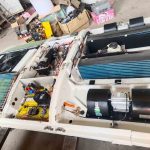 Introduction to Ac For Bus
 Rv Ac
Rv Ac
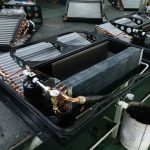 Camper Ac
 Motorhome Air Conditioning and Minibus Manufacturer Matching
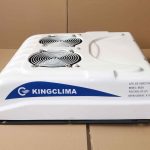 Rv Ac System
 Spanish
  English