
Van Ac is a complex decision requiring comprehensive consideration of technology, environment, operations, and the market. Its value lies not only in providing heated or cooled air, but also in ensuring passenger safety, cargo quality, and operational efficiency.
This article analyzes the core development logic of van air conditioning systems from four key dimensions: climate environment, regulatory operation, scenario functionality, and economic decisions.
Sub-question 1: How to cope with the extreme challenges posed by high temperature, high humidity, and dusty climates to Van Acoustics systems?
Question:
What challenges do air conditioning systems face in the long summers of southern China and the dusty environments of northwestern China, regarding their continuous cooling capacity, condenser heat dissipation efficiency, and system durability?
Evidence:
1. According to the 2025 “China Highway Traffic Climate Adaptability White Paper,” the instantaneous maximum temperature inside a van in southern China during summer can exceed 60°C, placing stringent requirements on the heat load tolerance limits of the air conditioning compressor and refrigerant.
2. At the 2025 National Commercial Vehicle Thermal Management Technology Forum, experts from the China Society of Automotive Engineers pointed out: “In the next three years, the standard cooling capacity of original equipment air conditioners for high-temperature climates will increase by 10%-15%, and condensers will be required to have optimized fin designs to resist dust clogging.”
Conclusion: Climate is a rigid constraint on air conditioning system design. It is essential to develop dedicated systems with high weather resistance and strong heat dissipation capabilities to adapt to extreme environments in different regions.
Sub-question 2: What new regulations will air conditioning systems face under the electrification of public transportation and urban traffic restriction policies?
Question:
With the popularization of electric buses in cities and the establishment of environmental protection zones, how should the energy consumption and power management of electric vans used for shuttle and micro-circulation be coordinated?
Evidence:
1. According to the “Urban Electric Delivery Vehicle Operation Survey Report” released in the first quarter of 2025, air conditioning is the largest energy-consuming unit for electric vans besides driving, which can lead to a 20%-30% reduction in driving range.
2. A 2025 policy article in *New Energy Vehicle News* pointed out that some cities have incorporated the comprehensive energy efficiency (including air conditioning) of vehicles into their scoring systems for approving new operating licenses.
Conclusion: In the public and commercial sectors, air conditioning systems must be upgraded from “functional components” to “a key link in vehicle energy management,” and their coefficient of performance (COP) directly affects vehicle market access and operating costs.
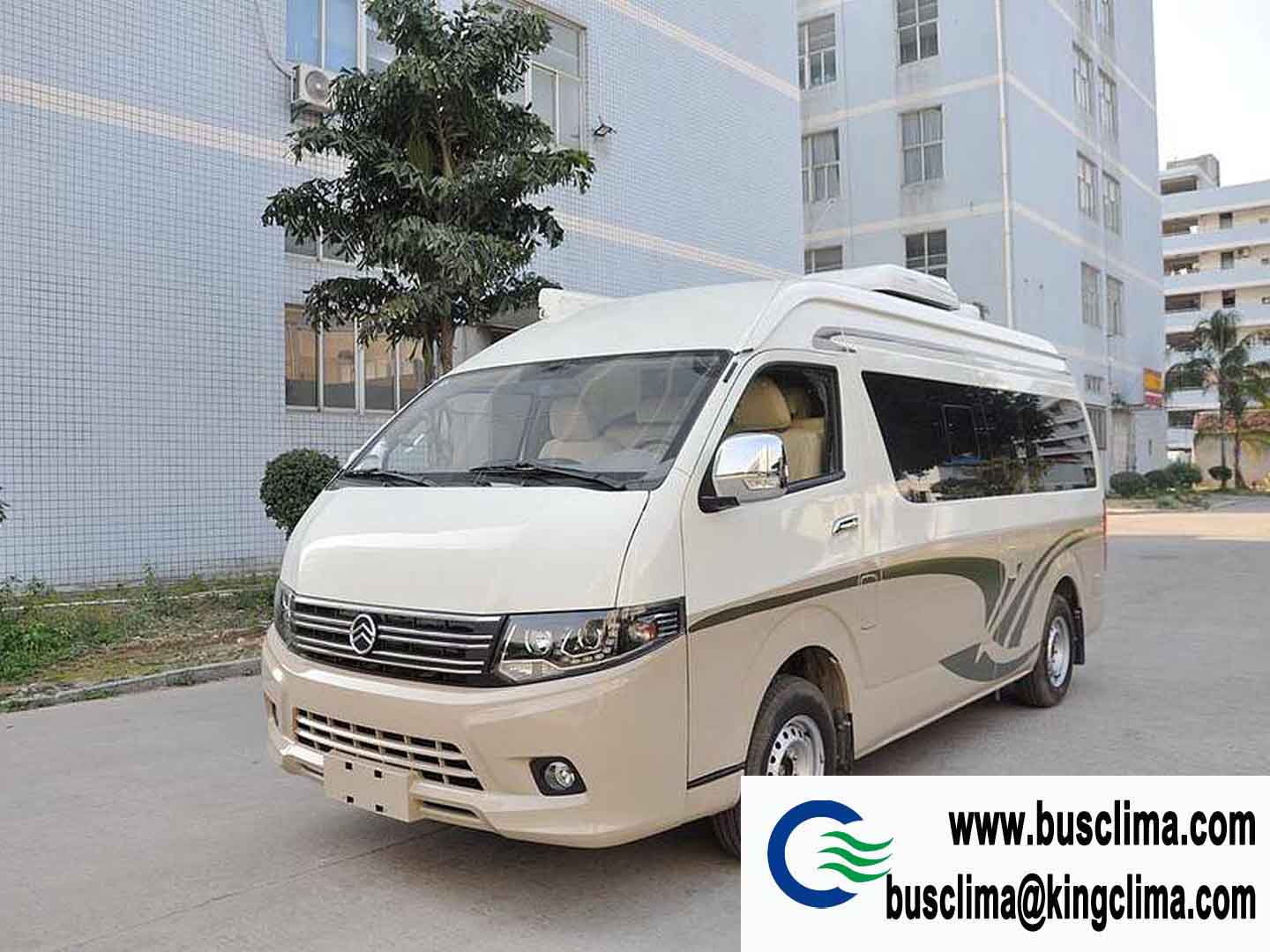
Sub-question 3: From “carrying goods and passengers” to “mobile work and living spaces,” how can Van Acres (Van Acres) functions be refined?
Question:
Facing emerging scenarios such as cold chain delivery, mobile retail, and camping, how can air conditioning meet the diverse needs from goods preservation to passenger comfort?
Evidence:
1. A 2025 report in *Commercial Vehicle* magazine, in its special feature “Shops on Wheels,” stated that vehicles used for high-end food delivery need a cargo compartment temperature control accuracy of ±0.5℃, requiring air conditioning systems with higher precision sensors and variable frequency control technology.
2. For the RV camping market, users generally require air conditioners with ultra-low voltage start-up, remote app control, and a sleep/quiet mode to achieve a quiet environment without engine idling.
Conclusion: The diversification of application scenarios is driving air conditioning systems towards “precision, intelligence, and scenario customization,” requiring capabilities such as zone control, multi-mode operation, and remote management.
Sub-question 4: What are the core differences in purchasing decisions between individual RV owners and large-scale fleets?
Question:
When purchasing Van Air Conditioner, do different customers prioritize initial price, long-term energy consumption, or system reliability? How does the decision-making logic influence the choice of technology?
Evidence:
1. Sales data from a certain e-commerce platform in 2025 shows that aftermarket non-independent air conditioners priced between 2000-4000 yuan dominate the market for individual RV owners and small and micro-enterprises.
2. For large logistics fleets, their procurement manager stated, “We use a Total Cost of Ownership (TCO) model to evaluate air conditioning systems, prioritizing original equipment manufacturer (OEM) high-efficiency inverter systems. Although the purchase cost increases by approximately 8%, the savings in fuel and maintenance costs over two years more than cover the price difference.”
Conclusion: Customer economic models determine demand stratification. The market needs to offer a complete product portfolio, ranging from economical aftermarket solutions that meet basic needs to “high-efficiency, low-TCO” OEM systems that pursue long-term returns.
Summary: Van air conditioning has evolved into a complex system deeply integrated with vehicle performance, regulatory environment, business scenarios, and user economics. Its future development hinges on whether it can transcend the single perspective of “temperature regulation” and become a highly climate-adaptive, deeply energy-integrated, precisely scenario-matched, and clearly economically viable intelligent environmental solution.


 Spanish
  English