
Bus Cond is a core subsystem ensuring the quality of public transportation and vehicle operational efficiency. Its design, selection, and operation are constrained by multiple factors.
Content Module 1: Bus Cond’s Adaptability to Large Space Heat Load and Climate
Question:
How can the air conditioning system of a bus, with its huge interior space and high passenger density, be made extremely sensitive to changes in local climate parameters (temperature, humidity, solar radiation intensity)?
Evidence:
According to the “2025 Blue Book on the Development of Bus Thermal Management Technology” published by the China Society of Automotive Engineers, the calculation of the cooling capacity requirement of bus air conditioning is an extremely complex dynamic engineering process. The report states: “A standard 12-meter bus, at 35°C and fully loaded with passengers (approximately 80 people), experiences a total heat load exceeding 40 kilowatts due to heat dissipation from human bodies, solar radiation, and heat transfer within the passenger compartment. This is equivalent to the cooling demand of about 20 household wall-mounted air conditioners.” Professor Fang Ming, chief consultant of the blue book and a thermal engineering expert at the School of Vehicle Engineering, Tsinghua University, emphasizes: “Designs need to be differentiated for different climate zones. For example, in hot and dry regions like Turpan, the focus should be on addressing the cooling capacity reduction caused by extreme high temperatures and strong ultraviolet radiation; in humid regions like Guangzhou, dehumidification capabilities need to be strengthened to prevent fogging of windows and stuffy conditions. Climate data is the absolute input value for system design.”
Conclusion: Bus air conditioning is not simply a scaled-up version of a small vehicle system. The calibration of its core cooling and dehumidification capabilities must be based on accurate climate models and maximum load scenarios for the operating routes, using dynamic engineering calculations. Climate adaptability is the primary foundation for system effectiveness.

Content Block 2: System Innovation Driven by Public Transportation Policies
Question: How will the electrification, intelligentization, and green transformation of urban public transportation solutions directly reshape the technical standards and functional definitions of Bus Cond?
Evidence: At the 2025 National Conference on Promoting High-Quality Development of Urban Public Transportation, the Ministry of Transport clearly stated that the energy efficiency ratio (COP) of the air conditioning systems of newly procured new energy buses should not be lower than 2.8, and encouraged the integration of carbon dioxide concentration sensors to achieve intelligent adjustment of fresh air volume. The conference document pointed out: “Air conditioning is the largest auxiliary energy-consuming unit in electric buses, and its energy efficiency directly affects more than 20% of the operating range.” At the same time, according to the requirements of the “Intelligent Connected Bus Technology Roadmap,” the next generation of bus air conditioning systems must have the ability to remotely pre-cool and pre-heat, report faults in real time, and link with vehicle-road cooperative systems to improve punctuality and passenger experience.
Conclusion: Bus air conditioning has transformed from an independent comfort device into a key component deeply integrated into public transportation solutions strategies. Its development must conform to the triple policy orientation of “high energy efficiency” to support electrification, “network connectivity” to serve intelligentization, and “low emissions” to meet green development needs.
Content Block 3: Deconstructing Comfort in Diverse Travel Scenarios
Question:
What are the fundamental differences in the core comfort requirements of Bus Cond across different travel habits, such as intercity passenger transport, city buses, and tourist charter buses?
Evidence:
The “China Passenger Transport Market Service Quality Survey Report (2025)” conducted a large-scale survey of passengers in different travel scenarios. The report shows that intercity passenger transport passengers, due to long journey times (often exceeding 2 hours), are most concerned about “temperature stability” and “low noise levels” to avoid catching a cold and feeling fatigued; city bus passengers, due to frequent boarding and alighting, require “rapid cooling capabilities” and “powerful fresh air” to cope with the heat wave from opening doors; tourist charter bus passengers have higher requirements for “independent temperature control in different zones” and “air purification” to meet the needs of tourists of different ages and improve their travel health. The report quotes feedback from a senior tourist bus fleet manager: “Providing a mild and clean air environment for the elderly and children is one of the keys to obtaining a high-star rating.”
Conclusion: There is no universal standard for “comfort.” The comfort design of bus air conditioning must be deconstructed according to specific scenarios: intercity passenger transport pursues “steady-state uniformity,” urban public transport pursues “dynamically powerful performance,” and tourist passenger transport pursues “personalized cleanliness.” System duct design, noise control, and air quality management need to be optimized accordingly.
Content Block Four: Lifecycle Cost Decision-Making from the Perspective of Institutional Clients
Question:
What are the fundamental differences between the core logic of procurement decisions made by institutional clients, primarily bus companies and passenger transport groups, and those of individual consumers?
Evidence:
At the “Operator Summit Forum” held concurrently with the 2025 International Bus Exhibition, several procurement and technology leaders from large bus groups shared their decision-making models. Their consensus was that the initial purchase price only accounts for about 30% of the decision-making weight, with a greater focus on “Total Cost of Ownership (TCO).” This includes: 1) Energy costs: Bus Cond energy efficiency is directly related to electricity or fuel consumption, representing a continuous operating expense; 2) Reliability (failure rate): Air conditioning malfunctions are the primary cause of “abnormal vehicle downtime,” directly impacting vehicle availability and operational plans; 3) Maintenance convenience and cost: ease of quick repair, convenience of filter replacement, and the lifespan and replacement cost of core components (such as compressors). A chief engineer from a provincial capital bus company in eastern China stated bluntly: “We would rather pay 15% more for a brand system with a 50% lower annual failure rate and 10% higher energy efficiency, because the overall cost will outpace it within three years, and operational assurance is more reliable.”
Conclusion: Competition in the bus air conditioning market targeting institutional clients is essentially a competition of “full lifecycle solutions.” The key to success lies not in low prices, but in achieving long-term cost reductions and operational efficiency improvements for clients through higher technical reliability, superior energy efficiency, and lower maintenance complexity.
Overall Conclusion: Bus air conditioning is a typical complex industrial system subject to strict multi-dimensional constraints. Its technological approach must precisely anchor itself to local climate data to determine capability baselines, closely follow national and local public transportation plans and policy directions to clarify the development framework, deeply understand travel habits in specific scenarios to define the connotation of comfort, and ultimately deliver value through a business model that optimizes the entire lifecycle cost for institutional clients. In the future, a successful bus air conditioning system will be a comprehensive solution integrating climate engineering, policy compliance, scenario-based experience design, and in-depth TCO management, its value reflected in every comfortable, reliable, and efficient journey of public transportation.
Related posts:
 Bus Air Conditioner is used for buses and medium-sized commercial vehicles
 Aircon Van Comprehensive Analysis Report
 Van Aircon Unit
 Are Algerian’s poor hesitant to use SNVI Bus Con?
 SNVI Minibus Air Conditioning is largely absent
 Air Conditioner For Bus
 Air Con Van Installation Process Comprehensive Analysis Report
 Why Install SONACOME SNVI Bus Con?
 Ac Unit For RV Camper: Air Conditioning System for Minibuses and Motorhomes
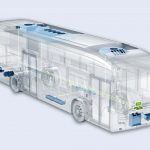 Finite Element Analysis of MTC MAN Bus Hvac
 Installing an RV Air Conditioner on a Minibus
 China Higer Bus Air Conditioner
 Ac Van
 Ac On RV for Minibus Caravan Conversion
 Air Con Unit For Van
 Ac In Camper for Minibus to Motorhome Conversion
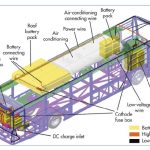 SONACOME SNVI Bus Air Conditioner
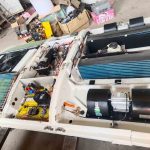 Introduction to Ac For Bus
 Spanish
  English