
Ac For Buses are crucial for travel comfort and passenger health. They consist of multiple components, including a compressor and condenser, each performing a different function.
Their operating principle is based on a cooling or heating cycle and can be categorized by drive method and function.
Furthermore, routine checks and regular maintenance are essential for maintaining the proper functioning of the air conditioning system. This includes checking the control panel, airflow, and temperature before departure, and regularly cleaning components such as the condenser and evaporator.
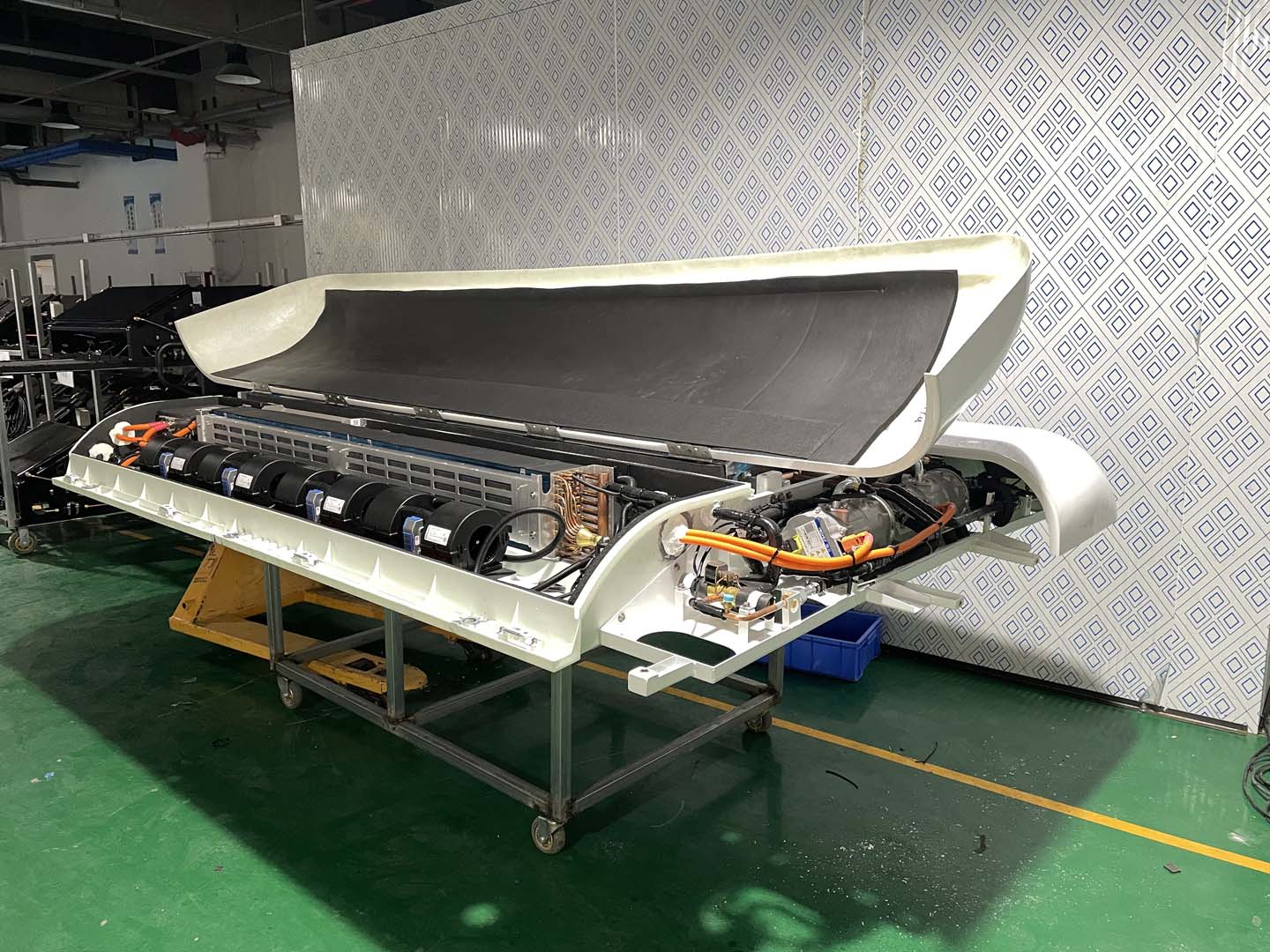
Basic Components of Ac For Buses
(I) Compressor
The compressor is one of the core components of Ac For Buses. Its main function is to compress low-temperature, low-pressure gaseous refrigerant into high-temperature, high-pressure gaseous refrigerant. This process is like injecting energy into the refrigerant, giving it sufficient pressure and heat for subsequent heat exchange. The performance of the compressor directly affects the cooling efficiency of the air conditioning system. If the compressor malfunctions, such as a decrease in compression capacity, the cooling effect of the entire air conditioning system will be significantly reduced. Common compressor types include reciprocating compressors and scroll compressors. Piston compressors have a relatively simple structure and low cost, and may be used in some older tour bus models; while scroll compressors have higher efficiency and lower noise, and are the more commonly used type in modern tour bus air conditioning systems.
(II) Condenser
The condenser is located near the front or side cooling grille of the tour bus. The high-temperature, high-pressure gaseous refrigerant from the compressor enters the condenser, where it dissipates heat through heat exchange with the outside air, thus condensing into a liquid state. The condenser’s heat dissipation effect is crucial for the normal operation of the air conditioning system. If the condenser surface is blocked by dust, debris, etc., its heat dissipation capacity will be affected, preventing the refrigerant from condensing effectively, and consequently affecting the cooling performance of the entire air conditioning system. Therefore, regular cleaning and maintenance of the condenser is one of the necessary measures to ensure the normal operation of the tour bus air conditioning system.
(III) Evaporator
The evaporator is a key component for Ac For Buses to achieve cooling. Liquid refrigerant enters the evaporator after being depressurized by a throttling device, where it rapidly evaporates and absorbs heat from the surrounding air, thereby lowering the air temperature. The evaporator is typically installed in the vehicle’s air ducts, using a fan to blow cool air into the passenger compartment. Factors such as the evaporator’s surface area and duct design affect its cooling efficiency. Severe frost buildup on the evaporator hinders airflow and heat exchange, reducing cooling performance; therefore, regular inspection and maintenance are necessary.
(IV) Expansion Valve (Throttling Device)
The expansion valve in Ac For Buses functions as a throttling and pressure-reducing device. It precisely controls the flow rate of liquid refrigerant, lowering its pressure and temperature before it enters the evaporator. This ensures sufficient evaporation of the refrigerant in the evaporator, achieving optimal cooling performance. Different types of expansion valves operate on different principles. For example, thermostatic expansion valves automatically adjust the refrigerant flow rate based on the evaporator outlet temperature and pressure, while electronic expansion valves offer more precise control based on the air conditioning system’s requirements, making them a more advanced throttling device widely used in high-end tour bus air conditioning systems.
(V) Refrigerant
The refrigerant is the medium for heat transfer in Ac For Buses. Common refrigerants include R134a. Refrigerant circulates among the various components of the air conditioning system, continuously absorbing and releasing heat to achieve cooling or heating functions. Choosing a suitable refrigerant is crucial, considering both its cooling performance and its environmental impact. For example, some early refrigerants have been phased out due to their ozone-depleting effects, while widely used refrigerants like R134a are relatively environmentally friendly. Furthermore, the refrigerant charge must be strictly controlled according to regulations; excessive or insufficient charge will affect the normal operation of the air conditioning system.
(VI) Control System
The control system of the tour bus’s air conditioning system coordinates the operation of various components to meet the temperature requirements inside the passenger compartment. It includes temperature sensors, a control panel, and a controller. The temperature sensor monitors the temperature inside the passenger compartment in real time and feeds the signal back to the controller. The control panel is the interface for the driver or passengers to interact with the air conditioning system, allowing them to set parameters such as temperature, fan speed, and mode. The controller controls components such as the compressor, fan, and expansion valve based on the feedback signals from the temperature sensors and the settings on the control panel. For example, when the temperature inside the vehicle is higher than the set temperature, the controller will start the compressor and adjust the opening of the expansion valve to increase the cooling capacity; when the temperature inside the vehicle approaches or reaches the set temperature, it will adjust the working status of each component accordingly to maintain a stable temperature.
 Spanish
  English