
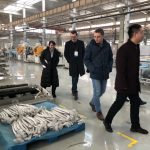
Ac For Buses Factory is a specialized manufacturing hub in the automotive thermal management field, integrating modular production, intelligent testing, and global industry collaboration to address diverse climate conditions, vehicle model requirements, and environmental standards.
Ac For Buses Factory presents a competitive landscape of “international brand technology leadership + Chinese manufacturers’ scale expansion.”
Chinese manufacturers, leveraging their domestic bus manufacturing advantages, are rapidly rising, with SONGZ and BUSCLIMA being typical examples.
SONGZ is headquartered in Shanghai, with production bases in Anhui and Liuzhou.
BUSCLIMA, a core supplier to Yutong Bus, focuses on vertical integration of bus air conditioner. Its factory is equipped with an environmental simulation laboratory capable of replicating extreme climate tests from -40℃ to 60℃, with an annual production capacity exceeding 150,000 units, and its products cover more than 30 countries.
Visit www.busclima.com or contact busclima@kingclima.com
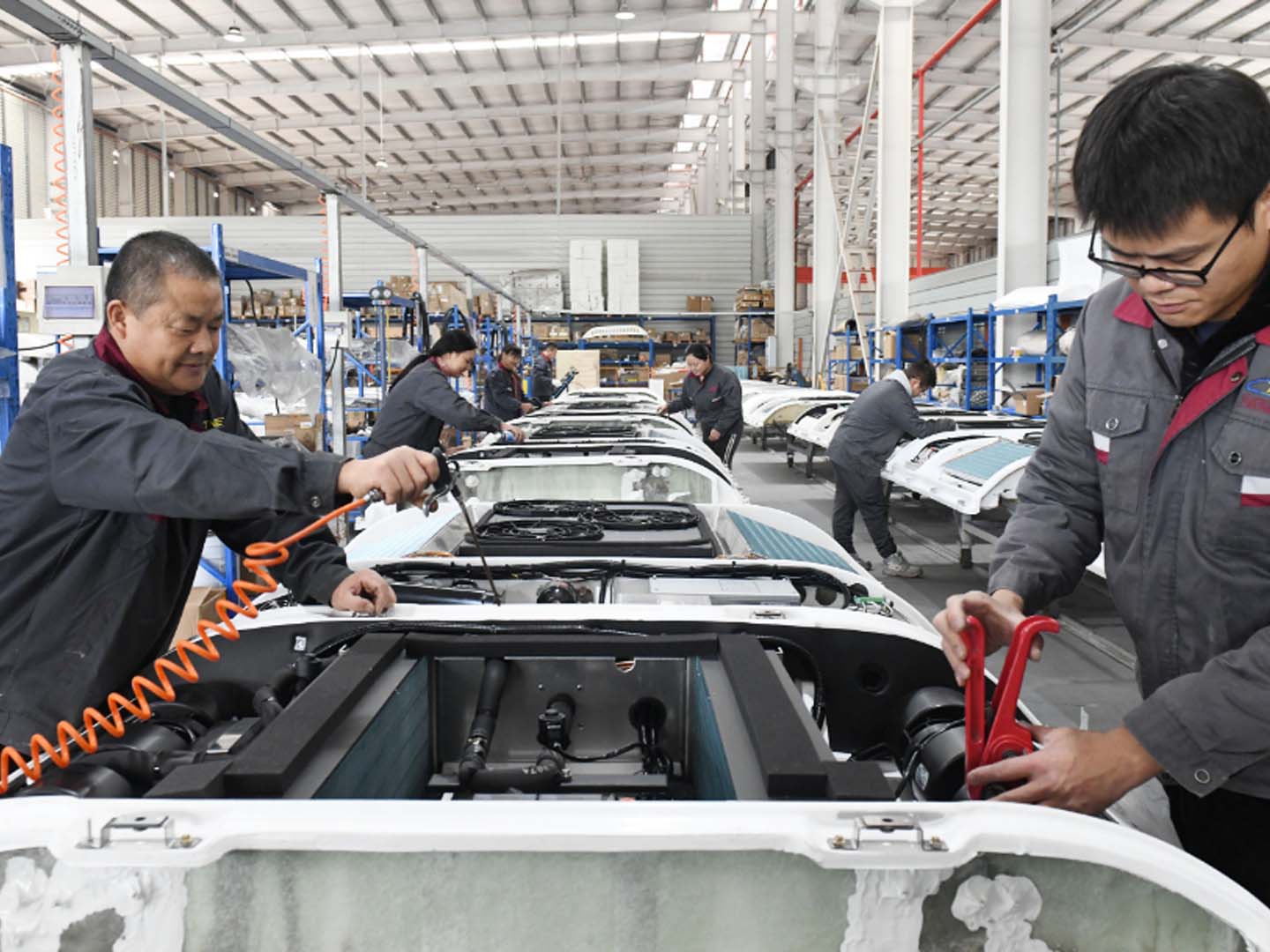
Ac For Buses Factory employs a “five-module pre-installation + final assembly integration” model, breaking down the air conditioning system into:
Refrigeration module (compressor + condenser, such as the Danfoss scroll inverter compressor used by Songzhi, achieving a COP of 3.2@35℃);
Heating module (PTC heater + waste heat exchanger, improving heating efficiency by 40% for electric vehicles);
Purification module (G4 + HEPA two-stage filtration, PM2.5 filtration efficiency of 99.7%);
Electrical control module (dual-core MCU controller, supporting CAN/LIN bus communication);
Shell module (carbon fiber composite material, reducing weight by 15% while increasing strength).
Ac For Buses Factory employs intelligent testing and quality control:
Full Lifecycle Traceability
RFID chips are used to record data throughout the entire process, from component arrival (e.g., R134a refrigerant used in Guangzhou Jingyi Automotive Air Conditioning) to finished product testing.
Environmental Chamber Testing
One unit out of every 100 products is randomly selected and subjected to simulated extreme conditions in a chamber ranging from -30℃ to 55℃ to verify temperature control accuracy (stabilization time within ±1℃ < 3 minutes).
Vibration Fatigue Verification
A six-degree-of-freedom vibration table (ISO 16750-3 standard) is used to simulate bumpy road conditions in the 10-2000Hz frequency band, ensuring an MTBF ≥ 6000 hours.
 Spanish
  English