
Modular Temperature Control Solution for Motorhomes
With the increasing popularity of the RV lifestyle in China, Type A motorhomes, converted from large passenger buses, are becoming a new favorite in the high-end market due to their unparalleled spaciousness and “mobile villa” living experience.
However, transforming such a large space (typically 10-12 meters long, 30-50 square meters) into a consistently comfortable living environment in any climate is a serious technical challenge.
Traditional single, centralized air conditioning systems often fall short in such scenarios, resulting in uneven airflow, high energy consumption, and a high risk of single-point failure.
Therefore, a distributed, modular temperature control solution based on multiple individual air conditioning units is becoming the optimal solution for addressing the challenges of large-space temperature control in motorhomes, thanks to its superior flexibility, reliability, and energy efficiency.
1. Technical Parameter Analysis – AC Unit for Motorhome
Reason: The fundamental contradiction between physical space and complex heat load.
The interior of a motorhome is usually divided into multiple functional compartments, such as the driving area, living area, separate bedroom, and kitchen/bathroom area. The space is long and deep, with high thermal inertia, and due to the large windows and relatively weak insulation (compared to buildings), the heat load inside the vehicle is extremely high and unevenly distributed. A single high-power air conditioner, whether placed at the front or rear of the vehicle, struggles to evenly and effectively distribute cold/hot air to every corner, easily leading to severe temperature stratification – the front being too cold and the rear being stuffy and hot.
Process: In-depth matching and calculation of key performance parameters.
The core of the multi-unit air conditioning solution lies in decomposing the required total cooling/heating capacity, which is then completed collaboratively by multiple independently operating units. The core technical parameters of each unit directly determine the system’s ultimate efficiency.
| Model | E-Clima2200 | E-Clima3000 | E-Clima4000 | E-Clima6000 | E-Clima8000 | E-Clima2600S |
| Voltage (V) |
DC12V/24V | DC12V/24V | DC12V/24V | DC12V/24V | DC12V/24V | DC12V/24V |
| Cooling Capacity (W/BTU) |
2200W//7500 | 3000W/10000BTU | 4000W/15000BTU | 6000W/20472BTU | 8000W/27300BTU | 2600W/78870BTU |
| Installation | Rooftop Mounted | Rooftop Mounted | Rooftop Mounted | Rooftop Mounted | Rooftop Mounted | Split Mounted |
| Evaporator Air Volume (m³/h) |
650 | 700 | 650 | 650 | 1500 | 450 |
| Condenser Air Volume (m³/h) |
1050 | 1400 | 1050 | 1700 | 3600 | 1400 |
| Refrigerant | R134a | R134a | R134a | R134a | R134a | R134a |
| Dimension (mm*mm*mm) |
700*580*263 | 885*710*290 | 700*580*263 | 1580*385*180/ 920*928*250 |
1260*1030*180 | 682*465*192 540*362*165 |
| Weight (KG) |
32 | 35 | 18/47 | 18/47 | 31 |
Result: Formation of a customized, highly redundant temperature control network.
Through parametric design and configuration, the multi-unit air conditioning system transforms from a cumbersome functional component into an intelligent, flexible environmental management network. It not only eliminates temperature dead zones within the space but also provides valuable system redundancy – even if a single unit fails, the remaining units can still ensure comfort in the basic living areas, greatly improving the reliability and safety of long-distance travel.
2. Usage Scenarios and Energy Matching – AC Unit for Motorhome
Reason: The complexity of travel scenarios and energy concerns in mobile living.
Motorhome users might be in the scorching heat of southern China one day and arrive in the cold nights of the northern plateau a few days later; they need to take short breaks at service areas and also desire to stay off-grid in national parks for several days. This dynamic scenario places extreme demands on the environmental adaptability and energy independence of the air conditioning system.

Process: Collaborative design of scenario-based energy systems and air conditioning.
The advanced nature of multiple individual air conditioning units must rely on a powerful, matching energy system, which forms the cornerstone of “scenario-based comfort.”
Coping with extreme climates: For the humid and hot climate of southern China, manufacturers such as Guangdong Junchi have launched models equipped with dual air conditioning systems to enhance dehumidification and cooling capabilities. For extremely cold regions, the air conditioning needs to have efficient heat pump heating functions, combined with an independent diesel heating system, to form a composite temperature control system, ensuring a warm and comfortable interior even at -20℃.
Achieving long-term off-grid living: This is the scenario where the modular solution maximizes its value. Taking the campervan solution showcased by China National Heavy Duty Truck Group as an example, it is equipped with a 12V/600Ah lithium battery, a 3000W inverter, and a 480W solar panel, designed to support air conditioning, refrigerators, and other appliances for several days of energy self-sufficiency. Multiple variable-frequency air conditioners can intelligently adjust power consumption based on the indoor and outdoor temperature difference, prioritizing solar energy use to maximize the limited battery storage, achieving a deep travel experience with “worry-free electricity and water.”
Matching new energy chassis: With the application of extended-range and pure electric chassis in motorhomes, the power consumption logic of the air conditioning needs to be more refined. Multiple individual air conditioning units can be precisely controlled, working efficiently when the vehicle is charging, and automatically switching to energy-saving mode or zoned operation when the battery level is critical, becoming part of the vehicle’s intelligent energy management system.
Result: A leap from “functional satisfaction” to “experiential freedom.”
When distributed air conditioning units and intelligent energy systems are deeply integrated, motorhomes truly break free from their dependence on fixed campsites and grid power. Users gain the freedom to independently create a comfortable and fresh “mobile home” anytime, anywhere, greatly expanding the geographical and psychological boundaries of travel.
3. Product Systemic Advantages – AC Unit for Motorhome
Reason: Limitations of single-unit performance and users’ pursuit of a comprehensive experience.
Users ultimately purchase not just the air conditioner itself, but a complete living experience comprised of temperature, air quality, quietness, and reliability. The multi-unit air conditioning solution, through system-level design, addresses several inherent pain points of traditional solutions.
Process: Building multi-layered, perceptible composite advantages.
Uniform Comfort and Personalized Experience: Distributed airflow ensures temperature uniformity from the front to the back of the vehicle, with temperature differences controlled within ±1.5℃. Simultaneously, passengers in different areas can set temperatures as needed without interference, meeting the differentiated needs of elderly people, children, and adults in the family.
Extreme Energy Efficiency and Extended Battery Life: Full DC inverter technology is the core of energy saving. Each compressor can adjust its speed steplessly according to the real-time load of the corresponding area, always operating at the highest efficiency point, avoiding the significant power waste of traditional fixed-frequency air conditioners’ frequent starts and stops. Industry-leading companies like KME, leveraging their mature inverter technology exported to Japan and Germany, enable their products to achieve a coefficient of performance (COP) far exceeding the industry average, directly translating into longer battery life.
Superior Quietness and High System Reliability: Inverter technology itself leads to lower operating noise, and the distributed operation of multiple small-to-medium power units means the noise sources are also dispersed, avoiding the roar of a single large-power compressor starting up. More importantly, the modular design provides natural redundancy and backup. As KME emphasized when participating in the development of RV air conditioning industry standards, system reliability and safety are the lifeline of high-end products. The multi-unit architecture means there are no single points of failure, and the overall system reliability is exponentially improved.
Result: Shaping the core value proposition of high-end motorhomes.
This solution transforms air conditioning from a hidden “cost center” into a “value center” that showcases the high-end quality of the vehicle. It represents the manufacturer’s insight into users’ deep needs and their ability to deliver on those needs through technology, and is one of the key configurations that differentiate Type A motorhomes from ordinary models and enable product premium pricing.
4. Target Customer Group and Decision Drivers – AC Unit for Motorhome
Reason: The value logic and identity behind the high investment.
Motorhomes equipped with a complete multi-unit air conditioning and energy system have a considerable price tag. Their target customers are not price-sensitive users, but rather a niche group with an ultimate pursuit of quality of life.
Process: Clear customer profiling and value proposition mapping.
High-end long-term travel families and global travelers: They are the core users, viewing RVs as a “mobile home.” They are willing to invest in the core value of “ensuring the comfort and health of the whole family in any extreme weather.” System-wide all-weather adaptability, off-grid survival capabilities, and quiet operation are their primary considerations.
Elite business reception and special industry users: Used in scenarios such as high-end mobile meeting rooms, actor rest vehicles for film and television production, and field engineering command vehicles. For them, a stable, quiet, and independently controllable interior environment is a necessity, directly related to work efficiency, business image, or project success. The system’s reliability and the technological sophistication it demonstrates are a reflection of their professionalism.
Forward-thinking technology enthusiasts and modification hobbyists: This group of customers is keen on the latest RV technologies, such as range-extended electric chassis, 48V electrical systems, and smart home integration. Modular, expandable, and smart-connected multi-unit air conditioning systems perfectly match their enjoyment of hands-on upgrades and exploring the boundaries of technology.
Result: A business transformation from “selling equipment” to “providing solutions.”
For RV manufacturers and modification plants, promoting multi-unit single-unit air conditioning solutions means shifting from providing standardized products to providing customized scenario solutions for users. This requires salespeople to not only understand product parameters but also to understand users’ travel dreams and living scenarios, using systematic value propositions (such as off-grid days calculation and comfort comparisons) to win the recognition of high-end customers.
Towards a Smart and Green Future – AC Unit For Motorhome
Looking ahead, multi-unit single-unit air conditioning systems for motorhomes will be deeply integrated with the overall trend of vehicle intelligence and greening. The system will be able to predict future weather based on GPS navigation and automatically pre-adjust the temperature, achieving dynamic energy optimization and distribution through linkage with the battery management system (BMS) and solar controller. At the policy level, the emphasis on green manufacturing and intelligent manufacturing in policies such as “Made in China 2025 Anhui Chapter” and various “15th Five-Year Plans” will also drive the RV air conditioning industry towards higher energy efficiency, more environmentally friendly refrigerants, and deeper intelligent connectivity. Ultimately, the multiple individual air conditioning solutions represent not only an advanced temperature control technology, but also a new philosophy of travel and living centered on freedom, comfort, and sustainability. It is quietly reshaping the design standards of large RVs, making every journey an unlimited exploration of the perfect living experience.
Related posts:
 Air Conditioning Units For Motorhomes
 12V Camper Air Conditioner used in medicalmobile
 Camper Aircon Unit – Modular Design Leads to a New Comfortable Travel
 15000 BTU Camper AC Multiple units
 12 Volt RV Air Conditioning Units represent an energy and technological revolution
 Technical White Paper on Multi-Unit Roof AC for Campers and Buses
 12 Volt Camper Ac
 15000 Btu Air Conditioner Rv
 Air Conditioning for Motorhomes Manufacturing Process
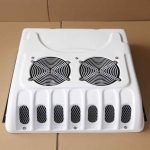 Air Conditioning Units for RV and Minibus Air Conditioner
 Air Conditioning Units for Campers Installation Process
 Similarities between RV Camper Air Conditioner and Minibus AC
 Ac For RV Camper Market Analysis Report
 15000 Btu Camper Air Conditioner
 Camper Air Conditioner
 Camper Ac
 Bus Air Conditioner is used for buses and medium-sized commercial vehicles
 Motorhome Rooftop Air Conditioners
 Spanish
  English