
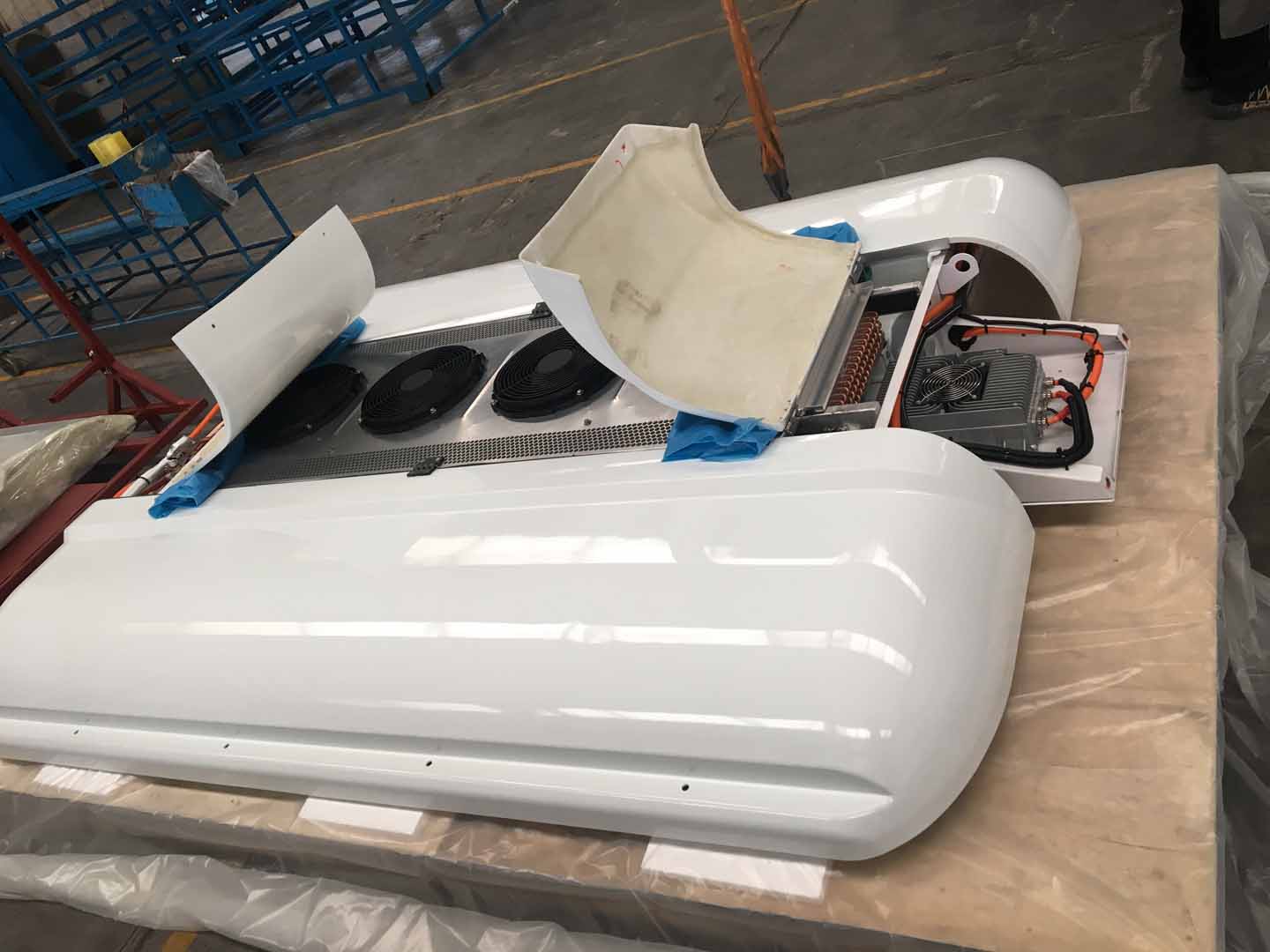
Air Conditioner for Bus Conversion is a non-original equipment manufacturer (OEM) integration, and its decision-making, implementation, and acceptance involve more complex engineering matching, regulatory compliance, and economic trade-offs. This report follows a “problem-evidence-conclusion” logic, constructing targeted independent analysis modules.
Content Module 1: Regulatory Compliance and Primary Constraints on Vehicle Safety for Air Conditioner for Bus Conversion
Problem:
What strict national mandatory regulations and vehicle safety certification constraints are involved in adding a roof-mounted air conditioner to an existing bus? What are the potential risks and legal consequences of non-compliant modifications?
Evidence:
According to the “Implementation Rules for Compulsory Product Certification (CCC) of Motor Vehicles – Guidelines for Changes and Extensions” issued by the State Administration for Market Regulation (CNCA) in 2025, any major modifications involving vehicle structure or electrical systems, if not declared and recertified, will result in the invalidation of the vehicle’s CCC certificate, and the vehicle will fail the annual inspection and be prohibited from operation. The guidelines clearly state that adding a roof-mounted air conditioner falls under the category of “changing the vehicle’s external structure and affecting driving safety.” At a safety conference that same year, the Traffic Management Bureau of the Ministry of Public Security reported several accident cases where unauthorized installation of high-power air conditioners led to vehicle electrical overload and fires, or structural hazards caused by roof frame corrosion. Experts at the conference emphasized: “Modification must be carried out by qualified institutions, and a test report conforming to the ‘Technical Conditions for Safe Operation of Motor Vehicles’ (GB 7258) must be issued. In particular, the lateral stability, roof strength, and electrical load safety margin of the modified vehicle must be verified.”
Conclusion: Regulatory compliance is a red line that cannot be crossed when modifying roof-mounted bus air conditioner. Any modification scheme must be based on the absolute premise of not damaging the original vehicle’s structural safety, not exceeding the original vehicle’s electrical design load, and obtaining certification from an authoritative institution. Modifications that prioritize performance while ignoring regulations will bring enormous safety and legal risks.
Content Module 2: Air Conditioner For Bus Conversion – Vehicle Model Adaptation, Climate Matching, and Precise Performance Recalibration
Question:
How to select and calibrate a roof-mounted air conditioning system that is compatible with the specifications for buses of different models, ages, and operating in different local climates to avoid “underpowered” or “overkill” systems?
Evidence:
In 2025, the China Automotive Maintenance and Repair Trade Association spearheaded the development of the “Technical Specifications for Air Conditioning Installation in In-Use Passenger Vehicles” (group standard). The specifications require three key assessments before modification: 1) Vehicle file assessment: Retrieve original vehicle technical drawings to confirm the load-bearing capacity and spatial dimensions of the roof structure; 2) Regional climate assessment: Calculate the required additional cooling/heating load based on historical meteorological data from the vehicle’s usual operating location (e.g., Guangzhou with high temperature and humidity, Xinjiang with dry and hot conditions); 3) Usage scenario assessment**: Determine whether the vehicle is used for intercity high-speed passenger transport (requiring continuous stability), urban public transport (requiring rapid cooling), or tourist charter buses (requiring low noise). Liu Bo, the main drafter of the specifications and a senior engineer, pointed out: “Moving air conditioning into buses in Harbin and into tourist buses in Hainan are two completely different solutions. The former needs to focus on defrosting capability and low-temperature start-up, while the latter needs to enhance cooling capacity and corrosion resistance. We must abandon the ‘one-size-fits-all’ mentality and implement precise matching of ‘one policy per vehicle.'”
Conclusion: Successful modification begins with accurate compatibility diagnosis. The selection and parameter settings of roof-mounted air conditioners must be a product of the convergence of the vehicle’s physical conditions, the climate characteristics of the operating location, and the needs of the usage scenario. Its core objective is to restore or enhance the vehicle’s environmental regulation capabilities under specific conditions, rather than blindly pursuing maximum power.
Content Module 3: Air Conditioner For Bus Conversion – Life Cycle Cost Model and Customer Decision-Driven Approach
Question:
For institutional clients facing low-cost solutions for upgrading the air conditioning systems of aging vehicles or adding new capacity, how should the economics of retrofitting roof-mounted air conditioners be assessed? What are the driving forces behind their decision-making?
Evidence:
Deloitte’s 2025 white paper, “Efficiency Improvement and Cost Optimization in China’s Passenger Transport Industry,” established a detailed “Economic Model for Retrofitting Air Conditioning Systems in Aged Buses.” The model shows that for buses aged 5-8 years with severely degraded original air conditioning efficiency but good chassis condition, the total investment (including equipment, retrofitting, and certification) for installing a new roof-mounted air conditioner is approximately 15%-25% of purchasing a new vehicle with equivalent capacity. The investment recovery period is typically achieved through “fuel/electricity savings” (higher energy efficiency of newer vehicles), “reduced downtime losses,” and “opportunities to increase ticket prices or occupancy rates” (improved comfort), ideally recovering costs within 2-3 years. The white paper interviewed several tourism company executives, who generally stated: “Phased air conditioning retrofitting of the fleet during the off-season is an effective way to balance capital expenditure and service quality. We value its ability to quickly improve the consistency of service levels across the entire fleet with lower cash flow pressure.”
Conclusion: The core value proposition of rooftop air conditioning retrofitting is “achieving a leapfrog upgrade in the environmental conditioning capabilities of the transport unit with an investment significantly lower than the vehicle replacement cost.” It primarily attracts institutional clients who value asset utilization, seek incremental improvements, and are sensitive to cash flow. Its economic advantages are particularly pronounced when the remaining vehicle life is long.
Content Module 4:Air Conditioner For Bus Conversion – The Extreme Importance and Quality Pitfalls of Installation Process
Question:
In rooftop air conditioning retrofitting, how can the installation process be elevated from an “auxiliary link” to a “core link” determining the long-term reliability, safety, and energy efficiency of the system? What are some common quality pitfalls?
Evidence:
A 2025 survey by *Commercial Vehicle* magazine on the quality of aftermarket air conditioning installations revealed a stark reality: over 60% of early failures (such as refrigerant leaks, abnormal noises, water leaks, and electrical faults) stemmed directly from improper installation processes, rather than the equipment itself. The survey report detailed key process control points: 1) Roof openings and sealing: Professional molds and waterproof adhesive must be used to ensure a lifetime leak-proof performance; 2) Structural reinforcement: Embedded parts or reinforcing beams must be installed within the roof frame to prevent fatigue cracking due to long-term vibration; 3) Piping and wiring: These must be isolated from the original vehicle wiring harness, oil lines, and brake lines, and secured with vibration-resistant materials to prevent wear. A featured commentator for the magazine, a modification technician with twenty years of experience, emphasized: “Modifying a rooftop air conditioner is 30% about the equipment and 70% about the installation. A qualified modification shop must have structural engineers, electricians, and refrigeration technicians working together, and must implement sealing and vibration resistance testing procedures that are more stringent than the original factory standards. Many low-price competitions in the market are essentially cutting corners on these unseen processes.”
Conclusion: The success or failure of a rooftop air conditioner modification highly depends, even decisively, on the professionalism and standardization of the installation process. Customers must place the “installation service provider’s qualifications and workmanship standards” on an equal or even higher level of evaluation than the “equipment brand.” Choosing a “guerrilla” service lacking technical expertise will inevitably lead to continuous repairs, poor performance, and even safety hazards.
Content Module 5: Air Conditioner For Bus Conversion – The Possibility of Intelligent Integration and Future Functional Expansion
Question:
In aftermarket modifications, can the next generation of intelligent rooftop air conditioners be integrated with the limited information systems of the original vehicle and expand into value-added functions such as health management and remote control?
Evidence:
At the “Aftermarket Technology Innovation Forum” of the 2025 Shanghai International Bus Exhibition, a leading supplier showcased an “Intelligent Rooftop Air Conditioning Integrated Solution” suitable for the aftermarket. This solution, through the addition of an independent IoT gateway and in-vehicle sensor network, enables: 1) limited but secure data reading from the original vehicle’s CAN bus (e.g., vehicle speed, engine status) to optimize air conditioning operation; 2) independent operation of an intelligent environmental control system, allowing fleet managers to remotely monitor and pre-set in-vehicle temperature and air quality via a mobile app; and 3) the addition of health modules such as plasma purification and PM2.5 filtration. Forum technical experts pointed out: “Although aftermarket systems cannot be as deeply integrated into the vehicle’s electronic architecture as original equipment, the independent intelligent control unit still brings significant improvements in experience and management. This provides a shortcut for older vehicles to quickly connect to a ‘smart fleet’ management system.”
Conclusion: Modern rooftop air conditioning aftermarket modifications have transcended simple heating and cooling, possessing the potential for functional leaps through the addition of intelligent modules. While the depth of integration is limited by the original vehicle platform, independent intelligent solutions can still effectively improve the passenger experience and fleet management efficiency, becoming a significant added value that attracts customers to choose high-end modification solutions.
Overall Conclusion: The rooftop air conditioning system for bus modifications is a specialized field existing at the intersection of regulations, technology, economics, and practice. Decisions must begin with a deep respect for regulatory compliance and overall vehicle safety, and a precise diagnosis of the vehicle, climate, and operating environment to determine the technical solution. For customers, the core value lies in achieving capacity upgrades with optimized total lifecycle costs. However, the foundation for realizing all this value is a highly skilled and professional installation process, a watershed between reliable modifications and safety hazards. Finally, intelligent integration capabilities give modification solutions future-oriented scalability. Therefore, a successful modification project is the result of collaboration between regulatory consultants, vehicle engineers, climate experts, project managers, and senior technicians. The deliverable is not just a well-functioning air conditioner, but a safe, compliant, economical, and sustainable vehicle asset upgrade solution.
Related posts:
 Aircon For Van
 Acc Bus Air Conditioning
 Van Ac Unit
 Bus Air Conditioner is used for buses and medium-sized commercial vehicles
 Ac Van
 Ac For Van
 Van Air Conditioner
 Aircon Van Comprehensive Analysis Report
 Air Con Van Installation Process Comprehensive Analysis Report
 Bus Cond System Comprehensive Analysis Report
 Air Con Unit For Van
 Ac For Skoolie Comprehensive Analysis Report
 Spanish
  English