
Air Conditioning Unit Motorhome: An Integrated Thermal Management Solution for Green and Efficient Operation Against the backdrop of the global transportation industry’s accelerated transformation towards electrification and intelligentization, buses, as the core carriers of public transportation, are receiving increasing attention for their comfort and energy consumption performance. Onboard air conditioning systems, especially multi-unit air conditioners designed for large spaces, have evolved from simple comfort devices into key systems affecting vehicle range, operating costs, and passenger experience. According to research by the International Council on Clean Transportation (ICCT), decarbonizing automotive air conditioning systems is a crucial aspect of emission reduction in the transportation sector, and electric bus air conditioning systems employing advanced technologies have enormous potential. This report will systematically analyze the development logic and market prospects of modern multi-unit air conditioning systems for buses from four dimensions: technical parameters, usage scenarios, product advantages, and target customers.
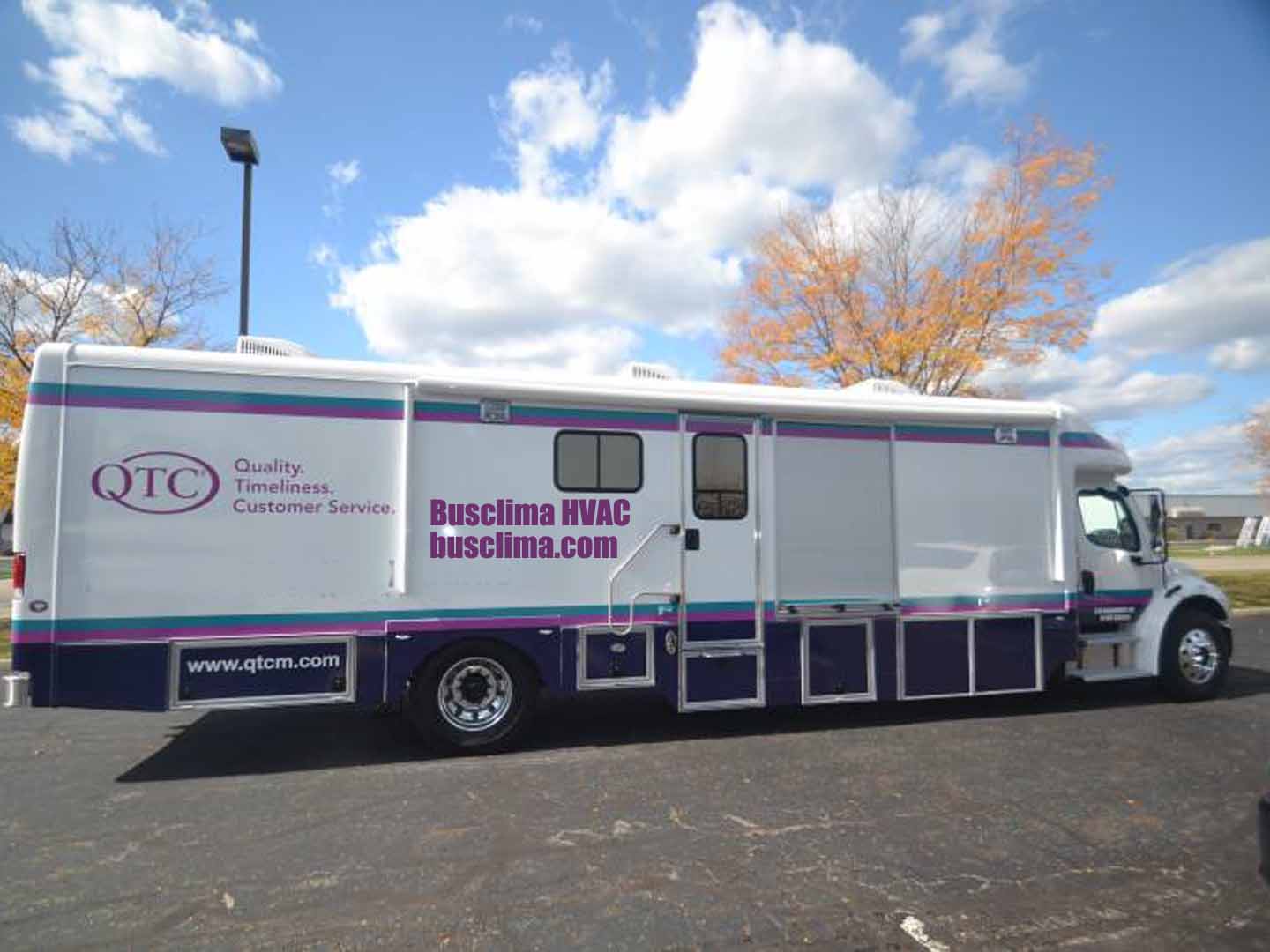
I. Technical Parameter Analysis: Air Conditioning Unit Motorhome
Reason: Bottlenecks of Single Systems and New Demands of Electrification Traditional large buses often use single, high-power rooftop air conditioners, which suffer from high energy consumption, uneven cooling/heating, and a wide impact from malfunctions. With the popularization of new energy vehicles, air conditioning has become the largest energy-consuming unit besides the drive system, and its efficiency directly affects vehicle range. Meanwhile, intelligent cockpits place higher demands on zoned temperature control and air purification.
The evolution of modern solutions involves modularization, parallel multi-unit configurations, and high-voltage platform adaptation. The core of modern solutions lies in modular multi-unit design and voltage platform upgrades:
Modularization and parallel multi-unit configurations: The total cooling capacity requirement is broken down into multiple independent cooling modules (e.g., 2-4) arranged in a distributed manner. This not only enables front and rear zoned or more refined temperature control but also improves system redundancy—a single module failure does not affect overall operation. For example, Songzhi Co., Ltd., through its acquisition of a stake in Xiamen King Long Automotive Air Conditioning Co., Ltd., is strengthening its modular supporting capabilities in the thermal management field of large and medium-sized buses.
Voltage platform evolution: Traditional 12V low-voltage systems are no longer sufficient to meet the needs of high-power electrical appliances (such as air conditioning compressors and PTC heaters), as excessive current leads to thick wiring harnesses and high losses. The industry is rapidly evolving towards 48V and even higher voltage platforms. 48V systems can provide the same or even greater power with less current, improving energy efficiency and supporting advanced functions such as electric compressors and intelligent temperature control valves. A 2024 industry report by Molex indicated that 48V systems enable more sensitive air conditioning control and more precise thermal management. In pure electric buses, the air conditioning system needs to efficiently interface with a 400V/800V high-voltage platform, posing challenges to DC-DC converters and heat pump integration technologies.
Result: Achieving High Energy Efficiency, High Reliability, and Intelligence
Through the aforementioned technological path, the new generation of bus air conditioning has achieved a performance leap: a significantly improved Comprehensive Energy Efficiency Ratio (COP); deep integration with the vehicle’s intelligent network system via CAN/FD or Ethernet communication, enabling remote pre-cooling/pre-heating, energy consumption management, and predictive maintenance; air quality management has also become standard, such as integrated HEPA filters and negative ion generators.
II. Focus on Usage Scenarios: Matching Diverse Operational Needs
Reason: The Complexity and Refinement of Operational Scenarios
The operational scenarios for buses vary greatly, from the frequent starts and stops and peak-hour congestion of urban public transport, to the continuous operation of long-distance passenger transport and crossing temperature ranges, to the comfort-first approach of tourist charter buses, all requiring different air conditioning solutions.
Process: Scenario-Based Customization and Intelligent Response
High-Frequency Public Transportation Scenarios: Emphasis on rapid cooling and high reliability. Multiple air conditioning units can be independently controlled by zones, with partial operation during off-peak hours to save energy; combined with passenger flow monitoring, load matching is achieved.
Long-Distance Passenger Transport and Tourist Buses: Emphasis on comfort and quietness throughout the journey. Multi-zone independent temperature control meets the needs of passengers in different locations; combined with active noise cancellation technology, the experience is enhanced. Software-defined chassis active noise cancellation functions launched by suppliers such as ZF provide new ideas for improving in-vehicle quietness.
Operation in Extreme Climate Regions: In cold regions, heat pump technology and waste heat recovery systems (for hybrid/gasoline vehicles) are crucial; in hot regions, high-efficiency compressors and thermal insulation materials are standard. ICCT research indicates that in cold cities such as Harbin, the emission reduction potential of advanced air conditioning systems is particularly significant.
Results: From General-Purpose Equipment to Scenario-Based Solutions
Air conditioning systems are no longer standard configurations, but rather deeply customized scenario-based thermal management solutions based on operating routes, regional climates, and vehicle models (such as low-floor buses and double-decker sightseeing buses), directly serving operational efficiency and brand differentiation.
III. Product Advantage Analysis: Creating Full Lifecycle Value
Reasons: Shift from Cost Center to Value Center
Fleet operators’ focus has shifted from initial purchase costs to the indirect benefits brought by total cost of ownership (TCO) and passenger satisfaction.
Process: Building a Multi-Level Value System
Energy Saving and Economy: The 48V high-voltage platform and high-efficiency heat pump technology can reduce air conditioning energy consumption by up to 30%, which translates to a significant increase in driving range for electric buses. Modular design reduces maintenance costs and downtime.
Reliability and Comfort: Multiple parallel redundant designs greatly improve uptime. Zoned temperature control, rapid cooling/heating, and a quiet cabin collectively define a high-quality travel experience.
Intelligence and Connectivity: As part of intelligent connected vehicles, the air conditioning system enables geofencing-based automatic adjustment, thermal management in collaboration with the battery management system (battery preheating in winter/cooling in summer), and remote fault diagnosis.
Result: Achieving Dual Improvement in Operational Efficiency and Experience
Ultimately, advanced multi-unit air conditioning systems transform themselves from a “cost burden” into a value-creating unit that helps operators optimize TCO and enhance service competitiveness by reducing energy consumption, minimizing malfunctions, and improving satisfaction.
Related posts:
 Air Conditioning Units for Motorhomes: A Distributed Temperature Control System
 Bus Air Conditioner is used for buses and medium-sized commercial vehicles
 12 Volt RV Air Conditioning Units represent an energy and technological revolution
 12V Rv Air Conditioning Units
 Technical White Paper on Multi-Unit Roof AC for Campers and Buses
 Motorhome Aircon 12V
 4 sets of Rooftop AC Units for Campers for a 15m bus
 12 Volt Dc Rv Air Conditioner
 Acc Bus Air Conditioning
 Modular Temperature Control Solution for Motorhomes
 Aircon Units For Motorhomes
 Camper Aircon Unit – Modular Design Leads to a New Comfortable Travel
 Camper Rooftop Air Conditioning Units
 Motorhome Roof Air Conditioner
 Motorhome Ac Unit
 12 Volt Rv Air Conditioner
 RV Rooftop Air Conditioning Units, 2 stes, Golden Partner for Minibus RV
 Best Rv Ac
 Spanish
  English