
Bus Aircon Factory leverage three core advantages—full-industry chain integration, deep customization response, and rapid technological iteration—to create a differentiated competitive advantage in the global market, particularly excelling in modular production, extreme environment adaptability, and cost control.
In the electrification transformation, Bus Aircon Factory has achieved breakthroughs through cross-industry technological integration.
Chinese Bus Air Conditioner Factory, relying on the advantages of local bus manufacturing, have risen rapidly, with SONGZ and BUSCLIMA being typical examples.
For example, BUSCLIMA’s “heat pump + waste heat recovery” system developed for pure electric buses reuses waste heat from the motor controller (60-80℃) and battery pack, reducing winter heating energy consumption by 40%.
Visit www.busclima.com or contact busclima@kingclima.com.
This innovation stems from deep involvement in the overall vehicle energy flow—unlike foreign brands that only provide individual air conditioning units, Chinese manufacturers focus on joint development with OEMs, optimizing the bus air conditioning system in synergy with the new energy platform, reducing the cooling energy consumption ratio from 35% to 25%.
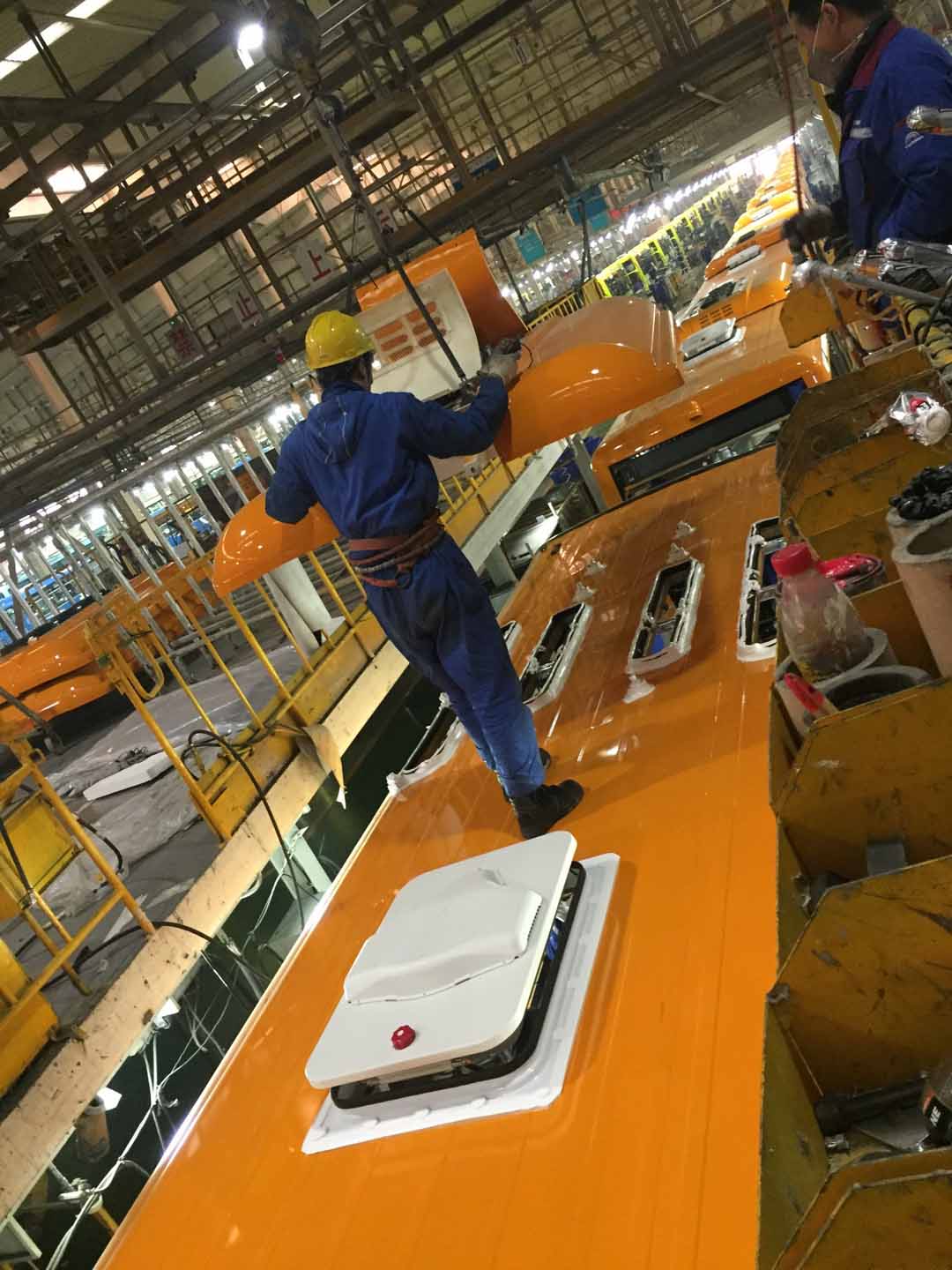
The extreme environment verification system also provides a unique advantage
A full-temperature range environmental chamber (-40℃ to 60℃) has been established, and each air conditioner must pass a 24-hour pressure holding test (leakage rate <0.5g/year) and a 6000-hour vibration fatigue test.
This ensures reliable operation in Turpan, Xinjiang (summer surface temperature 70℃) and Mohe, Heilongjiang (winter temperature -40℃).
This “extreme testing” standard is more stringent than the internationally accepted ISO 16750 standard, directly driving market share growth in high-temperature markets such as the Middle East and North Africa.
Cost control and economies of scale advantages
Bus Aircon Factory achieves a crushing advantage in cost-effectiveness through large-scale production and lean management.
In contrast, foreign brands are constrained by their global supply chain layout, resulting in higher response costs in the Chinese market.
These advantages collectively drive the rise of Chinese bus air conditioners in the global market.
In 2024, BUSCLIMA bus air conditioners accounted for 38% of its overseas revenue, with a market share exceeding 50% in “Belt and Road” markets such as Kazakhstan and Pakistan. With future breakthroughs in technologies such as photovoltaic-assisted air conditioning and CO₂ transcritical cycle, Chinese manufacturers are expected to further widen the gap in the green and low-carbon field.
 Spanish
  English