
Bus Con Manufacturers is far more than simple assembly workshops; they are high-tech industrial bases integrating mechanical engineering, thermodynamics, fluid mechanics, and intelligent control technologies.
Their mission is to manufacture mobile air conditioning systems that can operate stably in various harsh environments and provide a uniform and comfortable climate for dozens of passengers.
SONGZ and BUSCLIMA are typical representatives of Chinese Bus Con Manufacturers. Visit www.busclima.com or contact busclima@kingclima.com
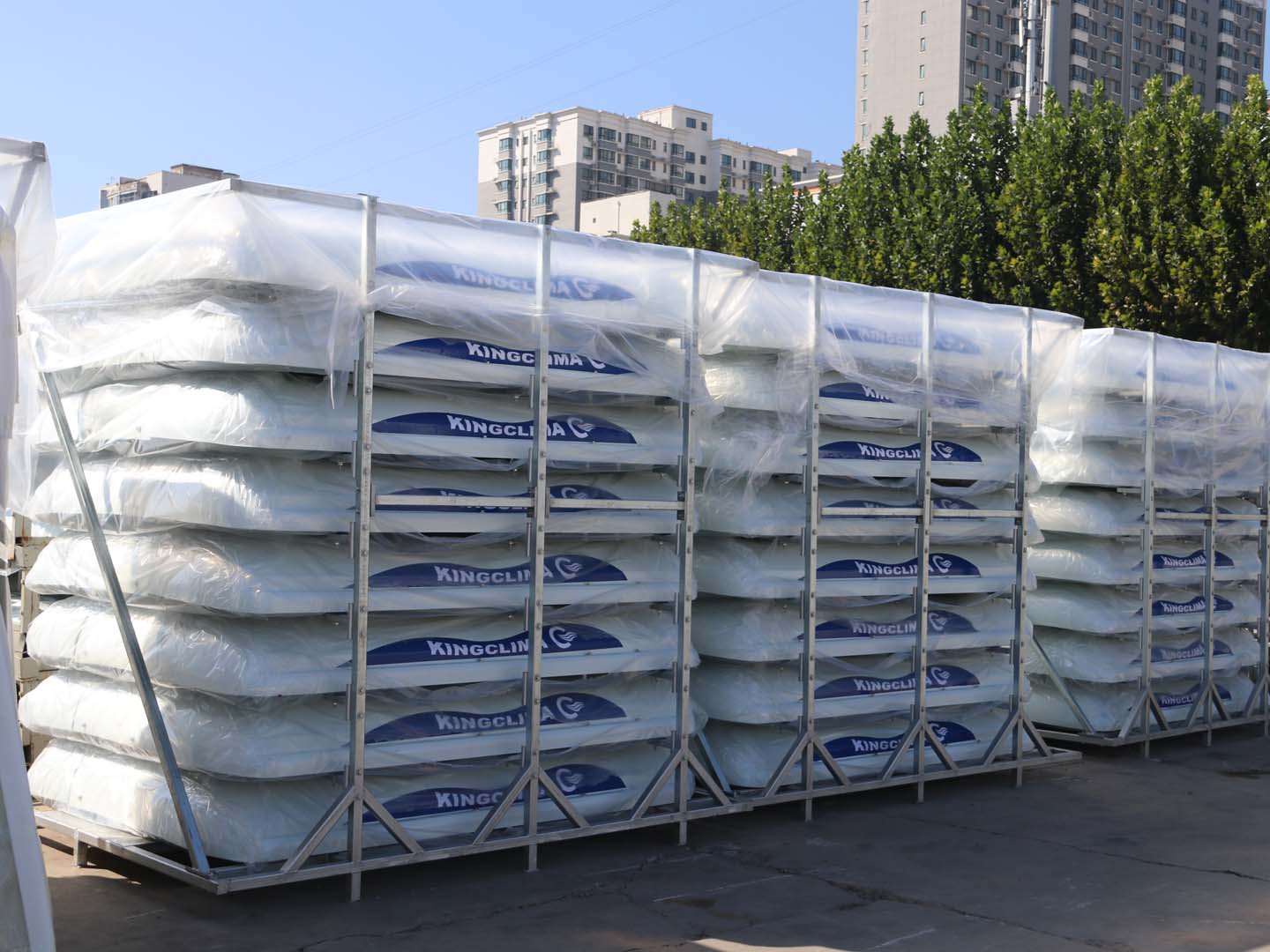
A modern Bus Con Manufacturer typically consists of the following core departments
1. Research and Design Center
This is the “brain” of the factory. Engineers use CAD/CAE software for system design, simulation analysis, and performance optimization.
Based on bus volume, passenger density, glass area, and regional climate, the required cooling/heating capacity is determined.
Lightweight and compact shell and internal structures are designed, balancing strength and space utilization.
Computational fluid dynamics is used to simulate airflow in the ducts to ensure uniform temperature within the cabin, eliminating dead zones.
Intelligent control logic is developed to achieve multi-temperature zone control, remote diagnostics, energy management, and other functions.
2. Production Workshops
The heat exchanger workshop manufactures the evaporator and condenser cores.
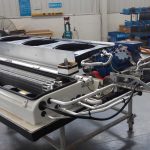
The sheet metal and injection molding workshop produces the air conditioner’s casing, ductwork, and grilles.
The final assembly line workshop assembles the various components together.
3. Quality Inspection and Testing Center
The entire Bus Con system is evacuated and filled with helium, and extremely small leaks are detected using a mass spectrometer in a sealed chamber.
The cooling capacity, heating capacity, airflow, and energy efficiency ratio of the air conditioner are tested in simulated environments.
The air conditioner undergoes rigorous “ice and fire” testing. Its extreme performance is tested in high-temperature, high-humidity chambers (e.g., 45°C, 90% humidity) and low-temperature cold-start chambers (e.g., -30°C).
The mechanical fatigue strength of all welds, connections, and pipes is tested, simulating the long-term bumpy ride of a bus on rough roads.
Related posts:
 Bus Air Con Manufacturer
 Bus Air Conditioning Maintenance
 Bus Aircon Manufacturer
 Bus Air Conditioner Manufacturer
 Ac For Bus Manufacturer
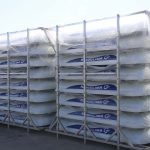 Bus Air Conditioning Manufacturer
 How does Ac For Buses Manufacture adapt to high-altitude environments?
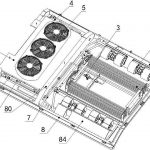 Bus Air Conditioner is used for buses and medium-sized commercial vehicles
 Spanish
  English