
Bus conversion air conditioning involves complex decisions regarding vehicle safety, regulations, technology, and economics. Modifications must be carried out prudently within a multi-dimensional constraint framework. This report follows a “problem-evidence-conclusion” logic, constructing an independent and searchable professional analysis module.
Content Module 1: Regulatory Compliance of Bus Conversion Air Conditioning: The Legal Boundaries of Modifications
Problem:
As commercial passenger vehicles, what mandatory regulations and certification requirements must be met when modifying the air conditioning system of a bus? What legal and technical risks will illegal modifications face?
Evidence:
According to the latest revised “Regulations on the Technical Management of Road Transport Vehicles” issued by the Ministry of Transport in 2025, any modification to a commercial passenger vehicle that affects vehicle safety performance or major technical parameters must be inspected and approved by a qualified vehicle comprehensive performance testing agency and reported to the transportation authority to update the vehicle technical file of the “Road Transport Permit”. The Traffic Management Bureau of the Ministry of Public Security further clarified in the “Guiding Opinions on Motor Vehicle Safety Technical Inspection Business” issued in the same year that unauthorized installation of high-power air conditioners that causes changes in vehicle curb weight, external dimensions, or electrical load exceeding the original design will result in failure to pass the annual inspection. Professor Li Jian, a member of the Expert Committee of the China Road Transport Association, pointed out: “For buses, especially new energy buses, air conditioning modifications without rigorous calculation and certification may disrupt the original vehicle’s energy management logic and high-voltage safety protection, posing risks far exceeding those of ordinary vehicles and potentially leading to insurance claim denials.”
Conclusion: Regulatory compliance is an absolute prerequisite for air conditioning modifications. A successful modification project begins with a legal and documented technical file change process. Any “naked modification” that circumvents regulations will expose the vehicle to downtime, penalties, and significant safety liability risks.
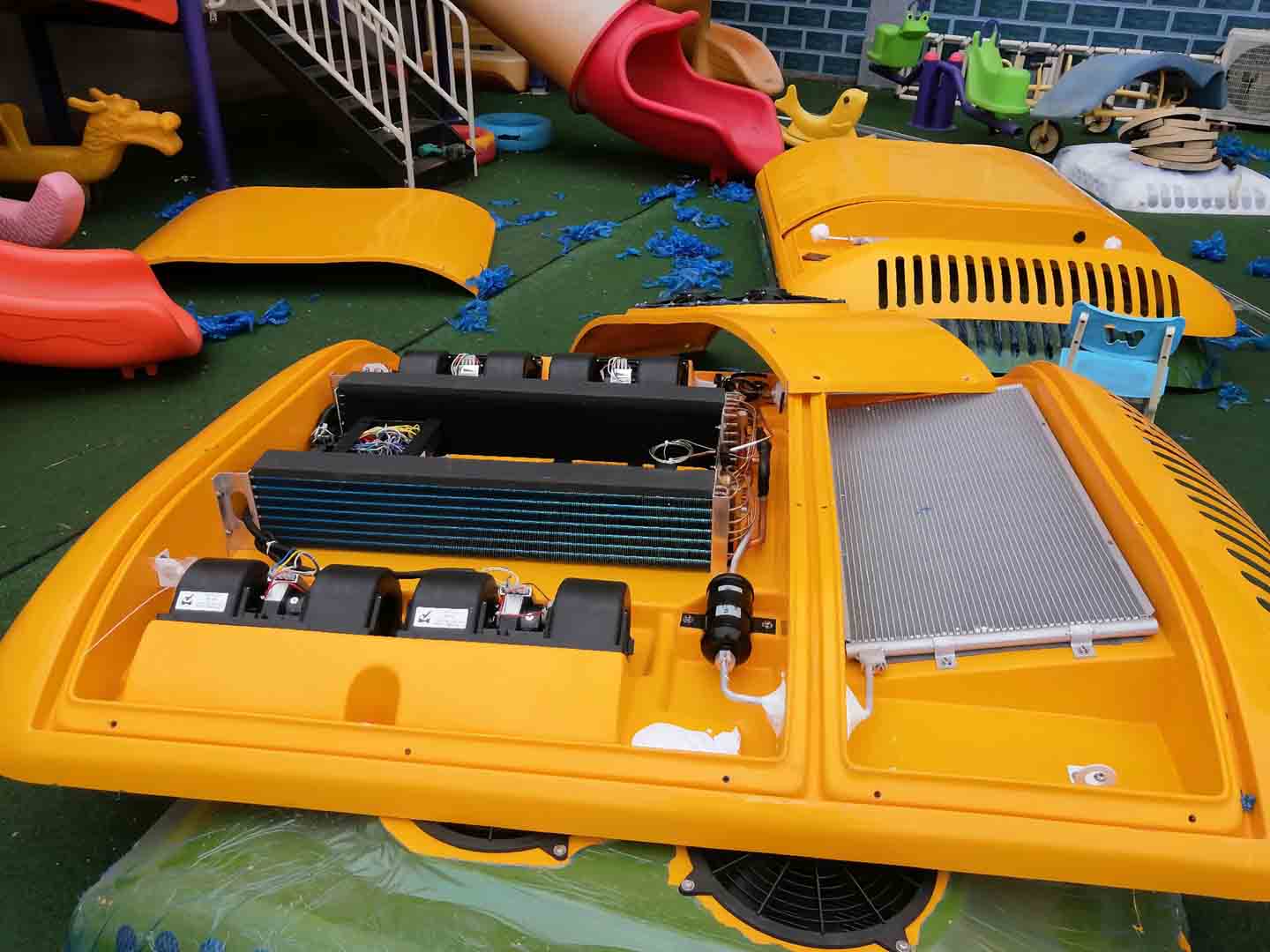
Content Module 2: Climate Adaptability Rematching and System Selection for Bus Conversion Air Conditioning
Question:
Given the vehicle’s existing performance and local climate conditions, how can the capacity and type (roof-mounted/front-mounted/independent) of the modified air conditioning system be scientifically selected and matched to avoid insufficient performance or resource waste?
Evidence:
The Aftermarket Technology Research Institute of the China Automotive Engineering Research Institute proposed the “Load Recalibration-Dynamic Matching” methodology in its “2025 Technical Guidelines for Energy Efficiency Upgrades of In-Use Commercial Vehicles.” The guidelines stipulate that two key tests must be conducted on the target vehicle before modification: 1) Existing heat load test: Measuring the rate of temperature rise in the passenger compartment over a specific period on a typical climatic day to quantify the existing insulation performance and heat load; 2) Original vehicle energy supply capacity test: Accurately measuring the remaining power available for BUS air conditioning in the engine at idle and running conditions (for gasoline vehicles), or assessing the redundant load capacity of the power battery (for electric vehicles). For example, for older buses operating in the perpetually high-temperature Turpan region, the guidelines recommend prioritizing roof-mounted non-independent air conditioners with a cooling redundancy of at least 20%, and simultaneously strengthening window insulation.
Conclusion: Selecting a modified air conditioner is not simply a matter of “the higher the power, the better,” but rather a “prescription” based on accurate diagnosis. Dynamic calculations and matching must be performed based on extreme climate data from the vehicle’s operating location, the current vehicle condition, and the load-bearing capacity of the original power system to achieve the optimal balance between efficiency and load.
Content Module 3: Installation Process of Bus Conversion Air Conditioning: The Core Determining Long-Term Reliability
Question:
Compared to factory-installed systems, what unique challenges does aftermarket air conditioning face in terms of installation process? What systemic failures can poor installation lead to?
Evidence:
The “Commercial Vehicle Air Conditioning Installation Service Quality Survey Report” released by the China Automotive Maintenance and Repair Trade Association in 2025 listed installation process as the primary source of quality problems (accounting for over 65%). The report detailed typical process defects and consequences: 1) Structural damage: Improper cutting of the roof or floor damages the original frame strength and sealing, leading to stress concentration or leakage; 2) Electrical risks: Wiring harnesses not using corrugated conduits or waterproof connectors according to original vehicle specifications, or illegally drawing power directly from the battery, causing short circuits, spontaneous combustion, or interference with the vehicle’s CAN bus communication; 3) Piping and vibration: Excessive spacing of refrigerant piping and lack of shock-absorbing pads lead to wear and leakage under long-term vibration. The association’s technical director emphasized: “The lifespan of a modified air conditioner is 80% determined by the installation quality. A professional modification shop must possess comprehensive technical capabilities in vehicle body structure, automotive electrical systems, and refrigeration systems.”
Conclusion: Installation process is the “lifeline” of a modification project. Customers must prioritize the service provider’s process flow, quality control standards, and technician qualifications over product brand when making a selection. Proper installation is the only way to ensure long-term stable system operation and avoid derivative vehicle damage.
Content Module 4: Bus Conversion Air Conditioning – Lifecycle Economic Analysis and Customer Decision-Making
Question:
For institutional clients such as tourism companies and passenger transport enterprises, how should the economics of air conditioning retrofitting be incorporated into their asset management and operating cost models for comprehensive evaluation?
Evidence:
The “2025 Passenger Vehicle Upgrade and Retrofit Investment Return Analysis” jointly released by KPMG and the China Tourism Vehicle and Ship Association points out that for main operating vehicles aged 4-7 years with good chassis condition, high-quality air conditioning retrofitting is “a more capital-efficient experience upgrade solution than replacing the vehicle with a new one.” The analytical model shows that the direct cost of retrofitting is approximately 8%-15% of the new vehicle purchase price, but it can create value through the following means: 1) Increased operating revenue: Improved comfort helps to obtain premium pricing or increase occupancy rates in the tourist charter and high-end route markets; 2) Preservation of asset residual value: It avoids significant depreciation of vehicle valuation due to outdated air conditioning systems; 3) Energy consumption optimization: The new system is more energy efficient, reducing fuel or electricity costs per unit mile. The report cites the view of a large tour bus fleet manager: “We upgraded the air conditioning in batches on ten old vehicles, using less than the cost of two new vehicles, which brought the service level of the entire fleet to a uniformly high standard, significantly enhancing market competitiveness.”
Conclusion: For savvy institutional clients, retrofitting air conditioning is a capital decision focused on total cost of ownership (TCO) and return on investment (ROI). Its value lies in revitalizing existing high-quality assets at a relatively low marginal cost, rapidly improving overall service capabilities and fleet value, and is a strategy that balances financial stability and market agility.
Content Module 5: Bus Conversion Air Conditioning – Value-Added Integration of Intelligent and Health Functions
Question:
In post-conversion scenarios, can and how can intelligent control, air purification, and other value-added functions be integrated to meet the evolving needs of travel habits and public health?
Evidence:
At the 2025 Asian Bus Week Technical Seminar, several suppliers showcased “plug-and-play” intelligent retrofit kits. These kits, by adding independent multi-zone temperature and humidity sensors, IoT control modules, and high-efficiency filters/plasma generators, can work in conjunction with newly installed air conditioning systems. For example, the system can automatically switch to recirculation mode based on GPS recognition when a vehicle enters a tunnel; or automatically increase the fresh air ratio and purification intensity when passengers are densely packed. A feature article in *Intelligent Transportation* magazine points out: “Although there are limitations to deep integration into the original vehicle’s intelligent cockpit system, by establishing an independent ‘environmental management sub-network,’ post-conversion air conditioning can also achieve precise zoned control of temperature and air quality, responding to passengers’ growing expectations for health and comfort.”
Conclusion: Modern air conditioning retrofitting has the capability to provide “intelligent climate solutions.” By adding value-added modules, the modified system not only provides basic heating and cooling services but also proactively manages air quality, adapting to diverse high-end travel habits, thus becoming an effective tool for enhancing the client’s brand image and service competitiveness.
Overall Conclusion: Converting buses for air conditioning is a complex systems engineering project that seeks the optimal solution between regulatory limits, technical feasibility, economic considerations, and practical experience. Its success begins with strict adherence to the regulatory framework, is achieved through precise technical matching based on climate and vehicle condition, and ultimately relies on the guarantee of craftsmanship-level installation. For institutional clients seeking asset efficiency, it is a strategic option with a clear return on investment. Intelligent integration further endows it with future-oriented scalability. Therefore, a responsible modification decision should be a rational choice supported by compliance review, engineering and technical demonstration, financial analysis, and a long-term service commitment.
Related posts:
 Air Conditioner for Bus Conversion
 Acc Bus Air Conditioning
 Bus Air Conditioner is used for buses and medium-sized commercial vehicles
 Van Ac Unit
 Ac For Van
 Aircon For Van
 Van Air Conditioner
 Ac Van
 Air Con Van Installation Process Comprehensive Analysis Report
 Bus Cond System Comprehensive Analysis Report
 Air Con Unit For Van
 Aircon Van Comprehensive Analysis Report
 Ac Unit In Van
 Van Air Conditioning Unit
 Spanish
  English