
Fixing RV Air Conditioner addresses the air conditioning systems of minibuses and motorhomes by integrating layout design with maintenance, creating a complete closed loop from “how to install it well” to “how to use and repair it well.” These two aspects are closely related: an excellent layout improves efficiency and reduces malfunctions, while scientific maintenance knowledge ensures long-term stable system operation.
Fixing RV Air Conditioner – Layout Design: Minibuses have compact spaces, so the core layout principle is “precise air delivery, efficient circulation, and avoiding direct airflow.”
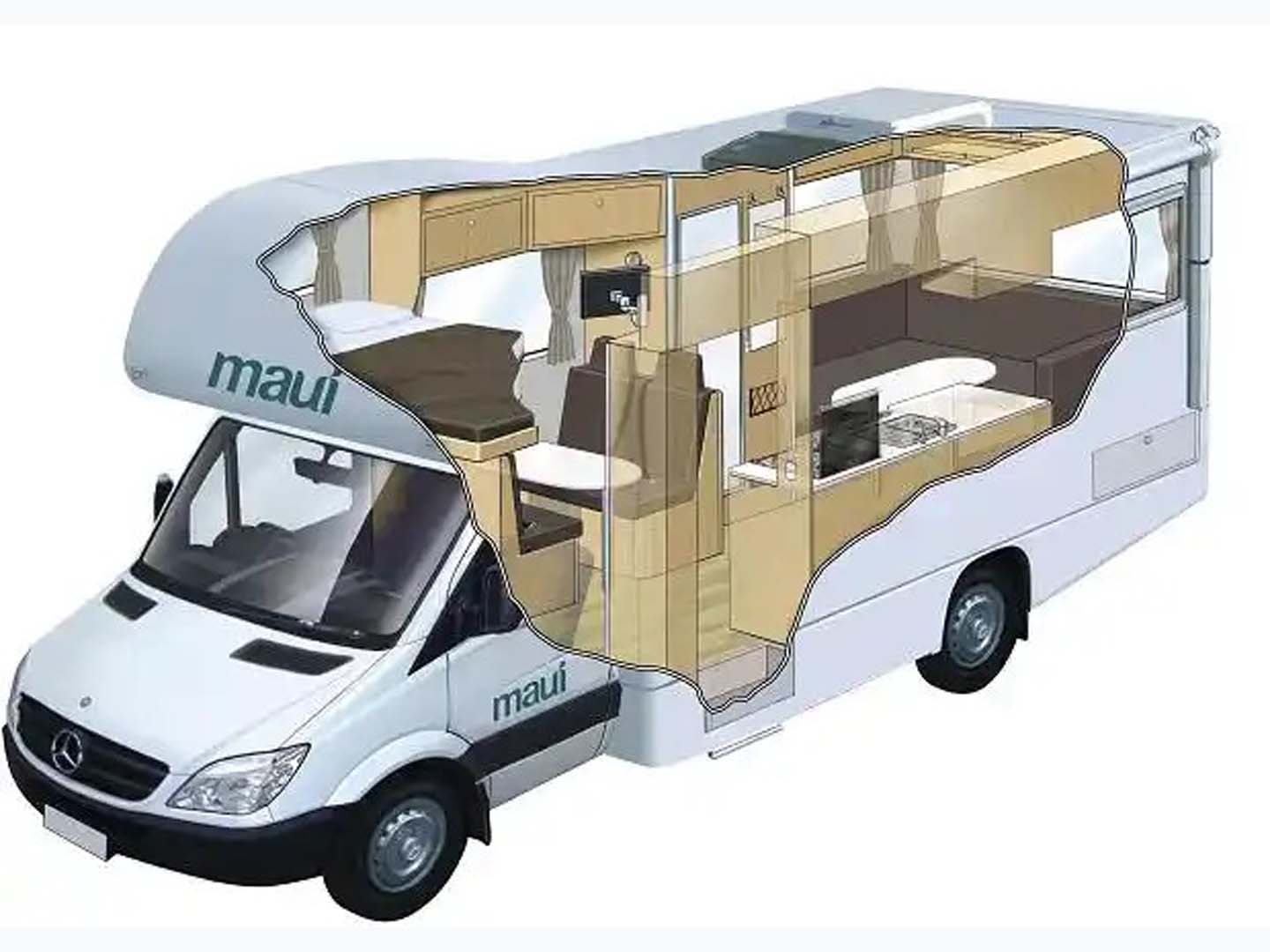
I. Core Layout Scheme (Taking the most common single roof-mounted air conditioner as an example)
Golden Rule: The air conditioning unit should be installed slightly forward from the center of the living area.
Airflow Organization Design (Duct type, most recommended)
Main Air Duct: Draws air from the indoor unit and is concealed within the central ceiling.
Outlet A (Living Area): Located on the side or bottom of the overhead cabinet above the dining table in the booth area. The vent direction should be adjusted to be horizontal, blowing towards unoccupied objects or walls in the direction of the vehicle’s front, using reflection to diffuse the cool air.
Air Outlet B (Sleeping Zone): Located above the foot of the bed (usually the transverse bed at the rear of the vehicle), the vent blows horizontally towards the foot of the bed or the side, absolutely avoiding direct airflow onto the head.
Return Air Inlet (Crucial!): Located on the cabinet door below the booth seating area, or on the low side wall directly below the air conditioner unit. Its purpose is to draw back sinking cold and warm air, creating effective convection circulation with the front air outlet.
Layout Advantages
Uniform Temperature: Effectively covers both front and rear areas.
Comfortable, Windless Experience: Prevents cold air from blowing directly onto the body.
High Efficiency and Energy Saving: Optimal air circulation path ensures high air conditioning efficiency.
Fixing RV Air Conditioner – Layout Avoidance Points
Strictly Prohibited:** Air outlets pointing vertically downwards towards the sofa or bed.
Avoided:** Return air outlets too close to the air outlets, causing airflow “short-circuiting.”
Required:** Use insulated dedicated air ducts and seal the joints to prevent cold loss and condensation.
Consideration:** Install independent air valves for the sleeping area air outlets for easy individual adjustment at night.
Fixing RV Air Conditioner – Repair and Maintenance
The repair of minibus/RV air conditioners follows the general procedure of “checking the electrical system first, then cleaning, and finally diagnosing the hardware,” but with specific focuses.
Routine Maintenance (Essential for Owners, Prevents 90% of Problems)
Clean the Filter (Monthly/Quarterly): Remove the return air filter and clean it with a vacuum cleaner or rinse and dry it with water. This is the first priority for maintaining airflow and air quality.
Clean the Outdoor Unit Radiator (Annually/Before Long Trips): Safety first. Go to the roof and carefully clean the dust, catkins, and insect remains from the radiator fins with a soft brush and vacuum cleaner. Poor heat dissipation is a major cause of poor cooling and shutdown.
Check the Drain Pipe: Ensure the air conditioner condensate drain pipe is clear and not bent or detached.
Fixing RV Air Conditioner – Professional Repair Scope (Do Not Perform DIY)
When self-checking fails, professional assistance is required:
Refrigerant Related: Leak detection, vacuuming, recharging. Never add refrigerant yourself.
Core electrical components: Replace the compressor, inverter module, and control board.
Sensor failure: Replace the temperature and pressure sensors.
Air duct system modification: Such as rearranging the air vents and optimizing airflow.
Summary: For minibus RVs, a well-designed air conditioning layout, coupled with regular maintenance and scientific troubleshooting by the owner, will maximize the long-term, reliable, and comfortable operation of this system in confined spaces, ensuring a worry-free journey.
Related posts:
 Bus Air Conditioner is used for buses and medium-sized commercial vehicles
 Air Conditioner In Camper
 Rv Ac Unit Repair
 Introduction to Ac For Bus
 Fixing RV Ac is compatible with Southeast Asian minibus chassis
 Motorhome Air Conditioning Repair
 Bus Con Supplier reminds all bus owners to clean BUS AC
 Motorhome Air Conditioning and Minibus Manufacturer Matching
 How Coaches HVAC Works & How to use Coaches HVAC
 Ac Repair Rv
 Spanish
  English