
Ac For Buses Manufacturer achieves stable operation at altitudes above 5000 meters through three major technological approaches: pressure compensation design, iterative thermal management system development, and full-scenario verification. Core performance indicators such as cooling capacity attenuation rate and heating reliability have surpassed those of similar international products.
I. Cooling System: Overcoming the Challenge of Lower Boiling Point at High Altitudes
The decrease in air pressure at high altitudes (e.g., at 4000 meters, air pressure is approximately 60% of standard atmospheric pressure) leads to a lower boiling point of the refrigerant. Traditional air conditioners suffer from problems such as “excessive evaporation and insufficient heat absorption.”
Ac For Buses Manufacturer overcomes this bottleneck through three technological innovations:
Dynamic Pressure Compensation Algorithm
The air conditioning ECU collects real-time altitude sensor data (accuracy ±5 meters). When the altitude exceeds 2000 meters, it automatically increases the compressor speed by 15%-20%, offsetting the effect of reduced boiling point by increasing refrigerant circulation.
In tests at Yamdrok Lake (altitude 4441 meters), its cooling capacity decreased by only 8% compared to the plains area, far lower than the industry average of 15%.
Wide-Range Adaptable Compressor
The scroll compressor (model SM180), through variable displacement technology (10%-100% stepless adjustment), maintains a condensing pressure of 2.6 MPa even at an altitude of 5000 meters, ensuring complete refrigerant liquefaction.
Low-boiling-point refrigerant replacement
Addressing the performance degradation issue of traditional 134a refrigerant at high altitudes, some high-end models have piloted R-454B (boiling point -51.6℃). Combined with an optimized evaporator fin spacing (increased from 1.8mm to 2.2mm), this resulted in a 12% improvement in cooling efficiency during testing in Golmud, Qinghai (altitude 2808 meters).
II. Heating System: Addressing Energy Efficiency Challenges in Low-Oxygen Environments
High-altitude, low-oxygen environments lead to decreased combustion efficiency in gasoline-powered vehicles (approximately 10% power loss per 1000 meters of altitude gain), while electric vehicles face battery capacity degradation.
Ac For Buses Manufacturer’s solution features a “dual-track approach” of electric and gasoline power.
Electric Vehicle Waste Heat Recovery Technology
During testing at the Gangbala Pass at an altitude of 5030 meters,
the bus utilized a dual-source recovery system of “motor waste heat + battery waste heat,” redirecting waste heat from the cooling system (60-80℃) into the heating circuit, reducing heating energy consumption by 40%. The cabin temperature was raised from -15℃ to 20℃ in just 5 minutes.
Independent Heating Solution for Gasoline-Powered Vehicles
The Webasto independent fuel heater (5kW) equipped for high-altitude diesel buses employs high-altitude injectors (atomized particle diameter ≤80μm) and closed-loop control using an oxygen sensor, ensuring a combustion efficiency of 92% at an altitude of 4500 meters, an 18% improvement over conventional heaters.
III. Structure and Materials: Combating the Dual Corrosion of Low Pressure and Strong UV Radiation
Strong UV radiation (UV index >10 year-round) and diurnal temperature variations (up to 30℃) at altitudes above 4000 meters accelerate the aging and sealing failure of air conditioning pipes.
Application of Weather-Resistant Materials
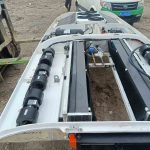
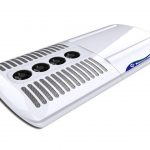
The piping system uses hydrogenated nitrile butadiene rubber (HNBR) sealing rings, with a compression set of <25% within a temperature range of -40℃ to 120℃, extending its lifespan by 3 times compared to traditional EPDM materials. The roof-mounted air conditioner housing uses ASA engineering plastic with added UV stabilizers, maintaining over 90% of its mechanical strength after 3 years of high-altitude exposure testing.
Pressure Balance Design
The developed “breathing” housing structure compensates for internal and external air pressure differences (maximum balance ±5kPa) through an internal silicone diaphragm, preventing leakage problems caused by housing bulging or sealing ring flattening under high-altitude, low-pressure conditions.
IV. Full-Scenario Verification System: Closed-Loop Testing from Laboratory to Real-World Road Conditions
Laboratory Environment Simulation
The bus air conditioning environment chamber replicates a composite environment at an altitude of 5500 meters and -40℃ to 60℃. Each high-altitude version air conditioner undergoes a “24-hour high and low temperature cycle + 1000 pressure shocks” test to ensure a leakage rate of <0.5g/year.
High-Altitude Road Testing
A full-load endurance test was conducted along the entire route around Yamdrok Lake (passing through the Gangbala Pass at an altitude of 5030 meters). The air conditioning system operated continuously for 12 hours without failure, and cabin temperature fluctuations were controlled within ±1.5℃.
User Data Iteration
Operating data from 300 vehicles of the Yamdrok Lake Bus Company was collected through a remote monitoring system. The bus air conditioning start-stop logic was optimized for frequent start-stop conditions at high altitudes, extending compressor life by 20%.
The technical capabilities of Ac For Buses Manufacturer not only support transportation in high-altitude regions worldwide but also serve as a “technical passport” for companies like Busclima to expand into overseas high-altitude markets such as Nepal and Peru.
While traditional air conditioning systems fail due to efficiency degradation at 3000 meters, Busclima’s solution is bringing comfort to the Third Pole of the Earth. Visit www.busclima.com or contact busclima@kingclima.com

 Spanish
  English