
Low Profile Rv Ac Unit with their low drag, low center of gravity, and aesthetically pleasing integration, are becoming key components for upgrading multi-functional commercial vehicles. However, their successful application depends not only on the product’s technical specifications but also on deep integration with complex external environments and user behaviors. To achieve precise matching, this report breaks down the analysis into four dimensions: local climate, transportation options, travel habits, and target customer groups. Each dimension follows a “problem-evidence-conclusion” logic to construct a comprehensive analytical framework. 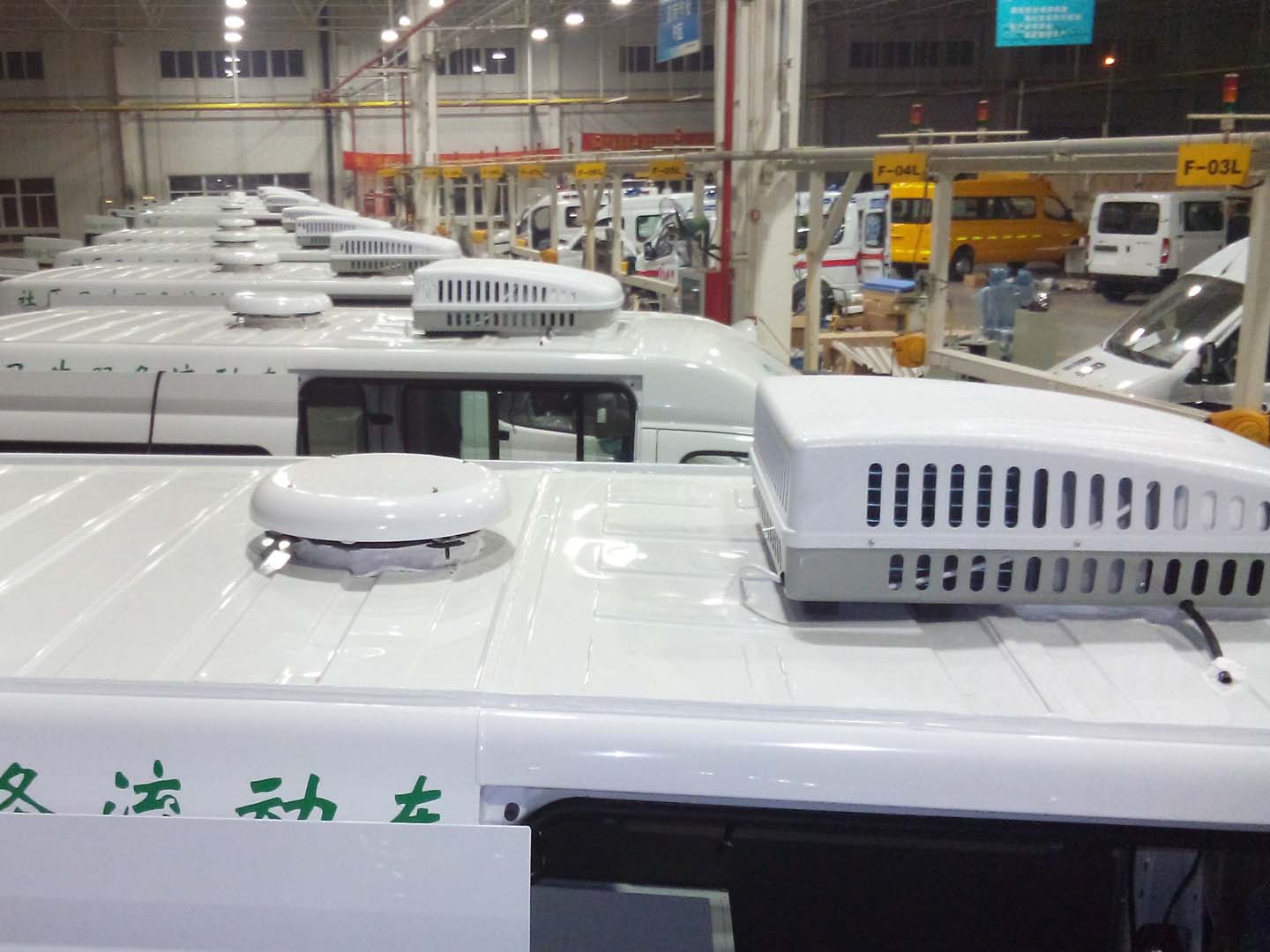
| Model | E-Clima2200 | E-Clima3000 | E-Clima4000 | E-Clima6000 | E-Clima8000 | E-Clima2600S |
| Voltage (V) |
DC12V/24V | DC12V/24V | DC12V/24V | DC12V/24V | DC12V/24V | DC12V/24V |
| Cooling Capacity (W/BTU) |
2200W//7500 | 3000W/10000BTU | 4000W/15000BTU | 6000W/20472BTU | 8000W/27300BTU | 2600W/78870BTU |
| Installation | Rooftop Mounted | Rooftop Mounted | Rooftop Mounted | Rooftop Mounted | Rooftop Mounted | Split Mounted |
| Evaporator Air Volume (m³/h) |
650 | 700 | 650 | 650 | 1500 | 450 |
| Condenser Air Volume (m³/h) |
1050 | 1400 | 1050 | 1700 | 3600 | 1400 |
| Refrigerant | R134a | R134a | R134a | R134a | R134a | R134a |
| Dimension (mm*mm*mm) |
700*580*263 | 885*710*290 | 700*580*263 | 1580*385*180/ 920*928*250 |
1260*1030*180 | 682*465*192 540*362*165 |
| Weight (KG) |
32 | 35 | 18/47 | 18/47 | 31 |
Dimension 1: Local Climate and Heat Load Challenges – Low Profile Rv Ac Unit
Problem: What differentiated requirements do different climate regions place on the heat dissipation capacity and continuous operational reliability of low-profile air conditioners?
Evidence: The third phase of the 2025 “China Transportation Climate Adaptability Development Report” points out that due to the typically reduced condenser heat dissipation area, low-profile designs experience an average 15% higher rate of continuous cooling efficiency degradation compared to standard models in the hot and humid South China region. The report specifically uses coastal areas as an example, pointing out that salt spray corrosion accelerates condenser fin oxidation, affecting heat dissipation. Meanwhile, according to the latest content from the 2025 National New Energy Vehicle Thermal Management Technology Symposium, the consensus reached at the meeting was that in the Northwest region, where there are large temperature differences between day and night, Camper Air Conditioner needs to frequently cope with thermal shocks, placing higher demands on compressor reliability. Wang Lei, a leading thermal management engineer, emphasized at the meeting: “The bottleneck for slim air conditioners in dry and hot regions is instantaneous heat dissipation, while in humid and muggy regions, the bottleneck is humidity load. The design must be differentiated accordingly; for example, increasing fan power for the former and improving dehumidification algorithm efficiency for the latter.”
Conclusion: Therefore, the selection and configuration of slim air conditioners must be customized according to local conditions. In the south, models with greater heat dissipation redundancy and superior anti-corrosion coatings should be prioritized, and better vehicle insulation may be necessary. In the north, the focus should be on the wide temperature range resistance and rapid start-up capability of core components.
Dimension 2: Adaptation to Transportation Schemes and Operational Scenarios – Low Profile Rv Ac Unit
Question: When slim minibuses are applied to different transportation schemes such as urban shuttles and tourist routes, what are the differences in the operating modes and reliability requirements of the air conditioning system?
Evidence: According to the 2025 Urban Public Transportation Green Transformation Seminar, the conference pointed out that electric minibuses used for “last mile” connections to scenic spots have extremely high air conditioning start-stop frequencies, resulting in a much greater impact on compressor starting current control and the power system than long-distance passenger transport. Frequent start-stops accelerate wear and tear and affect passenger experience. Vehicles used for fixed tourist routes, however, emphasize stability and low noise during long-term continuous operation. A technical director of a well-known bus manufacturer mentioned in an interview: “The slim air conditioners we equip for minibuses used in ride-hailing public transport operations integrate passenger flow sensors, which can increase the fresh air volume in advance at stations with frequent passenger boarding and alighting. This is a functional refinement driven by operational scenarios.”
Conclusion: The control logic of slim air conditioners needs to be deeply integrated with operational scenarios. High-frequency connection scenarios should be equipped with soft-start technology and more intelligent pre-cooling strategies; long-distance tourist scenarios need to ensure the energy efficiency stability of the compressor under continuous high load, and operating noise should be a core indicator.
Dimension 3: Impact of Travel Habits and Usage Patterns – Low Profile Rv Ac Unit
Question: How do typical user travel habits (such as daytime operation and nighttime parking/rest) affect the energy consumption distribution and system design priorities of air conditioning?
Evidence: A research article based on GPS data and energy consumption analysis published in the fifth issue of the journal *Commercial Fleet Management and Technology* in 2025 shows that minibuses used as company shuttles exhibit strict morning and evening peak usage patterns for air conditioning, with long idle times during the day, requiring the air conditioning system to have rapid cooling capabilities. In contrast, vehicles modified for self-driving tours are used by users who habitually use air conditioning for extended periods while parked, resulting in a very high dependence on off-grid power (batteries). The article points out that the latter users are far more sensitive to low standby power consumption and inverter technology in air conditioning than the former. Industry observer Li Jing analyzes: “User habits are diverging. ‘Operational’ users prioritize ‘rapid cooling’ and ‘durability,’ while ‘travel/recreation’ users prioritize ‘energy saving’ and ‘quiet operation.’ Optimizing both performance parameters simultaneously within a limited space is a huge challenge for slim air conditioners.”
Conclusion: Air conditioner energy efficiency curves should be designed with different focuses for different travel habits. Operational vehicles should prioritize high energy efficiency within commonly used temperature ranges (e.g., 26-28℃) and rapid response; recreational vehicles need to optimize the coefficient of performance (COP) at low to medium power levels and significantly reduce standby power consumption to extend battery life.
Dimension 4: Differences in Customer Demographics and Value Demands – Low Profile Rv Ac Unit
Question: What are the fundamental differences in the value judgment standards and sensitivities of corporate clients (fleet purchasers) and individual consumers (self-driving enthusiasts) regarding slim air conditioners?
Evidence: According to the market analysis released in the 2025 China Bus Blue Book, the core of corporate customers’ purchasing decisions is the Total Cost of Ownership (TCO). They are extremely concerned about the failure rate, ease of maintenance, and lifespan of air conditioners, and are less sensitive to the initial price than individual consumers. A fleet manager of a large tourism group stated in an interview, “We choose slim air conditioners primarily because of their data-driven promise of reduced fuel consumption, and secondly because we value whether the supplier can provide a nationwide rapid repair network.” Conversely, individual consumers prioritize intuitive user experience, such as the aesthetics of the control interface, remote control via mobile app, and operating noise levels. A 2025 market survey of RV conversions showed that over 60% of individual buyers listed “quiet operation” as the primary factor in their air conditioner selection.
Conclusion: Slim air conditioners targeting corporate customers should offer detailed energy consumption comparison data, extended warranty terms, and an efficient after-sales service system. Products targeting individual consumers must be meticulously crafted in industrial design, human-machine interaction, and quiet operation technology, making these experiential advantages core selling points.
Overall Conclusion – The success of the Low Profile Rv Ac Unit rooftop air conditioner in a slim minibus/RV is a systematic adaptation project.
From the climate-determined heat load basis, to the operating mode defined by transportation plans, to the energy consumption pattern shaped by travel habits, and finally to the purchasing decisions made by the value orientation of the customer base, these four dimensions are interconnected. Manufacturers and users cannot simply focus on the surface parameters of “thin” and “cool.” In the future, leading products will inevitably start from these four dimensions, using data-driven approaches to provide highly scenario-based and configurable solutions, thereby effectively transforming technological advantages into market value.
Related posts:
 Low Profile Rv Ac
 Camper Air Conditioning Unit
 Camper Air Conditioner
 Camper Roof Ac Unit
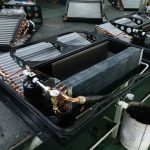 Camper Ac
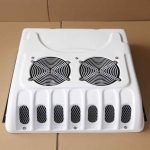 Air Conditioning Units for RV and Minibus Air Conditioner
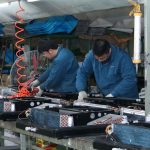 Air Conditioning for Motorhomes Manufacturing Process
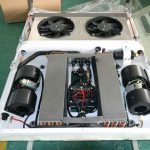 Air Conditioning Units for Campers Installation Process
 Similarities between RV Camper Air Conditioner and Minibus AC
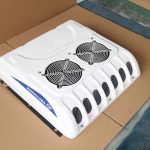 Ac For RV Camper Market Analysis Report
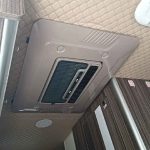 Small Air Conditioner for Camper
 12 Volt Air Conditioner For Rv
 Motorhome Air Conditioning and Minibus Manufacturer Matching
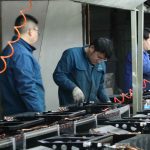 Ac For Camper and Mini Bus Ac Installation Steps
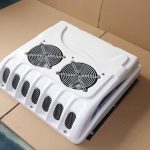 Air Conditioner for RV Installation Steps
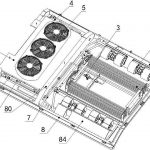 Bus Air Conditioner is used for buses and medium-sized commercial vehicles
 Ac Unit For RV Camper: Air Conditioning System for Minibuses and Motorhomes
 RV Air Conditioning Units to bus manufacturers in North Africa
 Spanish
  English