
Against the backdrop of the global acceleration of the transformation of public transportation and high-end passenger transport towards new energy and intelligent technologies, the Motorhome Roof Ac Unit has evolved from a single comfort device into a core intelligent unit influencing overall vehicle energy consumption, operational reliability, and passenger experience. According to the industry technology outlook released by the China Society of Automotive Engineers in 2025, improving the energy efficiency and intelligent control of air conditioning systems is one of the key paths for commercial vehicles to achieve their “dual-carbon” goals. Multiple roof-mounted air conditioning units, with their modular architecture and precise control capabilities, are becoming the mainstream technology solution leading this transformation. This article will systematically analyze its core value from four dimensions: technical parameters, usage scenarios, product advantages, and target customers.
I. Core Parameters of the Motorhome Roof Ac Unit: From Mechanical Air Delivery to Precise Control Through Intelligent Sensing
Reason: Traditional single roof-mounted air conditioners in buses have blind spots in air delivery and waste energy, failing to meet passengers’ needs for personalized comfort and contradicting the requirements of refined energy management for new energy vehicles.
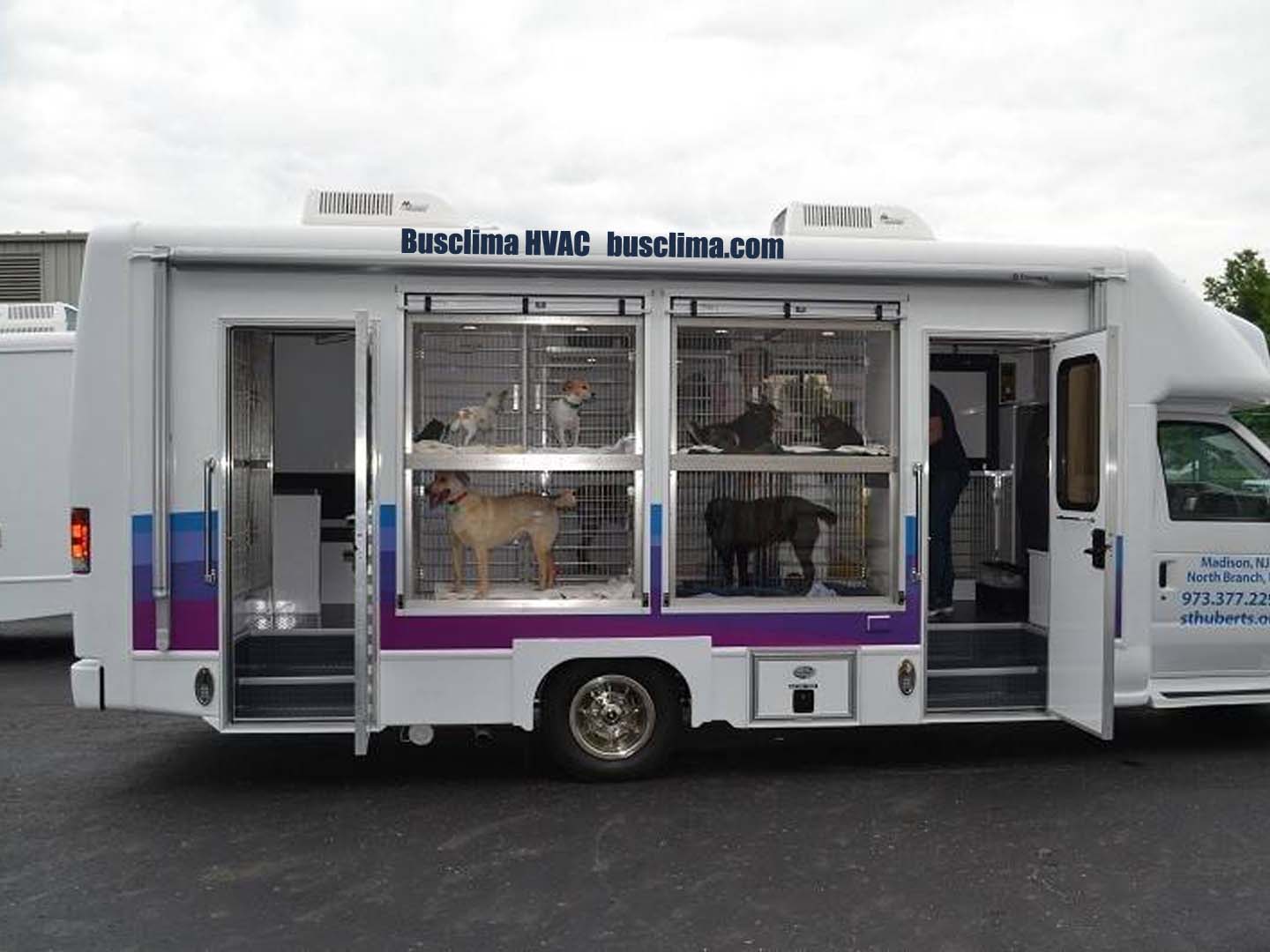
Process: Technological upgrades focus on the integration of modular air delivery and sensing control. Its core parameters and functional design revolve around precision: a standard multi-unit overhead unit typically integrates multiple independently controlled air outlets, each corresponding to a specific airflow area within the vehicle. A more crucial technological leap lies in the integration of multiple human body detection sensors. These sensors don’t simply determine the presence of passengers; rather, their detection areas perfectly overlap with the airflow coverage area of the corresponding outlet. This means the system can accurately sense the actual needs of each seating area. Based on this, combined with advanced adjustable airflow blades (such as a louvered design), it achieves independent zoned control of airflow angle and volume.
Result: This parameter system defines a closed loop of “perception-decision-execution.” The air conditioning system has been upgraded from a mechanical device that passively sets the temperature to an intelligent environmental management system capable of real-time sensing of passenger distribution and proactively providing precise zoned airflow. This lays the hardware foundation for on-demand cooling/heating and eliminating energy waste.
II. Motorhome Roof Ac Unit Usage Scenarios: Adaptive Innovation from “One-size-fits-all” to “On-Demand Allocation”
Reason: The complex and ever-changing operating scenarios of buses, including the tidal passenger flow of urban public transport, the continuous operation of long-distance passenger transport, and the quality demands of tourist charter buses, present seemingly contradictory and multifaceted challenges to the adaptability of air conditioning systems.
Process: The intelligent features of multiple roof-mounted units enable them to dynamically adapt to various scenarios.
Coping with Dynamic Passenger Flow: During peak hours for urban public transport, the system uses sensors to identify all fully occupied areas and activates all units for powerful airflow; during off-peak hours, airflow is only provided to areas with detected passengers, while airflow is automatically shut off in areas without passengers, achieving “airflow follows the vehicle’s movement.”
Ensuring Uniform Comfort on Long Journeys: In long-distance passenger transport, the system can be set to a constant airflow mode and ensures uniform temperature throughout the passenger compartment through multiple air outlets, avoiding the discomfort of “cold in the front and hot in the back” common with traditional air conditioning systems.
Meeting Personalized High-End Needs: In high-end business receptions or tourist charter vehicles, this technology allows for differentiated temperature and airflow settings in different zones within the vehicle (such as the executive seat and rest area). It can even prevent cold air from blowing directly on specific passengers, truly achieving personalized microclimate control for each individual.
Result: Multiple rooftop air conditioners thus transcend their status as “standardized components,” becoming intelligent solutions capable of proactively learning and adapting to specific operational scenarios, transforming a unified physical space into multiple customizable comfortable microenvironments.
III. Motorhome Roof Ac Unit Product Advantages: Building Multi-Dimensional Value Barriers Throughout the Lifecycle
Reasons: Faced with rising operating costs and competition in service quality, customer needs have shifted from low-price procurement to pursuing lower total cost of ownership (TCO), higher reliability, and a superior brand experience.
Process: The advantages of this solution combine economic efficiency, reliability, and user experience.
Superior Energy Efficiency: Its “on-demand allocation” operating mode fundamentally avoids unnecessary energy consumption. Referring to the practices of similar overhead convection air conditioning systems in the data center field, its fanless design and precise air delivery characteristics can reduce air conditioning system energy consumption by 12%-20%. For electric buses, this directly translates into a considerable increase in driving range and reduced operating costs.
Extremely high system reliability: The modular design brings inherent redundancy. Even if a single air delivery unit or sensor fails, the remaining units can still operate independently, ensuring basic temperature control functions and greatly improving system availability and uptime. Its structure is simpler than traditional precision air conditioners, and maintenance is also more convenient.
A revolutionary comfort experience: Zoned precise air delivery completely solves the pain points of uneven heating and cooling and direct airflow. As industry experts have stated, “The comfort of the future cabin lies not in a uniform temperature number, but in the system’s insight into and response to the differences in each passenger’s physical sensations.” Multiple overhead units are the engineering realization of this concept.
Result: These advantages collectively reshape the air conditioning system from a “cost consumer” into a creator of brand value that improves operational efficiency, enhances service competitiveness, and is directly perceptible.
Related posts:
 Bus Air Conditioner is used for buses and medium-sized commercial vehicles
 Technical White Paper on Multi-Unit Roof AC for Campers and Buses
 12 Volt RV Air Conditioning Units represent an energy and technological revolution
 4 sets of Rooftop AC Units for Campers for a 15m bus
 Air Conditioning Units for Motorhomes: A Distributed Temperature Control System
 Camper Rooftop Air Conditioning Units
 Acc Bus Air Conditioning
 12V Rv Air Conditioning Units
 RV Rooftop Air Conditioning Units, 2 stes, Golden Partner for Minibus RV
 Camper Aircon Unit – Modular Design Leads to a New Comfortable Travel
 Motorhome Rooftop Air Conditioners
 Aircon Units For Motorhomes
 Motorhome Roof Ac
 Introduction to Ac For Bus
 Modular Temperature Control Solution for Motorhomes
 Motorhome Roof Air Conditioner
 Motorhome Aircon 12V
 Motorhome Ac Unit
 Spanish
  English