
Motorhome Rooftop Air Conditioners
Motorhome rooftop air conditioners are the mainstream solution for RV air conditioning, and their unique advantages continue to drive the market. According to a research report by QYResearch, rooftop air conditioners dominate the RV air conditioning market, with a market share of approximately 71%.
In RV life, where the pursuit of ultimate travel freedom is paramount, a reliable, efficient, and space-saving Ac On Rv is crucial. This report will systematically analyze RV rooftop air conditioners from four dimensions: technical parameters, usage scenarios, impact on lifestyle, and target customers.
Motorhome Rooftop Air Conditioner Technical Parameters: High-Efficiency Integration and Intelligent Evolution
Phenomenon: The mainstream RV rooftop air conditioners on the market have evolved from single-function fixed-frequency cooling devices to highly integrated, intelligent, and efficient heat pump systems.
Analysis: The core technology of modern rooftop air conditioners is reflected in three aspects:
High Efficiency and Energy Saving: Leading products in the industry generally adopt full DC inverter technology, allowing both the compressor and fan to achieve stepless speed adjustment. This is similar to the principle of high-end household inverter air conditioners, which can automatically adjust the output power according to the heat load inside the vehicle, avoiding energy consumption and temperature fluctuations caused by frequent starts and stops, resulting in significant energy savings. The heating efficiency ratio (COP) of some models can reach 3.0, meaning that 1 unit of electrical energy can transfer 3 units of heat energy, greatly alleviating concerns about electricity consumption for heating in winter.
Enhanced Environmental Adaptability: Traditional air conditioners have extremely low heatinMotorhome rooftop air conditioners are the mainstream solution for RV air conditioning, and their unique advantages continue to drive the market. g efficiency at low temperatures, while the working temperature limit of the new generation of rooftop heat pump air conditioners has broken through -20℃, enabling effective heating even in cold environments, reducing reliance on additional electric auxiliary heating.
Integration and Intelligence: Rooftop air conditioners are becoming the “environmental control center” of RVs. Their design is highly integrated, and some models can additionally integrate battery thermal management, air purification, and disinfection functions. Through AI algorithms and cloud platforms, remote monitoring, fault prediction, and energy efficiency optimization can be achieved, making management more convenient.
Conclusion: When choosing a rooftop air conditioner, the key parameters are whether it is inverter-driven, whether it has a high-efficiency heat pump function, and the level of energy efficiency ratio. The technological trend is towards higher energy efficiency, wider operating temperature range, and deeper system integration and intelligent control.
| Model | E-Clima2200 | E-Clima3000 | E-Clima4000 | E-Clima6000 | E-Clima8000 | E-Clima2600S |
| Voltage (V) |
DC12V/24V | DC12V/24V | DC12V/24V | DC12V/24V | DC12V/24V | DC12V/24V |
| Cooling Capacity (W/BTU) |
2200W//7500 | 3000W/10000BTU | 4000W/15000BTU | 6000W/20472BTU | 8000W/27300BTU | 2600W/78870BTU |
| Installation | Rooftop Mounted | Rooftop Mounted | Rooftop Mounted | Rooftop Mounted | Rooftop Mounted | Split Mounted |
| Evaporator Air Volume (m³/h) |
650 | 700 | 650 | 650 | 1500 | 450 |
| Condenser Air Volume (m³/h) |
1050 | 1400 | 1050 | 1700 | 3600 | 1400 |
| Refrigerant | R134a | R134a | R134a | R134a | R134a | R134a |
| Dimension (mm*mm*mm) |
700*580*263 | 885*710*290 | 700*580*263 | 1580*385*180/ 920*928*250 |
1260*1030*180 | 682*465*192 540*362*165 |
| Weight (KG) |
32 | 35 | 18/47 | 18/47 | 31 |

Motorhome Rooftop Air Conditioners Use Cases: Off-Grid Parking and Space Optimization
Phenomenon: Motorhome life involves diverse scenarios, requiring both connection to shore power at campsites and the desire for extended independent stays in scenic wilderness areas.
Analysis: The design of rooftop air conditioners perfectly matches the core use cases of motorhomes:
“Designed for Parking”: Rooftop air conditioners are typical “parking air conditioners,” designed to provide continuous temperature control for the motorhome cabin when the engine is off and powered by the vehicle’s battery.
Optimizing Interior Space: Compared to under-bed or under-seat air conditioners that occupy interior storage space, or split-system air conditioners requiring separate indoor and outdoor units, rooftop air conditioners integrate all major components (compressor, condenser, evaporator, etc.) into a single unit on the roof. This maximizes the precious living and storage space inside the motorhome, optimizing space utilization.
Handling Complex Environments: Considering the special nature of outdoor use, high-quality rooftop air conditioners typically have an IP55 protection rating, making them dustproof and waterproof, meeting the needs of all-weather operation.
Conclusion: Rooftop air conditioners are the ideal choice for users who prioritize comfortable off-grid parking for extended periods and highly value interior space utilization. They sacrifice some vehicle clearance (due to increased roof height) in exchange for complete interior space and energy-efficient operation while parked.
Motorhome Rooftop Air Conditioners Lifestyle: From “Making Do” to a “Refined” Comfort Upgrade
Phenomenon: In the past, motorhome users often had to endure stuffy or cold nights outside of campsites, or refrained from using air conditioning for extended periods to save power.
Analysis: A high-performance rooftop air conditioner significantly changes users’ travel habits:
Improved Sleep Quality: In summer in the countryside or winter in the mountains, an air conditioner that can run quietly (choose low-noise models) all night, maintaining a comfortable room temperature, fundamentally guarantees rest quality, allowing users to say goodbye to restless nights.
Extended Quality Parking Time: No longer forced to leave beautiful campsites prematurely due to uncomfortable temperatures. Users can plan their trips more leisurely, staying immersed in a favorite location for several days, truly achieving “arrive at the destination, and settle in wherever you are.” Shifting the Focus of Energy Management: Users are moving from “worrying about whether the air conditioner will turn on” to “how to power the air conditioner more efficiently.” This will encourage them to more actively optimize the configuration of solar panels and lithium batteries, and plan their electricity consumption more precisely, thus forming a virtuous cycle of energy self-sufficiency.
Conclusion: The popularization of rooftop air conditioners elevates users’ focus from basic “survival needs” to “quality of life.” It is not just a piece of equipment, but a key cornerstone for achieving stable, comfortable, and long-term off-grid travel.
Motorhome Rooftop Air Conditioners Customer Profile: Mainstream Choices and Quality Seekers
Phenomenon: Rooftop air conditioners are not suitable for everyone; their user profile is clear.
Analysis: The core customer group mainly includes:
Mainstream RV Buyers: For users who purchase finished Class B, Class C motorhomes, or large travel trailers, rooftop air conditioners are almost a standard factory option or a preferred add-on. It represents a reliable, mature, and market-proven solution.
Space-Conscious Users: Users who have strict requirements for the interior layout of their vehicles and do not want any large equipment to encroach on cabinet, wardrobe, or under-bed storage space.
Users Who Value Convenience and Reliability: The integrated design of rooftop air conditioners avoids the complex installation and potential refrigerant leakage risks of split air conditioners. They are tested as a complete unit before leaving the factory, making them more worry-free and reliable for most users who don’t want complex modifications later.
Conclusion: The typical user of a rooftop air conditioner is a rational consumer who chooses mainstream RV models, values original factory quality and design integrity, and prioritizes interior space comfort and utilization.
To help you determine if a Motorhome Rooftop Air Conditioner is the best choice for you, consider:
Does your RV’s original design have a standard mounting position and load-bearing structure for a rooftop air conditioner?
Can you accept an overall vehicle height increase of 20-30 centimeters, which may affect access to underground parking or certain height-restricted roads?
Is your core demand for RV life the pursuit of maximum interior spaciousness, or are you willing to accept equipment occupying some cabinet space for other advantages (such as a lower center of gravity)?
Related posts:
 12V Air Conditioner For Motorhome
 12V Camper Air Conditioner used in medicalmobile
 Small Air Conditioner For Rv
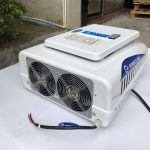 12V Ac Unit For Rv
 Camper Roof Air Conditioner
 Camper Air Conditioner
 12 Volt Rv Ac Unit
 Small Ac For Camper
 Best Ac For Rv
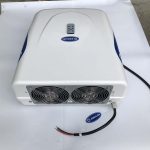 12V Rv Ac Unit
 Low Profile Rv Ac Unit
 12V Camper Ac
 Small Rv Ac
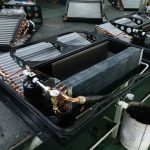 Camper Ac
 Camper Roof Ac Unit
 Air Conditioning for Motorhomes Manufacturing Process
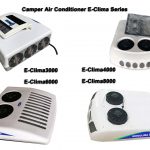 Camper Air Conditioning Unit
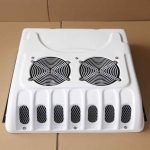 Air Conditioning Units for RV and Minibus Air Conditioner
 Spanish
  English