
Rooftop AC Camper
Rooftop AC Camper holds a dominant position in the RV air conditioning market, with a market share of approximately 71%, and modular design is at the forefront of this trend.
Facing multiple challenges such as limited interior space, high energy self-sufficiency requirements, and diverse usage scenarios in RVs, traditional single-unit fixed air conditioners can no longer meet the ultimate pursuit of comfort, reliability, and energy efficiency in modern travel.
Therefore, integrated, efficient, flexible, and intelligent “roof-mounted modular air conditioning units” are becoming a key technological direction for the iterative upgrade of high-end RVs.
This solution deconstructs the air conditioning system into standardized functional units that can be flexibly combined and independently controlled, achieving a leap from a single cooling device to an intelligent environmental management hub.
1. Rooftop AC Camper – Core Parameters and Modular Architecture
Reason: Traditional integrated air conditioners have inherent defects such as “fixed power, rigid installation, and difficult maintenance.” Different vehicle models, layouts, and user needs vary greatly, and a single product cannot achieve precise matching, often leading to energy waste or insufficient cooling.
Process: The core of the modular unit lies in “decoupling” and “recombination.” Its key parameter system is built around flexible configuration:
Modular Cooling Capacity: The system can be composed of multiple independent cooling units (such as a single 13,500 BTU module) connected in parallel. Users can combine one, two, or more modules like building blocks, depending on the size of the vehicle (such as a Class B or Class A RV) and the heat load, to achieve precise customization of the total cooling capacity.
Voltage and Component Compatibility: To adapt to different vehicle electrical systems, advanced DC inverter modules support direct connection to multiple DC voltages such as 12V, 24V, and 48V, eliminating the need for inverter conversion and improving energy efficiency and safety. At the same time, indoor units (top-discharge, bottom-discharge, ducted) and outdoor units (roof-mounted, underbody-mounted) can be freely combined to meet diverse installation and interior design needs.

Intelligent Collaborative Control: The modules do not operate independently, but are centrally controlled by a unified intelligent control system. This “brain” can command different modules to operate at different speeds (cooling output) based on sensor data from each zone, achieving “cooling on demand” and zone temperature control. Results: A customizable, scalable, and easily maintainable distributed temperature control network was built. Car owners can obtain tailored cooling solutions and easily upgrade them when needed in the future; a single module failure does not affect the overall system operation, significantly improving reliability.
2. Rooftop AC Camper – Diverse Usage Scenarios and Intelligent Response Strategies
Reason: RV living scenarios are extremely complex, ranging from high temperatures in the desert to cold nights in the highlands, from camping in designated areas to off-grid living in the wilderness, posing comprehensive challenges to the adaptability, endurance, and comfort of the air conditioning system.
Process: The modular unit, thanks to its architectural advantages, can intelligently adapt to different scenarios:
Extreme Climate and Long-Term Off-Grid Use: In scorching environments, multiple modules can operate in parallel at full power, providing instantaneous, high cooling capacity. In off-grid scenarios, the control system can automatically switch to energy-saving mode (such as operating only a single module, adjusting fan speed) based on battery power, significantly extending battery life. This effectively addresses the industry challenge of limited battery life in pure electric solutions.
Quiet Operation and Zoned Comfort: The split design (compressor mounted on the roof or chassis) isolates the main noise source from the cabin, achieving quiet operation during driving and parking. Independent air ducts easily enable personalized zone management, such as “cool in the front living area and warm in the rear sleeping area.”
Future Intelligent Connectivity: Industry foresight indicates that parking air conditioning is evolving towards direct connection with the vehicle’s high-voltage platform and integration with AI intelligent temperature control. The modular unit, as an addressable independent unit, is the best hardware foundation for future predictive energy management based on GPS, weather forecasts, and user habits.
Results: This transforms the RV from a container constrained by the external environment into an “intelligent mobile home” that can actively create and stably maintain an ideal microclimate at any location and time.
3. Rooftop AC Camper – Systemic Product Advantages
Reason: Users choose the modular solution not just for more cooling capacity, but for a systemic improvement in energy efficiency, space utilization, reliability, and overall experience.
Process: Its advantages are the result of multi-dimensional technological integration:
Energy Efficiency and Power Friendliness: Full DC inverter technology is the core. The compressor and fan offer stepless speed control, always operating at the highest energy efficiency point, significantly reducing power consumption compared to traditional fixed-frequency air conditioners. The modular architecture allows only the necessary units to be activated under partial load, avoiding the energy waste of “using a large engine for a small task.” Environmental control experts like Invicta point out that precisely matching demand and achieving stepless cooling capacity adjustment are key to high efficiency and energy saving.
Space, Weight, and Reliability: The lightweight design reduces the load on the roof. The distributed layout avoids single-point failure risks, and maintenance only requires addressing a single module, eliminating the need to disassemble the entire system, improving uptime and convenience.
Comfort and Quiet Operation: The split design combined with variable frequency technology minimizes operating noise. Fast and even cooling and heating capabilities provide a comfortable experience comparable to a fixed residence.
Result: The modular unit transforms air conditioning from a high-energy-consuming accessory into a core system that enhances the overall value of the vehicle and ensures the quality of the journey. It builds a long-term relationship of trust with users by reducing total cost of ownership, increasing freedom of use, and improving reliability.
4. Rooftop AC for Campers – Target Customer Group and Market Evolution
Reason: Due to its higher technical complexity and initial investment, the modular unit naturally serves a niche market with specific requirements for travel quality and the corresponding ability to pay and understand the technology.
Process: Its main customer profile is clear:
High-end self-propelled and large towable RV users: They are the core customers. Especially for large RVs with ample space and multiple zones, modularity is the optimal engineering solution for achieving uniform and independent temperature control. These users consider all-weather adaptability, system reliability, and ultimate comfort as necessary investments.
Related posts:
 Roof Top Camper Air Conditioner
 Camper Rooftop Air Conditioning Units
 4 sets of Rooftop AC Units for Campers for a 15m bus
 Air Conditioning Units for Motorhomes: A Distributed Temperature Control System
 RV Rooftop Air Conditioning Units, 2 stes, Golden Partner for Minibus RV
 Aircon Units For Motorhomes
 Modular Temperature Control Solution for Motorhomes
 Camper Air Conditioner 12V
 Air Conditioning Units For Motorhomes
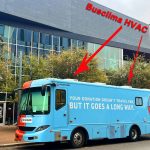 12V Camper Air Conditioner used in medicalmobile
 Technical White Paper on Multi-Unit Roof AC for Campers and Buses
 12 Volt RV Air Conditioning Units represent an energy and technological revolution
 Camper Aircon Unit – Modular Design Leads to a New Comfortable Travel
 15000 BTU Camper AC Multiple units
 12 Volt Camper Ac
 15000 Btu Air Conditioner Rv
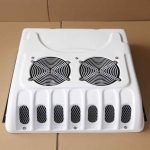 Air Conditioning Units for RV and Minibus Air Conditioner
 15000 Btu Camper Air Conditioner
 Spanish
  English