
Shuttle Bus Ac differs from home air conditioning in that it is typically controlled by the driver, but passengers can also make some personalized adjustments. Each seat has an adjustable air vent above it, which you can rotate to control the airflow.
Regarding temperature settings, it is recommended to set it between 24 and 26 degrees Celsius in summer and between 20 and 22 degrees Celsius in winter for both comfort and energy efficiency.
If you feel too cold or too hot, the best approach is to politely communicate with the driver.
Shuttle Bus Ac primarily regulates the interior temperature through cooling and heating cycles.
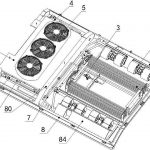
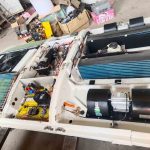
Its core components include a compressor, condenser, evaporator, and expansion valve.
The cooling cycle consists of four main steps: compression, condensation, throttling, and evaporation.
The heating function is typically achieved using waste heat from the engine or through a heat pump system.

Here are a few useful tips for using the Shuttle Bus Ac
Avoid prolonged direct exposure to the Shuttle Ac, especially on long journeys; it’s best to bring a light jacket. The bus has an internal/external air circulation mode. When encountering traffic jams or passing through tunnels, the driver will switch to internal circulation to prevent exhaust fumes and dust from entering the vehicle.
If you only want to turn off the air vent above your head, you can find the lever above your seat and move it to the horizontal position. Hopefully, this information will help you better understand and use the shuttle bus’s air conditioning. If you have more specific questions, visit www.busclima.com or contact busclima@kingclima.com


 Spanish
  English