
Small RV Air Conditioner
Small Rv Air Conditioner Multiple-unit has become a new trend in flexible temperature control for buses and RV.
With the growth of customized travel and multi-functional business travel needs, buses and RV are no longer just means of transportation, but have become mobile living and working spaces. In this context, traditional single large air conditioning systems can no longer meet the needs of zoned temperature control, energy saving, and complex scenarios. The solution of using multiple small air conditioning units is becoming a new trend in the industry. This article will systematically analyze this trend from four dimensions: policy drivers, technology selection, application scenarios, and market prospects.
Policy Regulations and Industry Trends – Small RV Air Conditioner
Policy regulations are the primary driving force behind industry technology upgrades. According to the “China’s National Program for Implementing the Montreal Protocol on Substances that Deplete the Ozone Layer (2025-2030),” environmental protection requirements for automotive Motorhome Ac are being significantly increased. From July 1, 2029, M1 category vehicles applying for new type approval will be prohibited from using refrigerants with a Global Warming Potential (GWP) greater than 150. This directly forces air conditioning manufacturers to accelerate technological iteration.
Reason: Traditional refrigerants are facing phase-out, and environmental regulations are becoming stricter.
Process: The industry is actively exploring next-generation solutions. Currently, the mainstream technological routes include natural refrigerants such as carbon dioxide (R744) and propane (R290), as well as low-GWP mixed refrigerants. For example, manufacturers such as Li Auto are simultaneously developing R290 systems and carbon dioxide systems. At the same time, national safety standards involving components such as electric vehicle coolants and rubber hoses have also been comprehensively upgraded, imposing higher requirements on insulation and flame retardancy.

Result: This policy drive is prompting the entire thermal management industry chain to evolve towards environmental protection, integration, and safety. The Shanghai International Automotive Air Conditioning and Refrigeration Technology Exhibition, to be held in November 2026, will also feature “low-carbon, environmental protection” and “thermal management” as core exhibition themes, reflecting the industry consensus.
Technical Parameters and Selection Schemes – Small RV Air Conditioner
For bus and RV users, choosing an air conditioner based on vehicle space, energy configuration, and usage habits is a core issue. The advantage of multiple small air conditioning units lies in their modularity and flexibility.
| Model | E-Clima2200 | E-Clima3000 | E-Clima4000 | E-Clima6000 | E-Clima8000 | E-Clima2600S |
| Voltage (V) |
DC12V/24V | DC12V/24V | DC12V/24V | DC12V/24V | DC12V/24V | DC12V/24V |
| Cooling Capacity (W/BTU) |
2200W//7500 | 3000W/10000BTU | 4000W/15000BTU | 6000W/20472BTU | 8000W/27300BTU | 2600W/78870BTU |
| Installation | Rooftop Mounted | Rooftop Mounted | Rooftop Mounted | Rooftop Mounted | Rooftop Mounted | Split Mounted |
| Evaporator Air Volume (m³/h) |
650 | 700 | 650 | 650 | 1500 | 450 |
| Condenser Air Volume (m³/h) |
1050 | 1400 | 1050 | 1700 | 3600 | 1400 |
| Refrigerant | R134a | R134a | R134a | R134a | R134a | R134a |
| Dimension (mm*mm*mm) |
700*580*263 | 885*710*290 | 700*580*263 | 1580*385*180/ 920*928*250 |
1260*1030*180 | 682*465*192 540*362*165 |
| Weight (KG) |
32 | 35 | 18/47 | 18/47 | 31 |
Voltage and Power Selection: Mainly divided into 12V DC and 220V AC. 12V Air Conditioners: Directly compatible with RV electrical systems, easy to install. However, they typically have lower power (cooling capacity of approximately 2000-3000W), suitable for limited spaces or situations where extreme cooling is not required. If the vehicle space is large or the environment is extremely hot, it may take longer to reach the set temperature.
220V Air Conditioners: Strong cooling capacity, able to cool down quickly. However, they rely on external mains power or a high-power inverter, which puts a huge strain on battery capacity. In the wilderness without mains power, the energy loss during the inversion process cannot be ignored.
Installation Options: Divided into integrated and split systems.
Integrated Air Conditioners: Such as Webasto’s BlueCool Drive 40, designed specifically for RVs, weighing only 6.6 kg, with a cooling capacity of 4kW. It can be integrated into the vehicle’s existing air conditioning circuit, providing cooling for the living area while driving. Its advantages include high integration and relatively simple installation and maintenance.
Split Air Conditioners: Separate indoor and outdoor units, offering more flexible installation, but requiring drilling into the vehicle body, which may affect vehicle sealing and resale value.
Energy Efficiency and Smart Technology: New generation small air conditioners generally use stepless variable frequency technology and intelligent control systems, which can automatically adjust the output according to the vehicle’s load, significantly reducing energy consumption. Some high-end products also have intelligent power management functions to prevent battery over-discharge.
Installation, Usage, and Target Customers – Small RV Air Conditioner
The value of multiple small air conditioning units is fully reflected in different application scenarios and customer groups.
Usage Scenarios:
Motorhomes and Campervans: This is the most typical demand scenario. The vehicle needs to simultaneously meet the cooling needs of the driving area while driving and the long-term temperature control of the living area when parked. Multiple systems can be controlled independently, such as only turning on the driving area air conditioner while driving, and then starting the living area air conditioner after parking, achieving energy savings. For example, King Long’s high-end campervans integrate air conditioning and other complete electrical equipment in the living area to enhance comfort.
Multifunctional Commercial Vehicles and Modified Vehicles: Used for corporate reception, mobile offices, etc., often requiring independent temperature control environments for different functional areas (such as the driving area, meeting area, and rest area). Special Vehicles: For vehicles such as ambulances, independent and precise temperature control is required for both the medical compartment and the driver’s cabin; engineering machinery cabins require powerful air conditioning to cope with harsh working conditions and are equipped with a positive pressure system to prevent dust intrusion.
Customer Base: Primarily divided into two categories. One category consists of business owners who use high-end RVs for family travel or business receptions; the other category consists of retirees who pursue a high-quality retirement lifestyle, have ample time, and prioritize comfort during their travels. These customers share a common characteristic: high demands for personalization and comfort, and relatively sufficient budgets.
Product Advantages and Market Prospects – Small RV Air Conditioner
The core advantage of using multiple small air conditioning units lies in achieving a comfortable experience through “centralized management and zoned control,” aligning with technological development trends.
System Advantages:
Improved Comfort and Energy Efficiency: Different areas of the vehicle can be independently temperature-controlled, avoiding energy waste. For example, only the sleeping area needs to be adjusted at night.
Enhanced System Redundancy and Reliability: Multiple units act as backups for each other; a single unit failure does not affect the basic temperature control functions of other areas.
Facilitates Personalized Modification and Upgrades: The modular design makes later additions and layout adjustments easier.
Market Prospects: J.D. Power research indicates that the focus of new energy vehicle users is shifting from range parameters to the overall “usability” and “effectiveness” of the vehicle, with driving comfort being a key aspect. Simultaneously, leading suppliers like Eberspächer are already providing complete solutions ranging from single devices to intelligent interconnected thermal management systems. In the future, with the popularization of integrated thermal management modules, multiple small air conditioners will no longer be isolated devices, but rather terminals in an intelligent temperature control network, working in conjunction with the vehicle’s battery management system and navigation system to achieve predictive energy management based on location and habits.
Small RV Air Conditioner Conclusion
The use of multiple small air conditioners in large RVs is not simply an increase in the number of devices, but a systemic upgrade driven by policies, technology, and market demand. It precisely addresses users’ pursuit of zoned comfort, flexible layout, and energy efficiency. With the implementation of environmental regulations and the integration of intelligent technologies, this flexible and efficient thermal management solution will undoubtedly bring a higher quality of comfort to mobile spaces.
Related posts:
 Air Conditioning Units for Motorhomes: A Distributed Temperature Control System
 Modular Temperature Control Solution for Motorhomes
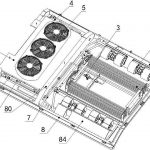 Bus Air Conditioner is used for buses and medium-sized commercial vehicles
 12 Volt RV Air Conditioning Units represent an energy and technological revolution
 Camper Aircon Unit – Modular Design Leads to a New Comfortable Travel
 15000 BTU Camper AC Multiple units
 Best Rv Air Conditioner
 4 sets of Rooftop AC Units for Campers for a 15m bus
 Technical White Paper on Multi-Unit Roof AC for Campers and Buses
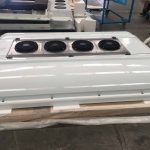 Acc Bus Air Conditioning
 15000 Btu Camper Air Conditioner
 Camper Air Conditioner 12V
 Aircon Units For Motorhomes
 Air Conditioning Units For Motorhomes
 Camper Rooftop Air Conditioning Units
 12 Volt Rv Ac Unit
 RV Rooftop Air Conditioning Units, 2 stes, Golden Partner for Minibus RV
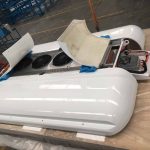 Air Conditioner for Bus Conversion
 Spanish
  English