Busclima China
Busclima China
  • Home
  • About us
  • Product
    • Bus Air Conditioner Unit
      • Bus Air Conditioner Airsuper Series
      • Bus Air Conditioner Wind Series
      • Bus Air Conditioner KingClima Series
    • Electric Bus Air Conditioner Unit
    • Mini Bus Air Conditioning Unit
  • News
    • Bus AC Knowledge
    • Bus AC Troubleshooting
  • Contact Us
  1. Home
  2. Bus AC Knowledge
  3. How to calculate the cooling capacity of Camper Ac

How to calculate the cooling capacity of Camper Ac

nick51331 Bus AC Knowledge

How to calculate the cooling capacity of a Camper Ac? A motorhome is a small, enclosed mobile space with relatively poor insulation, designed for extreme environments (scorching sun, extreme cold). Its heat load mainly comes from: Conductive heat: heat transferred through walls, windows, and roof (maximum). Radiant heat: heat generated by direct sunlight.
Internal heat generation: heat generated by people, appliances, and cooking.
Infiltration heat: hot air leaking in through door gaps.

How to calculate the cooling capacity of a Camper Ac – Two calculation methods (Method 2 recommended)
Method 1: Quick estimation method (suitable for initial planning) Applicable to standard box-type motorhomes (such as Iveco, Ford Transit chassis).

Formula: Required cooling capacity (BTU/h) ≈ Motorhome living area volume (cubic meters) × Coefficient
Coefficient selection:
1.50 Coefficient: Good insulation (thick insulation layer, double-glazed windows), mainly used in temperate regions.
2.60 coefficient: Generally suitable for vehicles with good insulation, many windows, or those used frequently in subtropical regions. (Recommended starting point)
3.70+ coefficient: Poor insulation, large window area (especially large windshield), and those used frequently in hot regions.

Example: A 7-meter minibus has an internal living area of ​​approximately 4m (length) × 2m (width) × 1.8m (height) = 14.4 cubic meters.
1. Calculated using a coefficient of 60: 14.4 × 60 = 864 BTU/h.
2. Conclusion: An air conditioner with a cooling capacity of approximately 9,000 BTU/h is needed (rounded up to the nearest commercially available standard).

Method 2: Detailed Itemized Estimation Method (More Accurate, Strongly Recommended)
This method more accurately reflects the actual situation. It is usually calculated in watts (W) and then converted to BTU/h (1 W ≈ 3.41 BTU/h).

Calculate Heat Transfer from Walls/Roof (Q1)

Formula: Q1 = Surface Area × Insulation Coefficient × Temperature Difference Between Inside and Outside

RV Simplification Factors:
1. Excellent Insulation (Polyurethane Foam ≥ 5cm): Insulation Coefficient approx. 2.5 W/(m²·℃)
2. Medium Insulation (Ordinary Foam or XPS Board): Insulation Coefficient approx. 4.0 W/(m²·℃)
3. Poor Insulation (Original Sheet Metal + Simple Interior): Insulation Coefficient ≥ 6.0 W/(m²·℃)

Temperature Difference Between Inside and Outside: Assuming outdoor temperature 38℃ and target indoor temperature 26℃, the temperature difference is 12℃.

Example: Living area surface area (excluding floor) approximately 30㎡, medium insulation.

Q1 = 30㎡ × 4.0 × 12℃ = 1440 W

Calculate Heat Transfer from Windows (Q2 – Primarily Radiant Heat)
1. This is the main heat source! Formula: Q2 = Window area × Solar heat gain coefficient × Radiation intensity
2. Simplified RV calculation: Each square meter of single-pane glass can generate 500-700 W of heat load under strong sunlight! Applying high-quality heat insulation film can reduce this by 30%-50%.
3. Example: 4㎡ of windows (including sunroof), without film. Q2 = 4㎡ × 600 W/㎡ = 2400 W

Calculating internal heat generation (Q3)
1. Approximately 100-150 W per person (sitting position).
2. For appliances such as refrigerators and lights, estimate heat generation at 30% of their rated power.
3. Example: 3 people + appliances generate approximately 100W of heat.
Q3 = 3 × 150 + 100 = 550 W

Summarize and select Camper Ac
1. Total heat load Qtotal = Q1 + Q2 + Q3 = 1440 + 2400 + 550 = 4390 W
2. Convert to cooling capacity:
In watts: 4390 W
In BTU/h: 4390 × 3.41 ≈ 14,970 BTU/h
3. Consider safety margin: Air conditioners cannot always operate at full load, and long-term full-load operation results in significant losses. It is recommended to add a 10-20% safety margin.
4. Final Required Cooling Capacity: 14,970 × 1.2 ≈ 18,000 BTU/h

Important Conclusion: For this example of a medium-sized motorhome, a 15,000 BTU air conditioner might be needed. However, the heat load on the windows (Q2) must be significantly reduced through high-quality heat insulation film and additional sunshades; otherwise, the air conditioner will be overloaded and extremely energy-intensive. A more reliable solution is to install two air conditioners of 9,000-13,500 BTU each, enabling zoned control and redundancy. How to calculate the cooling capacity of Camper Ac? Visit www.busclima.com or contact busclima@kingclima.com for more technical support.
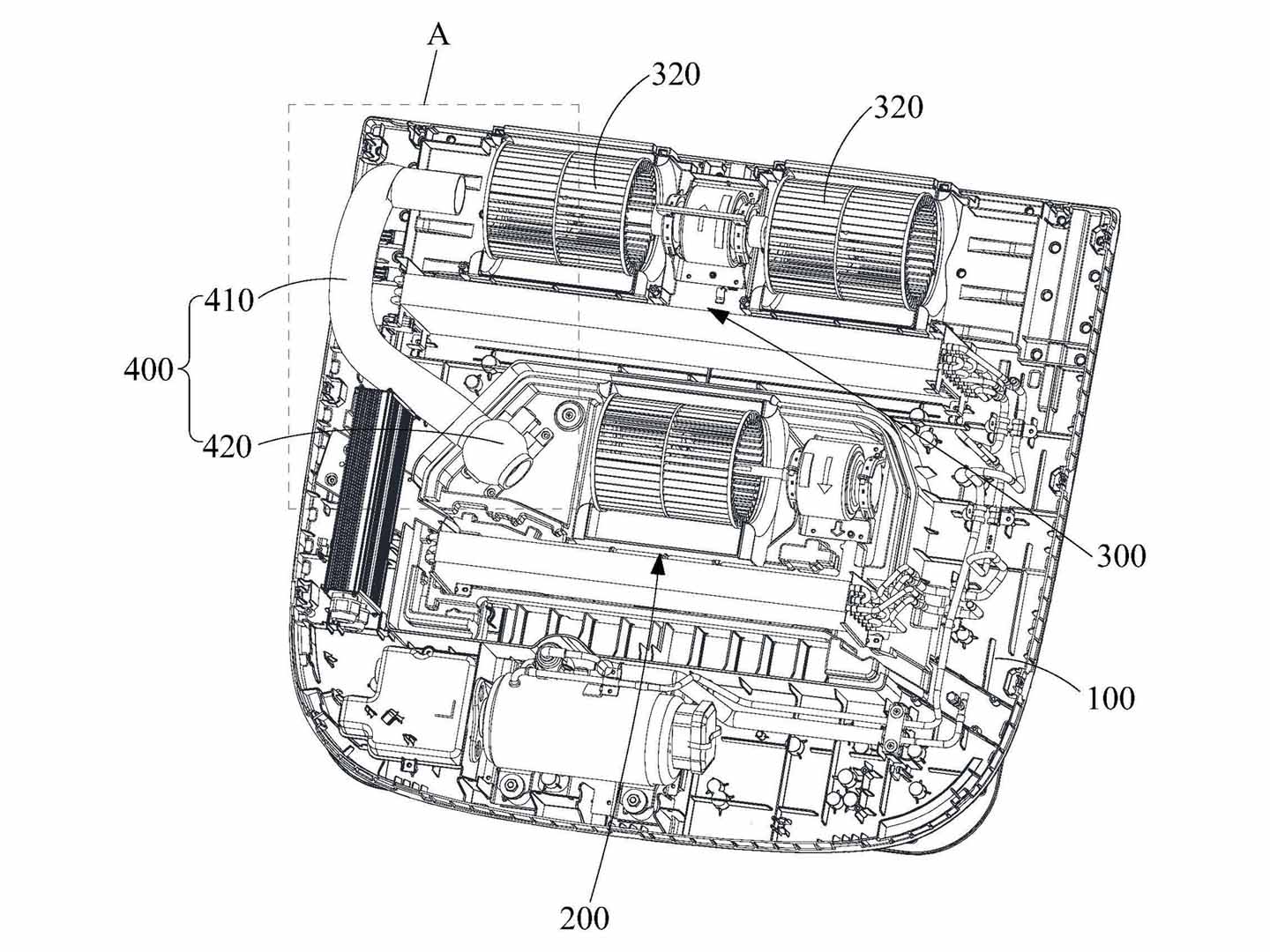
How to calculate the cooling capacity of Camper Ac

How to calculate the cooling capacity of Camper Ac – How do the calculation results guide action? (Decision-making process)
1. Obtain the cooling capacity value (e.g., 15,000 BTU).
2. Convert to electricity demand: Calculate the Energy Efficiency Ratio (EER) based on the average level of a motorhome inverter air conditioner at 10 BTU/h/W.
Power demand (W) ≈ Cooling capacity (BTU/h) ÷ EER = 15,000 ÷ 10 = 1500 W.
This means that the air conditioner consumes approximately 1.5 kWh per hour when operating under medium to high load.
3. Matching the power system
Your battery pack (e.g., a 12V 800Ah lithium battery, with approximately 9.6 kWh of usable power) can theoretically support this air conditioner for 9.6 ÷ 1.5 ≈ 6.4 hours without external power.
Conclusion: This battery configuration is reasonable. If the calculated support time is too short, you must increase the battery capacity or reduce the air conditioner’s operating load.
4. Choosing the type and quantity of air conditioners:

> 12,000 BTU: A dual-air conditioner solution is strongly recommended, distributed front and rear, for greater flexibility, quieter operation, and higher reliability.

Be sure to choose a DC inverter air conditioner, which operates efficiently at low power, saving electricity and having a low starting current.

How to calculate the cooling capacity of Camper Ac? Calculation is the first step in scientific planning. For non-standard vehicles such as minibuses and large trailers, it is strongly recommended that you inform a professional RV air conditioning supplier or conversion company of your vehicle dimensions, window layout, and insulation plan. They can provide more accurate calculations and selection advice. Never choose an air conditioner with insufficient cooling capacity to save money; that will mean that in the hottest weather, it will only be able to groan helplessly while you are drenched in sweat inside the vehicle.
Related posts:

Bus Air ConditionerBus Air Conditioner is used for buses and medium-sized commercial vehicles Ac For BusIntroduction to Ac For Bus Air Conditioner In CamperAir Conditioner In Camper Ac For SkoolieHow to calculate the cooling capacity of a school bus air conditioner?
12 volt vs 110 volt AC capacity, AC calculation for camper with many windows, AC capacity and camper ceiling vents, AC capacity for weekend vs full-time use, AC cooling capacity for RV, AC size for camper in Arizona, AC size for camper in Florida, Airflow calculation for camper ducts, Appliance heat load camper AC, Ask an expert about AC sizing, Average vs peak load AC sizing, Battery bank sizing for AC calculation, Best app for calculating AC size, Body heat contribution to AC load, BTU calculator for travel trailer, BTU for camper with slide outs, BTU needed for camper in hot climate, BTU per square foot camper, Calculate AC for 30ft fifth wheel, Calculate AC for class C motorhome, Calculate AC for pop up camper, Calculate AC needs for camper van, Calculate BTU for camper air conditioner, Calculate cooling load for camper, Calculate supplemental cooling needs, Calculating AC load from refrigerator, Calculating AC tonnage for RV, Calculating annual cooling cost camper, Calculating capacity with fans, Calculating dehumidification load, Calculating electrical load for camper AC, Calculating for camper addition, Calculating for camper parked in sun, Calculating for ducted vs non-ducted AC, Calculating for frequent door opening, Calculating for future camper upgrades, Calculating for high humidity camping, Calculating for multiple AC units, Calculating return air needs camper, Calculating runtime for camper AC, Camper AC BTU requirements, Camper AC capacity in watts conversion, Camper AC efficiency calculation, Camper AC size calculator, Camper AC ton to BTU conversion, Camper awning effect on cooling load, Camper ceiling height AC capacity, Camper insulation and AC sizing, Camper LED lights heat load calculation, Camper square footage AC calculation, Camper volume AC calculation, Climate zone camper AC BTU, Common mistakes calculating camper AC, Cooling capacity estimation camper, Cooling capacity for camper off-grid, Duct size calculation for AC capacity, Example calculation for 20ft camper, Factors for sizing camper AC, Figuring out what AC size for camper, Free camper air conditioner sizing tool, Generator size for camper AC calculation, Heat gain calculation for RV, How many BTUs for camper AC, How to account for camper color AC load, How to calculate camper AC cooling capacity, How to calculate CFM for camper AC, How to calculate EER for camper AC, How to calculate for camper cooktop heat, How to determine camper AC size, How to measure camper for AC, How to verify AC size calculation, HVAC contractor for camper calculation, Impact of skylights on AC size, Insulation R-value camper AC sizing, Latent heat calculation for camper, Load calculation software for RVs, Low profile AC capacity calculation, Manual J calculation for RV, Nighttime cooling capacity needs, Number of windows AC BTU calculation, Occupants calculate AC BTUs, Online RV AC BTU calculator, Oversizing camper AC problems, Peak heat gain time calculation, Pet heat load camper AC calculation, Portable AC capacity calculation, Professional vs DIY calculation, Quick estimate camper AC BTUs, Remodel cooling load calculation, RV AC sizing guide, RV air conditioner BTU calculation formula, RV air conditioner sizing rule of thumb, SEER rating calculation for RV, Selecting right size RV air conditioner, Sensible heat ratio RV AC, Shade impact on AC capacity calculation, Simplified method for camper AC size, Solar panel calculation for running AC, Spreadsheet for camper cooling load, Static pressure calculation RV AC, Sun exposure calculate AC size, Travel trailer AC size chart, Undersizing camper AC issues, Ventilation impact on AC sizing, What size air conditioner for my camper, Whole camper vs bedroom AC calculation, Zoned cooling capacity calculation
2025-12-15

Product Inquiry

Your Name(*)

Your Email (*)

Phone(*)

Your Message

Product

  • Product
    • Bus Air Conditioner Unit
    • Electric Bus Air Conditioner Unit
    • Mini Bus Air Conditioning Unit

News

  • Busclima Commences Deliveries of Advanced Coach Air Conditioning Systems to Major Global Corporation 2026-02-10
  • Busclima Coach Air Conditioning Systems Delivered to Major Global Enterprise 2026-02-09
  • Busclima Successfully Fulfils Major 2025 Air Conditioning Order 2026-02-09
  • Busclima Announces Strategic 2025 Partnership with International Transport Leader 2026-02-09
  • Busclima Secures Major 2025 Air Conditioning Contract with Global Transport Operator 2026-02-09

tags

12 Volt Camper Ac 12 Volt Rv Ac Unit 12V Air Conditioner For Motorhome 12V Camper Air Conditioner 12V Rv Ac 12V Rv Ac Unit 15000 Btu Air Conditioner Rv 15000 Btu Camper Ac Ac For Camper Ac For Rv Ac For Rv Camper Ac In Camper Ac On Rv Ac Unit For Rv Camper Aircon Campers Air Conditioner For Rv Air Conditioning For Motorhomes Air Conditioning Unit For Rv Air Conditioning Units For Campers Camper Ac Camper Ac Unit Camper Air Conditioner Camper Rooftop Ac Camping Tent Ac Unit Coleman Camper Ac Coleman Mach Rv Ac Unit Fixing Rv Ac Low Profile Air Conditioner For Rv Low Profile Camper Ac Low Profile Camper Air Conditioner Low Profile Rv Ac Low Profile Rv Ac Unit Mini Split On Rv Motorhome Rooftop Air Conditioners Pop Up Camper Air Conditioner Portable Ac For Camping Portable Air Conditioner For Camping Portable Motorhome Air Conditioner Rv Air Conditioner Rv Camper Air Conditioner Rv Mini Split Rv Roof Air Conditioner Rv Rooftop Ac Unit Thermo King Bus Air Conditioning Top Rated Rv Air Conditioners
  • Bus Air Conditioner Unit
  • Electric Bus Air Conditioner Unit
  • Mini Bus Air Conditioning Unit
  • Product
  • Home
  • About us
  • Product
  • News
  • Contact Us
Copyright © 2019 Company Name, Inc. emai:busclima@kingclima.com Tel:0086 0371 6637 9266