
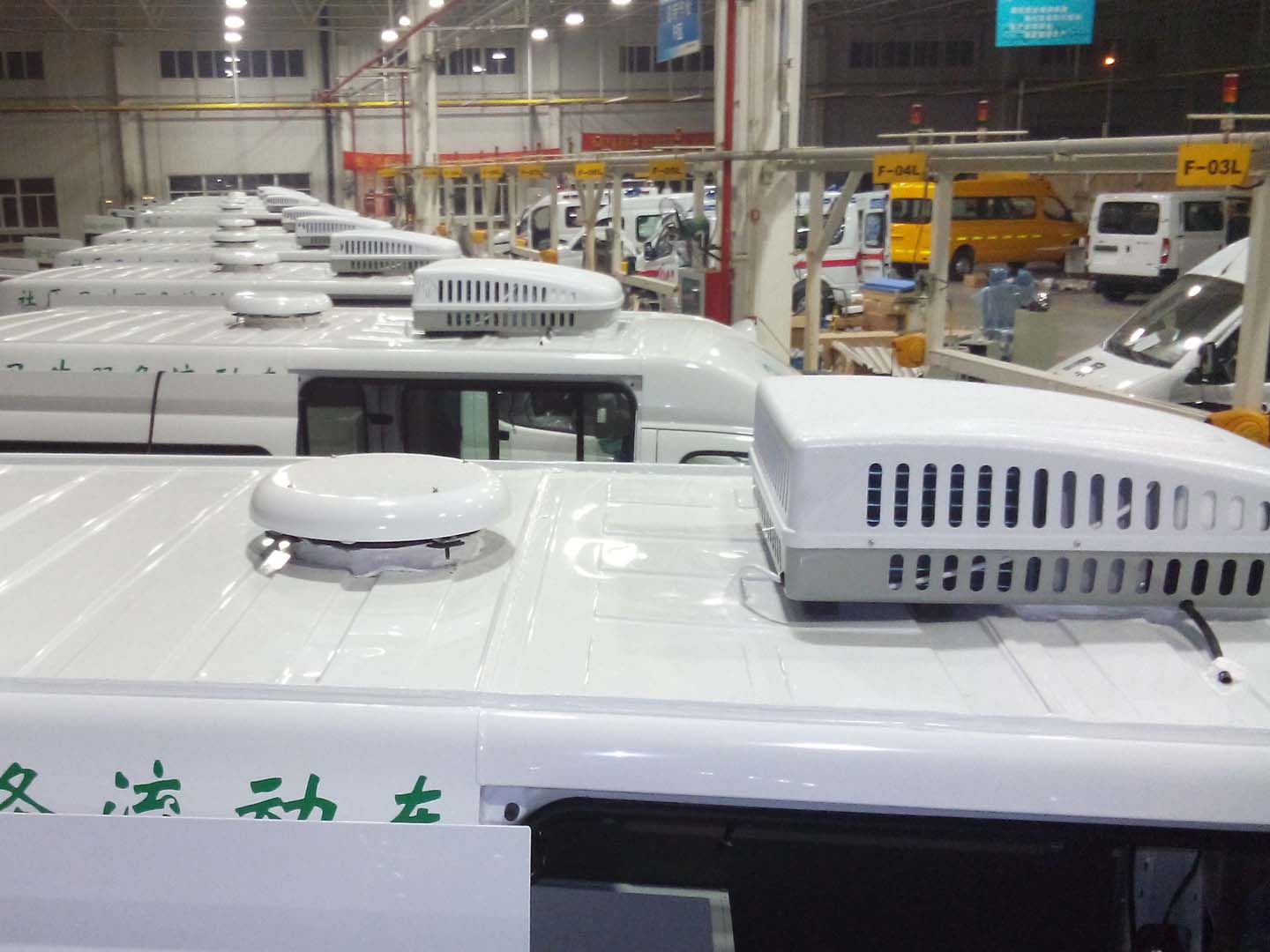
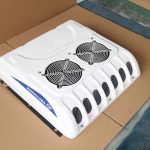
Low Profile RV Ac is a roof-mounted air conditioner designed to optimize vehicle aerodynamics and aesthetics.
Its core feature is a significantly reduced external installation height, typically 30% to 50% lower than conventional models.
This design aims to reduce wind resistance and noise during vehicle operation and improve the overall streamlined appearance.
According to the 2025 RV Accessories Industry Design Trends Report, low-profile air conditioners have become standard equipment in new Class B motorhomes and high-end travel trailers.
Its emergence is a direct response to users’ growing demands for fuel economy, driving stability, and vehicle aesthetics.
Low Profile RV Ac – Core Technical Features and Implementation
To achieve the low-profile profile, the manufacturer employs several integrated engineering technologies.
A compact scroll compressor and a high-efficiency microchannel heat exchanger are closely arranged to save vertical space.
The air circulation system has been redesigned, using centrifugal or hybrid fans to maintain sufficient airflow at a lower height.
A 2025 paper in the journal *Thermodynamics Engineering* points out that advanced aerodynamic shroud design can shift the airflow separation point backward, thus maintaining heat dissipation efficiency while reducing height.
The outer casing is typically made of a single piece of high-strength composite material, reducing weight while ensuring structural rigidity.
These technologies work together to achieve cooling capacity similar to traditional models within a limited space.
Low Profile RV Ac – Performance Trade-offs and Objective Assessment
Choosing a low-profile air conditioner means making trade-offs between aesthetics and certain performance parameters.
Due to its compact design, the heat exchanger area of some models may be slightly smaller than that of traditional models, potentially limiting peak heat dissipation efficiency in extreme high-temperature environments.
More convoluted internal airflow may increase air resistance, resulting in a slight increase in fan power consumption at the same airflow rate.
A comparative test conducted by the authoritative independent testing organization “RV Tech Review” in 2025 found that the energy efficiency difference between top-of-the-line low-profile air conditioners and standard Camper Ac was controlled within 5%.
However, its manufacturing cost is on average 15% to 25% higher than traditional models, which is directly reflected in the final selling price.
Users need to clarify whether their priorities regarding vehicle appearance and driving performance outweigh their considerations for maximum cooling efficiency and cost.
Low Profile RV Ac – Installation Compatibility and Structural Considerations
Installing a low-profile air conditioner places specific requirements on the roof structure and preparation.
Because the mounting base area is usually larger to distribute stress, it is necessary to ensure that the roof has a sufficiently flat area and internal support frame.
During installation, the original factory-supplied sealing gaskets and streamlined water guide covers must be strictly used; this is a crucial step to ensure waterproofing and aerodynamics.
Experienced installation technicians emphasize that the internal wiring and drainage pipe layout have a more compact space, requiring extremely high installation precision.
Not all existing RV roofs are suitable for direct upgrades; a professional assessment of the roof structure is essential.
Correct installation is the fundamental prerequisite for realizing its design advantages and avoiding leaks and abnormal noises.
Low Profile RV AC – Market Positioning and Purchase Recommendations
Low-profile air conditioners are a product of market segmentation and consumer upgrading, serving a specific user group.
They are best suited for users who frequently drive long distances at high speeds, are sensitive to fuel economy, and value the vehicle’s aesthetic integrity.
For users who primarily engage in static camping or low-speed driving, their aerodynamic advantages may not be fully realized.
When purchasing, focus on the Energy Efficiency Ratio (CEER), operating noise level in decibels, and the manufacturer’s waterproof warranty period.
It is recommended to consider the air conditioner as part of the overall vehicle system, integrating it with the vehicle’s insulation performance and window shading solutions.
Ultimately, it represents an engineering philosophy that strives for balance: achieving a more perfect combination of form and function without significantly compromising core functionality.
Related posts:
 Small Air Conditioner for Camper
 Camper Air Conditioner
 Air Conditioning Units for RV and Minibus Air Conditioner
 12 Volt Air Conditioner For Rv
 Similarities between RV Camper Air Conditioner and Minibus AC
 Air Conditioning Units for Campers Installation Process
 Air Conditioning for Motorhomes Manufacturing Process
 Camper Ac
 Ac For RV Camper Market Analysis Report
 Motorhome Air Conditioning and Minibus Manufacturer Matching
 Ac For Camper and Mini Bus Ac Installation Steps
 Ac Unit For RV Camper: Air Conditioning System for Minibuses and Motorhomes
 Installing an RV Air Conditioner on a Minibus
 RV Air Conditioning Units to bus manufacturers in North Africa
 RV Air Con is designed for West Asian countries
 RV Air Cond Matching with Turkish bus manufacturers
 Ac On RV for Minibus Caravan Conversion
 Air Conditioner for RV Installation Steps