
Motorhome roof air conditioner is essential equipment for long-distance travel and extended stays, and the comfort of the interior environment and energy management efficiency directly determine the quality of the trip.
The air conditioning system, as the core component maintaining the comfort of this “mobile space,” is undergoing a profound transformation in its technological approach and assembly model.
With 2025 as a key turning point, as new energy vehicle thermal management technology evolves towards “holistic coordination” and “intelligence,” the assembly of bus and motorhome air conditioning units is also upgrading from the simple stacking of multiple independent components to a highly integrated, intelligently controllable, and unified thermal management platform.
Core Parameter Evolution and Industry Trends – Motorhome Roof Air Conditioner
Reason: The shift in energy structure and the increasing demand for comfort.
Traditional fuel-powered bus and motorhome air conditioning systems primarily rely on engine power and have a relatively independent design. However, with the application of new energy chassis and users’ pursuit of longer off-grid parking times and quiet comfort, air conditioning systems face pressure to transform from “high-energy-consuming components” to “high-efficiency environmental management systems.” Their performance indicators are no longer limited to cooling capacity and power consumption, but extend to the synergistic efficiency with the entire vehicle’s energy system.
| Model | E-Clima2200 | E-Clima3000 | E-Clima4000 | E-Clima6000 | E-Clima8000 | E-Clima2600S |
| Voltage (V) |
DC12V/24V | DC12V/24V | DC12V/24V | DC12V/24V | DC12V/24V | DC12V/24V |
| Cooling Capacity (W/BTU) |
2200W//7500 | 3000W/10000BTU | 4000W/15000BTU | 6000W/20472BTU | 8000W/27300BTU | 2600W/78870BTU |
| Installation | Rooftop Mounted | Rooftop Mounted | Rooftop Mounted | Rooftop Mounted | Rooftop Mounted | Split Mounted |
| Evaporator Air Volume (m³/h) |
650 | 700 | 650 | 650 | 1500 | 450 |
| Condenser Air Volume (m³/h) |
1050 | 1400 | 1050 | 1700 | 3600 | 1400 |
| Refrigerant | R134a | R134a | R134a | R134a | R134a | R134a |
| Dimension (mm*mm*mm) |
700*580*263 | 885*710*290 | 700*580*263 | 1580*385*180/ 920*928*250 |
1260*1030*180 | 682*465*192 540*362*165 |
| Weight (KG) |
32 | 35 | 18/47 | 18/47 | 31 |
Process: Technological integration and standard iteration.
Currently, the core parameter system of bus and motorhome air conditioning units is being redefined, and its development is deeply influenced by the penetration of new energy vehicle thermal management technology:
Energy efficiency ratio (COP) becomes a key indicator: A higher COP means less power consumption, which is crucial for bus and motorhomes that rely on limited battery energy storage.
The industry is rapidly shifting from traditional fixed-frequency compressors to air conditioning units using DC variable-frequency compressors, which can continuously adjust the output according to the actual load, resulting in significant energy savings.
Mandatory application of environmentally friendly refrigerants: In response to the global environmental agenda, the use of refrigerants with low global warming potential (GWP) has become a mandatory requirement.
CO₂ (R744) refrigerant heat pump systems and R290 (propane) technology have become cutting-edge choices for high-end models due to their excellent environmental characteristics and efficient heating capabilities at low temperatures.
Intelligent control interfaces become standard: Modern air conditioning units are no longer “black box” devices. According to industry analysis for 2025, leading systems have integrated intelligent communication interfaces such as the CAN bus, supporting data interaction with vehicle battery management systems (BMS), intelligent control panels, and even cloud platforms, laying the foundation for predictive energy management.
Result: The parameter content of the new generation of air conditioning units
has expanded from single mechanical performance indicators to comprehensive technical specifications covering energy efficiency, environmental protection, and communication protocols. This directly drives the shift in assembly mode from “physical connection” to “deep integration of functions and data.”
Integrated Assembly Solution – Motorhome Roof Air Conditioner
Reason: The drawbacks of traditional assembly methods and the bottlenecks in system efficiency.
Traditional bus and motorhome air conditioning assembly often involves installing components such as compressors, condensers, evaporators, and air ducts separately, connected by complex piping and wiring harnesses.
This mode has inherent drawbacks such as large space occupation, long installation time, high risk of leakage due to numerous pipe connections, and the inability to coordinate heat management across various subsystems (such as battery cooling and cabin air conditioning).
Process: Modular and integrated platform design becomes the solution.
Drawing on the latest concepts in new energy vehicle thermal management, advanced bus and motorhome air conditioning assembly is exhibiting the following characteristics:
Physical integration and space optimization: By adopting “multi-way valve” integration technology, multiple valves controlling the refrigerant flow are integrated into a single module, significantly reducing the number of external pipes (according to the case study, the number of pipes can be reduced by 40%), reducing weight and improving reliability.
Core heat exchange components such as condensers and evaporators are also trending towards compact, flat designs to adapt to the limited space on the roof or under the chassis.
Functional integration and heat coordination
The core goal of assembly has evolved into building an “integrated thermal management platform.”
This platform, through a unified control algorithm, connects previously independent circuits such as the driver’s cabin/living area air conditioning, power battery thermal management (if applicable), and waste heat recovery from diesel/water heating systems.
For example, in winter, the system can prioritize using waste heat from the battery or electric drive system to heat the cabin, and only activate the heat pump or PTC when insufficient, thereby significantly reducing heating energy consumption. Intelligent Pre-assembly and Testing
Before leaving the factory, air conditioning suppliers or high-end modification factories pre-assemble core components such as compressors, integrated valve bodies, controllers, and sensors into one or more fully functional modules.
These modules undergo rigorous sealing, performance, and durability testing and are delivered in a “plug-and-play” manner, significantly improving modification efficiency and system consistency.
Result: Motorhome Roof Modular Air Conditioning Unit
The integrated assembly delivered is no longer a pile of loose parts, but a deeply optimized and tested “intelligent thermal management function package.” It simplifies on-site installation, reduces failure rates, and maximizes energy efficiency through intelligent scheduling of the vehicle’s heat.
Multidimensional Usage Scenarios and Comprehensive Product Advantages – Motorhome Roof Air Conditioner
Reason: The extreme diversity of usage scenarios for motorhomes and the preciousness of electrical resources.
From scorching deserts to frigid snowfields, from bustling campsites to tranquil wilderness, motorhome air conditioning systems need to cope with complex environmental challenges.
At the same time, in off-grid situations without access to mains electricity, every kilowatt-hour of electricity is extremely valuable, and the energy consumption performance of the air conditioner directly determines the sustainable parking time.
Result: Through targeted technical integration and assembly, the air conditioning system is upgraded from a basic functional device to a key value unit that enhances travel quality and vehicle competitiveness in specific scenarios.
Target Customer Groups and Decision-Making Logic – Motorhome Roof Air Conditioner
Reason: Consumer upgrading and the rise of professional user groups.
With the development of RV culture, the user group has rapidly expanded from early adventure enthusiasts to families pursuing high-quality lifestyles, retired travelers, and corporate clients using motorhomes for business purposes. Their understanding of products and performance requirements are far higher than before.

Process: Value perception drives purchasing decisions.
Experienced Travelers and Modification Experts: This group of customers is technically savvy and deeply understands “total cost of ownership.”
They are willing to pay a premium for highly integrated, energy-efficient, and reliable pre-assembled modules because it means fewer breakdowns, longer battery life, and higher resale value.
They are often the earliest adopters and word-of-mouth promoters of new technologies.
High-End Business Users and Business Owners
For business-type motorhomes used for hospitality, customers focus on brand image, riding comfort, and reliable, trouble-free performance. The integrated air conditioning solution, offering OEM-level quality, boasts a clean layout, quiet operation, and reliable performance—key aspects that demonstrate professionalism and prestige.
As industry observers note, comfort and energy efficiency have become core competitive advantages for new energy vehicle brands, and this logic also applies to the high-end motorhome market.
For hassle-free family users:
More and more families want to enjoy motorhome travel but don’t want to be bogged down by complex maintenance.
Therefore, they highly favor integrated solutions provided by professional manufacturers and thoroughly tested.
This “turnkey” solution minimizes uncertainties during subsequent use, allowing them to focus more on the travel experience itself.
Result: The core commonality of the target customer group is their recognition of “system value” rather than “parts price.”
They are buying not just an air conditioner, but a complete environmental management system that guarantees comfort, reliability, and freedom during their travels.
This demand is forcing the entire industry chain, from parts supply to modification services, to accelerate its transformation towards providing more highly integrated solutions.
Motorhome Roof Air Conditioner: Defining the Future Assembly Paradigm
In summary, the assembly of bus and motorhome air conditioning units is undergoing a paradigm shift shaped by policies and regulations, the integration of cutting-edge technologies, and the deepening of user scenarios.
The best assembly solution goes far beyond the physical process of attaching components to the vehicle; it refers to building a collaborative system based on efficient and environmentally friendly components, structured around an integrated thermal management platform, and controlled by intelligent systems.
This system can deeply interact with the vehicle’s energy network, intelligently deciding on heat distribution; it can provide a stable, reliable, and easy-to-maintain experience through modular design;
Ultimately, it can seamlessly adapt to users’ diverse journeys, transforming technological advantages into tangible comfort, freedom, and peace of mind. As industry integration deepens, future bus and motorhome air conditioning systems will inevitably interact more intelligently with the environment and human needs, becoming a true “intelligent hub for mobile space environments.”
Related posts:
 Motorhome Ac Unit
 12 Volt Rv Air Conditioner
 Best Rv Ac
 Small Rv Air Conditioner
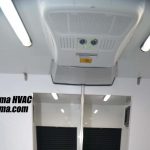 Best Rv Ac Unit
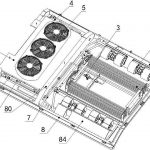 Bus Air Conditioner is used for buses and medium-sized commercial vehicles
 Air Conditioning Units for Motorhomes: A Distributed Temperature Control System
 12 Volt RV Air Conditioning Units represent an energy and technological revolution
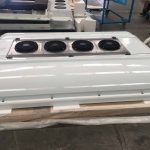 Acc Bus Air Conditioning
 Modular Temperature Control Solution for Motorhomes
 Technical White Paper on Multi-Unit Roof AC for Campers and Buses
 Camper Aircon Unit – Modular Design Leads to a New Comfortable Travel
 4 sets of Rooftop AC Units for Campers for a 15m bus
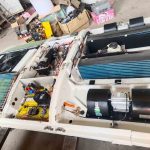 Introduction to Ac For Bus
 Camper Rooftop Air Conditioning Units
 Motorhome Air Conditioning and Minibus Manufacturer Matching
 Motorhome Rooftop Air Conditioners
 Roof Top Camper Air Conditioner