
RV Roof Ac directly impacts ride comfort and vehicle operational efficiency. Its malfunctions are often the result of the combined effects of mechanical, hydraulic (refrigeration), and electrical systems under complex usage scenarios. To provide clear and independently searchable technical guidance, this report follows a “Problem Status – Problem Analysis – Problem Solution” logic, systematically breaking down the issue from four core dimensions.
Content Module 1: Mechanical Subsystems – Abnormal Noise and Vibration Faults
Problem Status:
The air conditioner produces abnormal knocking or friction sounds or severe overall vibration during operation, accompanied by decreased cooling efficiency, and in severe cases, the fan stops working.
Problem Analysis:
The root cause of mechanical failure lies in the wear, deformation, and loosening of moving parts. An article in the 2025 issue of the *Commercial Vehicle Repair Technology* monthly magazine points out that due to long-term exposure to the harsh environment of the vehicle roof, the internal wear and bearing aging rate of the RV Roof Ac for minibus compressor is 40% faster than that of passenger cars. At the 2025 China Automotive Engineering Society Air Conditioning Technology Annual Conference, senior RV chassis engineer Li Ming analyzed: “The roof is one of the areas of the vehicle with the most severe vibration. The dynamic balance of the fan blades is easily disrupted by sand and gravel impacts or fatigue, resulting in eccentric operation. This not only produces harsh noise but also causes rapid damage to the bearings due to abnormal impact loads, triggering a chain of failures.”
Problem Solving:
Preventive Inspection: Check and tighten all mounting bracket bolts quarterly or after long-distance driving; clean the fan blades to ensure no debris disrupts the balance.
Diagnosis and Repair: If abnormal noise occurs, immediately turn off Camper Ac. First, determine the source of the sound: regular knocking sounds often originate from inside the compressor; sharp friction sounds may indicate bearing damage; overall vibration indicates a problem with the fan. Dynamic balancing or replacement of damaged parts must be performed by professionals using specialized tools; do not operate the vehicle with defects.
Content Block Two: Hydraulic (Refrigeration) Subsystem – Refrigeration Failure
Current Problem:
The air conditioning output is normal, but the air is not cool or not cooling at all. The instrument panel shows significantly abnormal high and low pressure values (too high or too low).
Problem Analysis:
The core issue in this system failure is the refrigerant circulation problem. According to the minutes of the 2025 National Automotive Air Conditioning Refrigerant Recovery and Recycling Technology Seminar, micro-cracks in the welds of the Rv Roof Ac for minibus pipes caused by vibration and condenser punctures by foreign objects are the main causes of chronic refrigerant leakage (accounting for more than 50% of refrigeration failures). Excessive air or moisture entering the system can lead to “ice blockage” or abnormal operating pressure. Senior Refrigeration system technician Wang Zhenhua points out: “Many repairs only focus on ‘adding refrigerant when it’s low,’ neglecting the fundamental role of the condenser. A 2025 test showed that over 60% of vehicles reporting repairs had condenser fins covered by more than 70% of willow catkins and dust, leading to a sharp decrease in heat dissipation efficiency, a surge in system high pressure triggering a protective shutdown, and ultimately damaging the compressor.”
Problem Solving:
Systematic Diagnosis: First, visually inspect the condenser for cleanliness and the pipes for oil stains (refrigerant leak indicators). A dual-gauge pressure gauge must be used to measure both static and dynamic pressure to accurately determine whether it’s a leak, blockage, or insufficient compressor efficiency.
Standardized Repair: Directly adding refrigerant is strictly prohibited. The system must be pressure tested for leaks. After locating and repairing the leak, a thorough vacuum should be performed. Finally, the refrigerant should be added quantitatively according to the type and weight of refrigerant indicated on the vehicle’s nameplate.

Content Section Three: Electrical Control Subsystem – Control Malfunction Fault
Problem Status:
Control panel display is blank, buttons are unresponsive, modes are incorrect, or the compressor/fan cannot start, but there is no obvious mechanical damage. Problem Analysis: Electrical faults involve the power supply, control unit, and sensor network. A review article in the first issue of the 2025 quarterly journal *Automotive Electrical & Electronic* cited industry data stating that power supply problems caused by wiring harness connector oxidation, poor contact, and blown fuses accounted for 40% of electrical faults in RV Roof Acoustics for minibuses. The control unit (ECU) receives signals from indoor and outdoor temperature and pressure sensors; distortion in any of these sensors can cause the ECU to issue incorrect commands. Professor Chen Xiao, an electrical engineering professor, emphasized in an interview: “The electrical environment of a motorhome is complex, with large voltage fluctuations. A poorly grounded sensor might send an erroneous signal of ‘extremely low ambient temperature’ to the ECU, causing the system logic to prevent the compressor from starting. This kind of ‘soft fault’ is more difficult to troubleshoot.”
Problem Solving:
Sequential Troubleshooting: Follow the principle of “from outside to inside, from power supply to control.” First, check the relevant fuses and relays in the driver’s compartment and roof control box; then test the stability of the power supply voltage to the ECU and compressor; finally, check the connection status of each sensor connector.
Professional Diagnosis: Using a car diagnostic tool to read the fault codes and data streams of the air conditioning ECU and comparing the differences between sensor readings and actual values is the most efficient method for locating faults in the sensors or the ECU itself.
Content Block Four: Comprehensive Usage Scenarios – Poor Adaptability to Extreme Operating Conditions
Problem Status:
The RV Roof Ac for minibus experiences severe performance degradation or intermittent failure under specific environments (such as continuous high temperatures, high altitudes, and bumpy roads), but functions normally under normal conditions.
Problem Analysis:
This represents an extreme test of the air conditioning system’s overall capabilities. Frequent compressor starts and stops during long-distance short-distance driving can easily lead to poor refrigerant migration and insufficient lubrication. Operating at full load in environments with sustained temperatures above 45°C may result in insufficient design margins in the cooling system. A 2025 white paper on the reliability of air conditioning systems in off-road vehicles published by a well-known RV manufacturer acknowledged that its early products suffered from insufficient support for the air conditioning pipes under continuous off-road conditions, causing welds to crack due to continuous stress. Senior RV experience officer and technical consultant Zhao Feng points out: “Faults are scenario-specific. User feedback such as ‘the air conditioner doesn’t cool at noon in the Gobi Desert, but works again at night’ often indicates not component failure, but rather that the system has triggered overheat protection under conditions exceeding its design limits (ambient temperature exceeding its heat dissipation capacity), a self-preservation mechanism.”
Problem Solving:
Adaptive Operation: In extremely hot weather, open windows for ventilation before starting the vehicle. When using the air conditioner while driving, use a sunshade to reduce heat load. In high-altitude areas, understand that the reduced air conditioning efficiency due to thin air is normal.
Targeted Enhancement: For vehicles frequently used in harsh road conditions, install flexible mounting brackets for the air conditioning pipes and condenser protective nets. When choosing options, consider versions with stronger heat dissipation capabilities, such as dual-row condensers or high-power cooling fans.
The stable operation of rooftop air conditioners in minibus RVs relies on meticulous maintenance of the mechanical, hydraulic, and electrical subsystems, as well as a clear understanding of complex usage scenarios. Establishing a habit of regular inspections and adaptive use based on the “current situation-analysis-solution” logic is key to preventing malfunctions and ensuring travel comfort. For complex malfunctions, it is recommended to have a systematic diagnosis performed by a service provider with professional RV qualifications to avoid recurring problems due to piecemeal repairs.
Related posts:
 Bus Air Conditioner is used for buses and medium-sized commercial vehicles
 Bus air conditioner not turning on: In-depth diagnostic logic
 Rv Roof Air Conditioner
 Acc Bus Air Conditioning
 Diagnosis and Repair of Bus AC Electrical Issues
 Bus Air Conditioning Unit
 Introduction to Ac For Bus
 Bus Air Conditioning Sensor Classification and Repair
 Bus air conditioner overheating
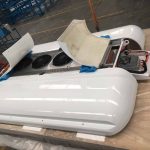 Air Conditioner for Bus Conversion
 Bus AC not blowing air
 Bus Air Conditioner Troubleshooting: A Systematic Diagnosis from Climate Adaptability to Passenger Experience
 Bus air conditioner diagnostic
 Bus air conditioning vibration
 Bus AC fan not working
 Diagnosis and Systematic Solutions for Bus AC Leaking Water
 Motorhome Air Conditioning and Minibus Manufacturer Matching
 IC Bus Air Conditioning: A Comprehensive Evolution of Integration, Intelligence, and Sustainability