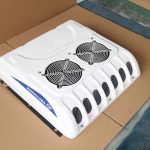
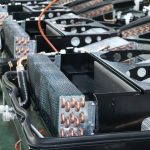
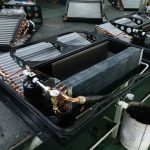
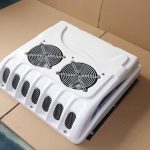
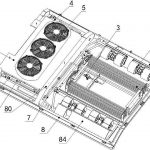
While the application scenarios of RV Camper Air Conditioner and minibus (medium-sized bus) air conditioning differ, they share many core similarities as “dedicated air conditioning systems for mobile vehicles.”
These similarities primarily stem from their disconnection from the stable power grid and their need to provide a comfortable climate in a relatively confined mobile space within a complex and bumpy environment.
BUSCLIMA engineers explain that in these application scenarios, the functions and appearance of RV AC and minibus AC are identical, differing only in power output.
Same Core Technology Platform and Working Principle
1. Both follow a vapor compression refrigeration cycle, with core components including a compressor, evaporator, condenser, and throttling device.
2. Both consist of an indoor unit and an outdoor unit (or an integrated unit), connected by refrigeration piping to form a closed refrigerant circulation system.
Power Source of RV Camper Air Conditioner and Minibus AC
1. This is the most fundamental difference between them and household air conditioners. Neither uses 220V/380V AC mains power; instead, they directly utilize the vehicle’s DC power system.
2. Typically, a belt-driven compressor (direct mechanical drive) powered by the vehicle’s engine is used, or an electric compressor powered by the vehicle’s battery (24V or 48V system) (especially in new energy minibuses).
3. The vast majority use the vehicle’s battery (12V, 24V, 48V) for power, operating through an electric compressor. This is the most common energy mode.
RV Camper Air Conditioner and Minibus AC Reliability Requirements
1. Both must be able to withstand the continuous vibrations and shocks generated by the vehicle driving under various road conditions.
2. All components (especially the compressor and heat exchanger) must be securely fastened.
3. Piping welding requirements are much higher than those for household air conditioners, requiring processes such as nitrogen-filled shielded welding to prevent weld cracking due to vibration.
4. Electrical terminals must use anti-loosening designs (such as spring washers and self-locking connectors).
5. Both need to start and operate normally and stably under extreme outdoor temperatures (over 50°C in summer and below zero in winter).
6. The system needs to withstand the corrosive effects of rain, salt spray (in coastal areas), and road dust.
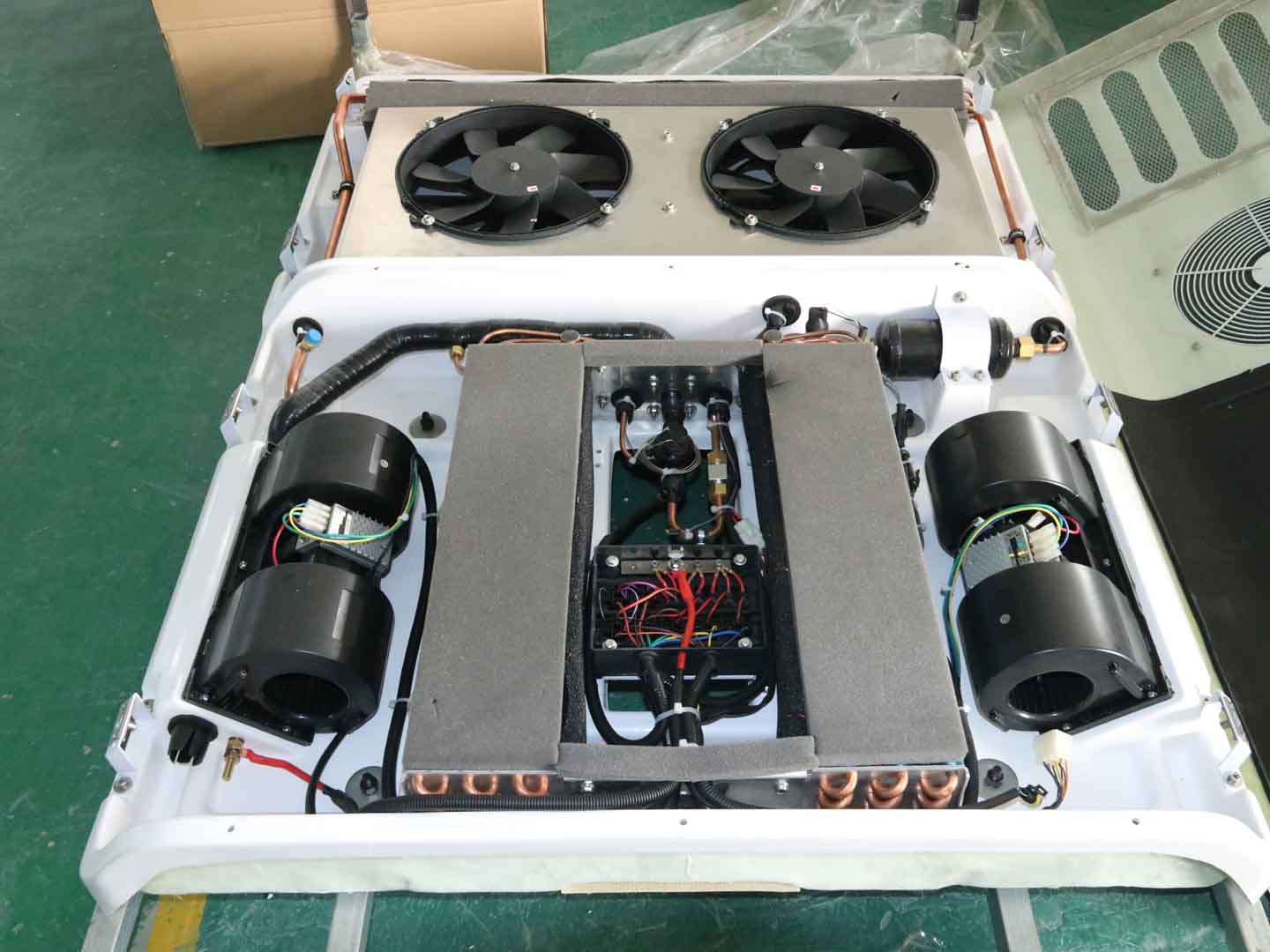
Every kilogram of vehicle weight affects fuel/electricity consumption and handling; therefore, the air conditioning system needs to be as lightweight as possible while maintaining performance.
Due to its very close proximity to passengers, controlling operating noise (especially fan noise) is a shared design priority.
Both systems require well-designed air ducts and vents for the confined space to achieve uniform temperature distribution within the vehicle.
In essence,RV Camper Air Conditioner and the Minibus AC are “sibling products” sharing the same core technological DNA.
Their main differences lie in the specific needs of their target users (e.g., RVs emphasize quietness and home integration, while minibuses prioritize rapid cooling and high airflow).
However, their requirements for fundamental reliability, energy source, and environmental adaptability are highly consistent. This is why some specialized AC for Rv manufacturers are able to cover both markets simultaneously.