
Small Ac For Camper can be used in minibus/RV platforms where space and energy are both limited. The selection and configuration of rooftop small air conditioners need to go beyond the simplistic notion that “small equals economical,” achieving a precise balance across multiple dimensions.
True superiority lies in a deep fit with specific parameters, usage scenarios, user habits, and target customer groups.
Mainstream “small air conditioners” on the market often tout their cooling capacity (below 7000 BTU) and compact size, but actual user feedback is often polarized: some are satisfied with their energy efficiency and adaptability, while others complain about “insufficient cooling capacity” or “slow cooling.” 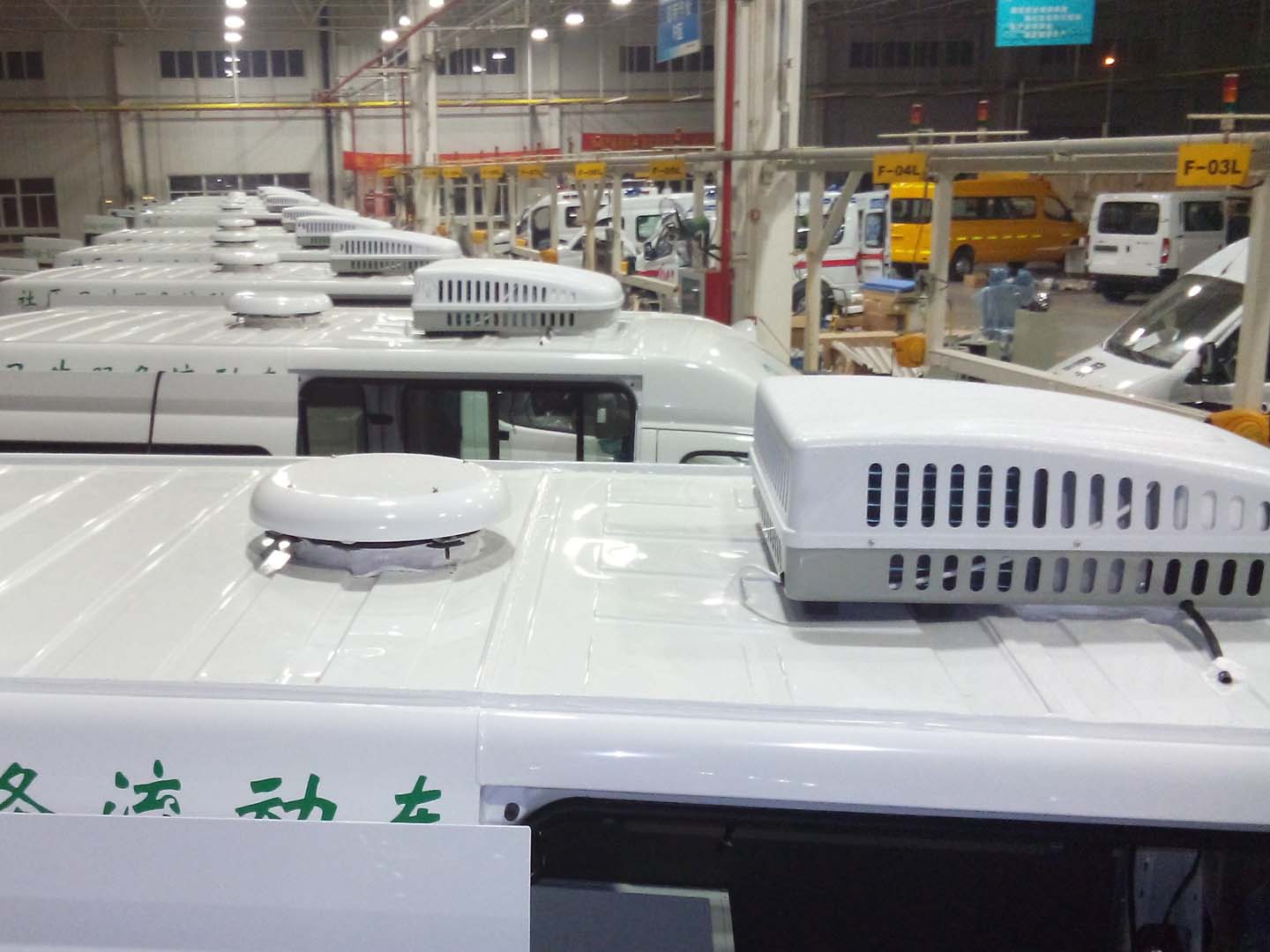
| Model | E-Clima2200 | E-Clima3000 | E-Clima4000 | E-Clima6000 | E-Clima8000 | E-Clima2600S |
| Voltage (V) |
DC12V/24V | DC12V/24V | DC12V/24V | DC12V/24V | DC12V/24V | DC12V/24V |
| Cooling Capacity (W/BTU) |
2200W//7500 | 3000W/10000BTU | 4000W/15000BTU | 6000W/20472BTU | 8000W/27300BTU | 2600W/78870BTU |
| Installation | Rooftop Mounted | Rooftop Mounted | Rooftop Mounted | Rooftop Mounted | Rooftop Mounted | Split Mounted |
| Evaporator Air Volume (m³/h) |
650 | 700 | 650 | 650 | 1500 | 450 |
| Condenser Air Volume (m³/h) |
1050 | 1400 | 1050 | 1700 | 3600 | 1400 |
| Refrigerant | R134a | R134a | R134a | R134a | R134a | R134a |
| Dimension (mm*mm*mm) |
700*580*263 | 885*710*290 | 700*580*263 | 1580*385*180/ 920*928*250 |
1260*1030*180 | 682*465*192 540*362*165 |
| Weight (KG) |
32 | 35 | 18/47 | 18/47 | 31 |
Small Ac For Camper Performance Parameters—A Trade-off Between Efficiency and Compactness
The 2025 “Report on the Development of Thermal Management Technology for Small Commercial Vehicles” points out that the key parameters for evaluating small rooftop air conditioners have shifted from “nominal cooling capacity” to “actual space cooling rate” and “low-power consumption maintenance capability.” The report, through comparative testing, found that small air conditioners using full DC inverter technology, although their peak cooling capacity may be lower than comparable fixed-frequency products, actually offer superior overall cooling performance and passenger comfort in real-world vehicle environments (especially considering insulation differences) due to their ability to maintain high efficiency for extended periods. According to the latest discussions at the 2025 Annual Academic Conference of the China Society of Automotive Engineers’ Air Conditioning Branch, the consensus emphasized that for small air conditioners, “high energy efficiency ratio (SEER)” is more valuable than “large cooling capacity.” Leading test engineer Chen Liwei analyzed in the report: “With limited roof space and load-bearing capacity in minibuses, the advantage of ‘small air conditioners’ is weight reduction and a lower center of gravity. However, ‘small’ does not equal ‘weak’; its technological essence should be a higher level of energy efficiency density. A 5000 BTU inverter small air conditioner with an SEER of 12 has a far greater practical value than a 7000 BTU fixed-frequency model with an SEER of only 8.”
Therefore, evaluating the merits of Camper Air Conditioner hinges on examining their sustained cooling efficiency and energy efficiency level under limited power input. Prioritize models employing DC inverter technology and possessing high energy efficiency certification, rather than simply pursuing the maximum nominal cooling capacity.
Small AC for Camper Use Cases – A Necessary Requirement for Precise Matching
The same small air conditioner might be insufficient for commuting on a humid and hot minibus in a southern city, but could perform well on a dry tourist route in the north with large temperature differences.
This reveals that the performance of small air conditioners is highly dependent on the external environmental heat load. Their design redundancy is limited, and their sensitivity to different scenarios is far greater than that of large air conditioners. A study published in 2025, “China Regional Climate and Vehicle Heat Load Map,” shows that, for the same vehicle compartment volume, the total sensible and latent heat (humidity) load in South China during summer can be 30%-40% higher than in North China. This means that small air conditioners used in South China must have stronger dehumidification capabilities and high-temperature heat dissipation designs. In an interview, the product director of a well-known RV air conditioning company revealed, “We offer differentiated versions of our ‘small air conditioners’ for different climate zones. For example, the ‘Southern Version’ enhances the power of the condenser cooling fan and the hydrophilic coating of the evaporator to cope with high temperatures and humidity; the ‘Northern Version’ focuses more on wide-range start-up performance and heating capacity.”
Therefore, the choice of a small air conditioner must be highly scenario-based. In hot and humid areas, priority should be given to models with enhanced heat dissipation and dehumidification functions, and additional insulation of the vehicle itself may be necessary; in dry areas or areas with large temperature differences, more attention should be paid to its operational stability and heating efficiency.
Small Ac For Camper Lifestyles – The Dynamic Equation of Power Consumption
Some users can achieve a comfortable night’s sleep with a small air conditioner and limited battery power, while others, even with larger batteries, still experience range anxiety. This difference often stems from the degree of matching between usage habits and the air conditioner’s intelligent management capabilities.
The power consumption of a small air conditioner is not a constant value, but a dynamic variable affected by the user’s set temperature, usage time, and ambient temperature. For users accustomed to “off-grid parking” and prolonged air conditioning use, the core need is not the air conditioner’s peak power, but rather the breadth of its efficient operating range at medium or low power. The 2025 “White Paper on Energy Management of Motorhomes” indicates that small air conditioners with intelligent power adjustment and integration with the Battery Management System (BMS) can extend average usable time off-grid conditions by more than 40%. Energy management expert Wu Feng points out: “For small air conditioners, the core of ‘intelligence’ is understanding ‘consumption within limits.’ For example, when the battery charge decreases at night, it can automatically and gently raise the set temperature by 1-2°C, or operate at a lower fan speed, maintaining basic comfort with minimal energy consumption. This addresses users’ actual pain points more effectively than simply improving hardware energy efficiency.”
Therefore, for users with long-term off-grid usage needs, the “best” small air conditioner must be an intelligent energy terminal. Its value lies not only in hardware energy efficiency but also in whether it possesses intelligent algorithms that coordinate with the vehicle’s energy system, dynamically optimizing operating strategies based on energy conditions.
Small AC For Camper Customer Base – Fundamental Differences in Value Perception
Individual car owners are often willing to pay a premium for quieter, smarter small inverter air conditioners, while some rental operators consider the same product “more show than substance” and tend to choose cheaper, easier-to-maintain basic fixed-frequency models.
This reflects the different definitions of core product value among different customer groups. Individual users (such as family travelers and road trip enthusiasts) perceive value holistically, including comfort (noise, smooth temperature control), convenience (intelligent control), and emotional experience (technological feel). Corporate customers (such as short-term rental platforms and business fleets) have a highly rational value assessment, focusing on purchase cost, failure rate, ease of maintenance, and total lifecycle cost. The 2025 Commercial Fleet TCO Analysis Report shows that for high-frequency, multi-user operating vehicles, the extreme reliability and extremely low single-repair time of the equipment are far more important than the experience improvements brought by cutting-edge technology.
Therefore, there is no single “best” small air conditioner suitable for all users. For the consumer market, a product’s competitive advantage should be built on superior user experience, quiet operation, and intelligent integration. For the enterprise market, the core competitiveness lies in ultimate reliability, modular design, and a robust after-sales support network.
Small Ac For Camper Overall Conclusion
The excellence of the rooftop “mini air conditioner” in minibuses and campervans is a systems engineering project that seeks the optimal solution within limited physical boundaries (parameters) in relation to the external environment (usage scenario), human behavior (lifestyle habits), and purchasing motivations (customer group). Its definition is relative and scenario-specific. When choosing, users should conduct a four-dimensional cross-evaluation: clearly define their target customer group and core value propositions, analyze key usage scenarios and climate challenges, examine personal lifestyle habits and energy management patterns, and ultimately select a product with the optimal parameter combination (efficiency, quietness, and intelligence) within this framework. The ultimate winner will be the intelligent solution that best understands how to create maximum satisfaction with limited capabilities under multiple constraints.
Related posts:
 Best Ac For Rv
 12 Volt Rv Ac Unit
 Small Rv Ac
 Low Profile Rv Ac Unit
 Camper Air Conditioning Unit
 Camper Air Conditioner
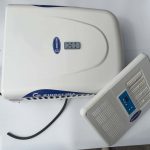 Camper Roof Ac Unit
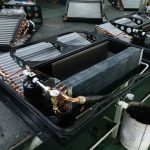 Camper Ac
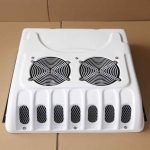 Air Conditioning Units for RV and Minibus Air Conditioner
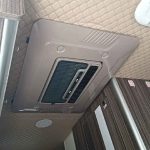 Small Air Conditioner for Camper
 Similarities between RV Camper Air Conditioner and Minibus AC
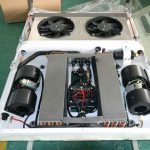 Air Conditioning Units for Campers Installation Process
 Air Conditioning for Motorhomes Manufacturing Process
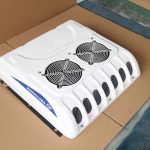 Ac For RV Camper Market Analysis Report
 12 Volt Air Conditioner For Rv
 Low Profile Rv Ac
 Ac For Camper and Mini Bus Ac Installation Steps
 Motorhome Air Conditioning and Minibus Manufacturer Matching