
Small Air Conditioner for Camper – Definition and Core Requirements
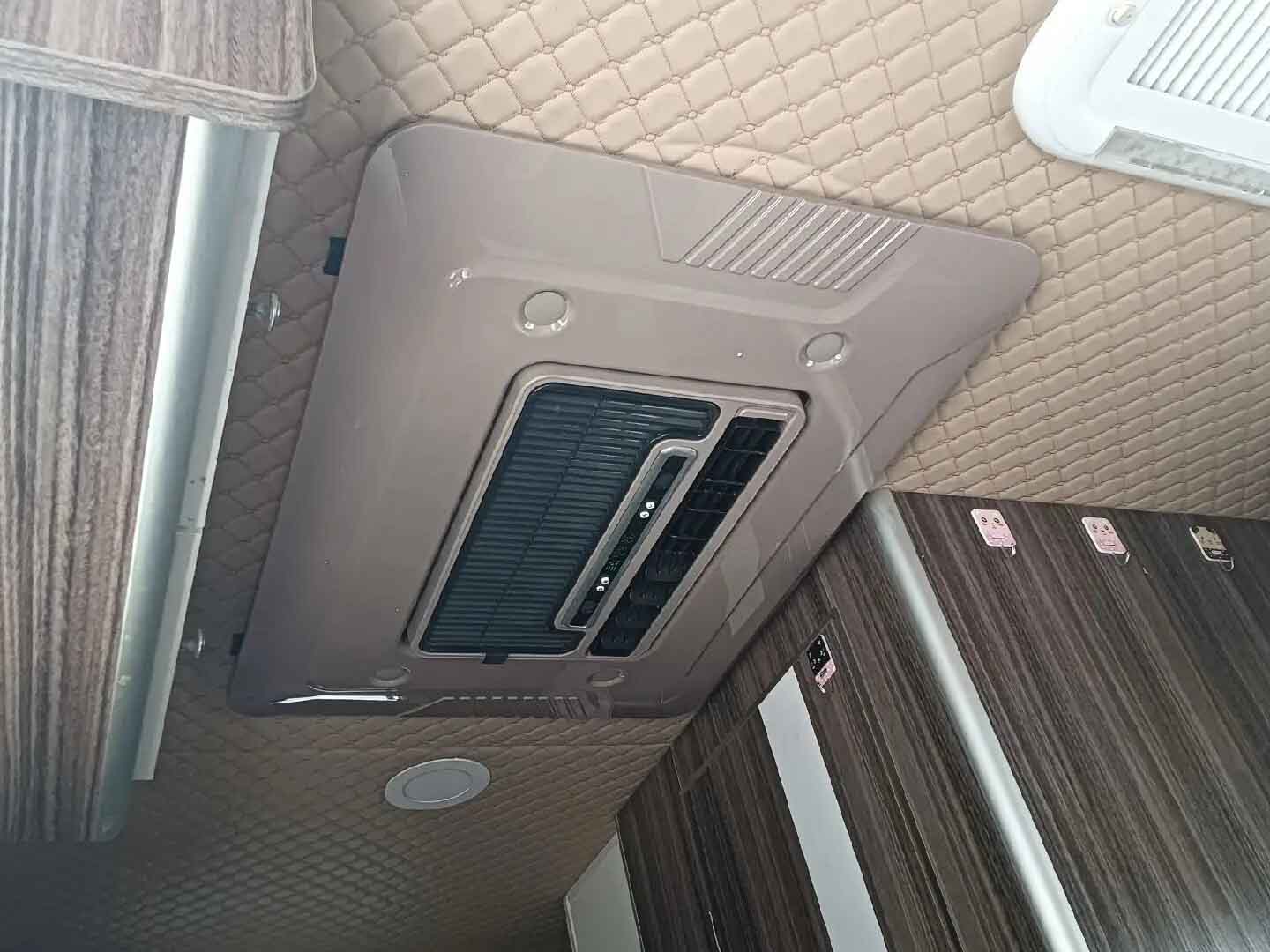
Small Air Conditioner for Camper is designed specifically for compact campervans, caravans, and small motorhomes.
Their core mission is to provide effective temperature control within extremely limited installation space and power budget.
These devices typically refer to compact rooftop or portable units with a cooling capacity between 5000 and 8000 BTU.
The fundamental difference between them and large motorhome air conditioners lies in the extreme compromises made in size, weight, and power.
This compromise has given rise to unique technological paths and product forms.
Small Air Conditioner for Camper – Types and Application Scenarios
Mainstream products fall into two main technological categories: integrated rooftop air conditioners and split-type air conditioners.
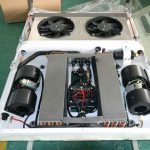
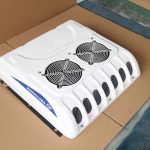
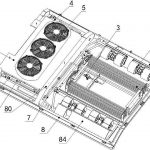
Traditional integrated rooftop air conditioners integrate the compressor, condenser, and evaporator into a single unit on the roof.
The advantages are relatively standard installation and direct airflow, but the roof protrudes higher, raising the center of gravity.
Split-type air conditioners, on the other hand, place the compressor and outdoor unit on the exterior chassis, with only the lightweight evaporator located inside the vehicle.
This significantly reduces roof weight and height, making it more suitable for small, high-roof vehicles or those prioritizing low wind resistance.
Portable air conditioners offer a temporary solution, dissipating heat outside the vehicle via flexible hoses. They are highly flexible but less energy efficient.
The choice depends on the vehicle’s structure, the extent of permitted modifications, and the user’s temperature control priorities.
Small Air Conditioner For Camper – Energy Efficiency and Power Challenges
For small motorhomes, electricity is a more scarce core resource than space.
High efficiency means longer off-grid operation time and a smaller burden on generators.
Therefore, the competition among small air conditioners is essentially a competition of energy efficiency ratio (COP).
The latest technology focuses on full DC inverter technology, enabling stepless speed regulation of the compressor and fan motor.
This avoids the energy waste and temperature fluctuations caused by the frequent start-stop cycles of traditional fixed-frequency air conditioners.
In a 2025 outdoor power evaluation report, engineers pointed out: “A good compact inverter Camper Ac can improve its seasonal energy efficiency ratio by more than 40% compared to older fixed-frequency models.”
This means that consuming the same amount of electricity can produce more cooling.
Power management must be deeply integrated with air conditioning to achieve intelligent temperature control and power limiting based on battery level.
Small Air Conditioner For Camper – Installation Flexibility and Creative Solutions
The extremely limited installation space in small campervans has spurred a variety of innovative installation solutions.
Chassis mounting is a popular option, concealing the air conditioning unit under the vehicle floor or in a storage compartment.
This completely frees up roof space for solar panel installation, but requires complex duct design.
“Hidden” installations integrate the air conditioning unit into cabinets or bedside tables, maintaining the visual integrity of the interior furnishings.
The core challenges of installation are ensuring reliable condensate drainage and accessibility for maintenance.
The ventilation path must be scientifically planned; any airflow blockage will lead to significant performance degradation.
A seasoned remodeler advises: “Installing air conditioning in small campervans requires the meticulous planning of every air duct and pipe, akin to surgery. A comprehensive cooling plan must precede the specific installation.”
Small Air Conditioner For Camper – Future Trends and Selection Recommendations
The future of small campervan air conditioning is moving towards greater integration, intelligence, and quietness.
Heat pump technology will become standard, enabling a single unit to handle both cooling and efficient heating.
Smart home-style integration allows for scenario-based temperature control management via mobile app or voice commands.
Quiet operation is key to high-end performance, improving the nighttime experience through optimized air ducts and compressor vibration reduction.
For users, accurate heat load calculations should be performed first when choosing an air conditioner to avoid underpowered or excessive performance.
Air conditioning must be considered as part of the vehicle’s overall energy system, taking into account the compatibility with batteries, solar panels, and generators.
Ultimately, a successful small campervan air conditioner strikes the optimal balance between comfort, freedom, and quietness within limited conditions.
Related posts:
 Camper Air Conditioner
 Air Conditioning Units for RV and Minibus Air Conditioner
 Camper Ac
 Similarities between RV Camper Air Conditioner and Minibus AC
 Air Conditioning Units for Campers Installation Process
 Air Conditioning for Motorhomes Manufacturing Process
 Ac For RV Camper Market Analysis Report
 Motorhome Air Conditioning and Minibus Manufacturer Matching
 Ac For Camper and Mini Bus Ac Installation Steps
 Bus Air Conditioner is used for buses and medium-sized commercial vehicles
 Ac Unit For RV Camper: Air Conditioning System for Minibuses and Motorhomes
 RV Air Conditioning Units to bus manufacturers in North Africa
 Installing an RV Air Conditioner on a Minibus
 Air Conditioner for RV Installation Steps
 Ac In Camper for Minibus to Motorhome Conversion
 RV Air Cond Matching with Turkish bus manufacturers
 RV Air Con is designed for West Asian countries
 Ac On RV for Minibus Caravan Conversion