
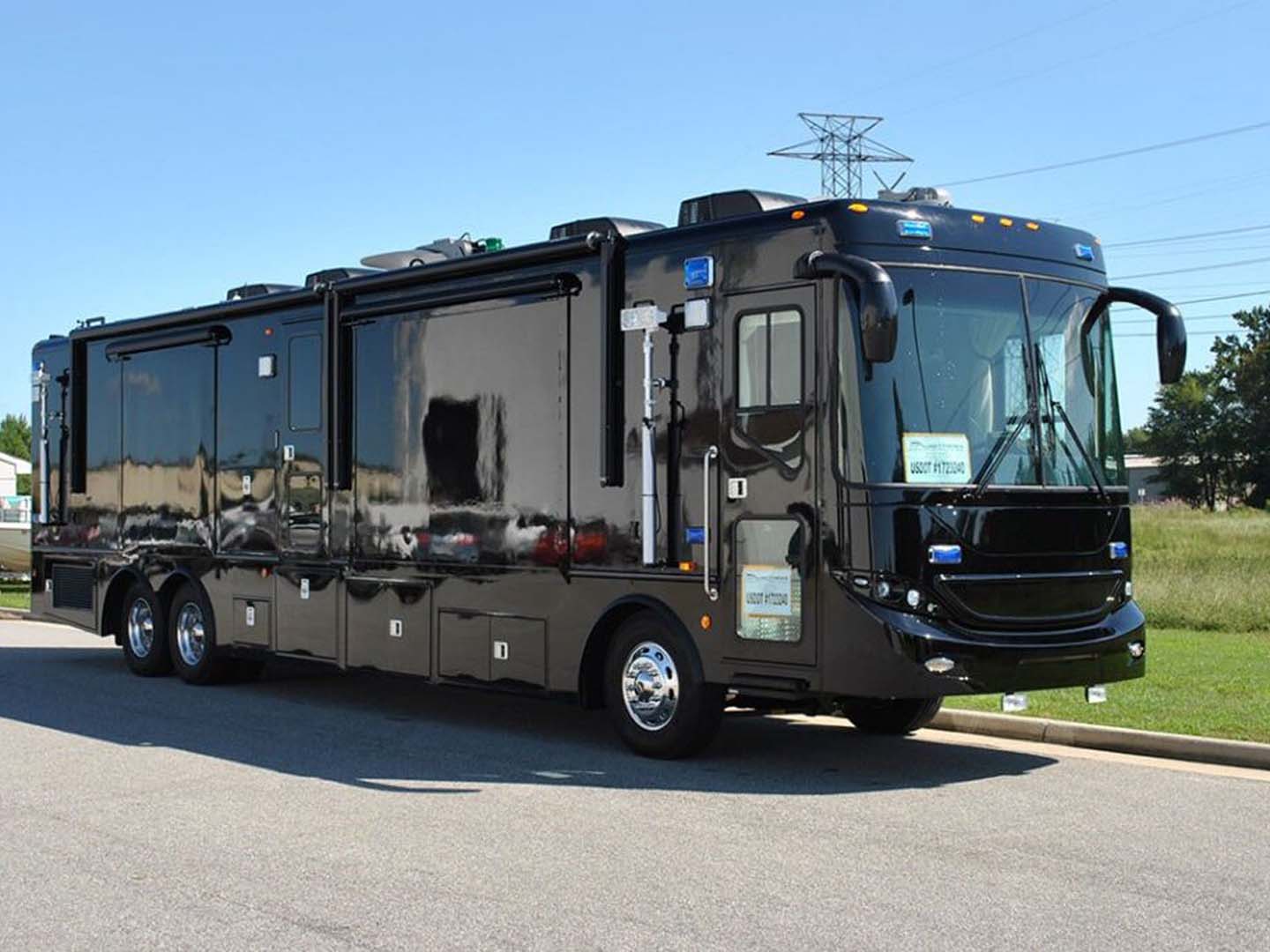
Small RV face more stringent constraints in terms of space, energy consumption, and reliability than larger vehicles. To achieve precise product-market matching, a systematic analysis across multiple scenarios is essential. Small RV, with their flexibility and versatility, are widely used in tourism rentals, corporate commuting, and family travel.
| Model | E-Clima2200 | E-Clima3000 | E-Clima4000 | E-Clima6000 | E-Clima8000 | E-Clima2600S |
| Voltage (V) |
DC12V/24V | DC12V/24V | DC12V/24V | DC12V/24V | DC12V/24V | DC12V/24V |
| Cooling Capacity (W/BTU) |
2200W//7500 | 3000W/10000BTU | 4000W/15000BTU | 6000W/20472BTU | 8000W/27300BTU | 2600W/78870BTU |
| Installation | Rooftop Mounted | Rooftop Mounted | Rooftop Mounted | Rooftop Mounted | Rooftop Mounted | Split Mounted |
| Evaporator Air Volume (m³/h) |
650 | 700 | 650 | 650 | 1500 | 450 |
| Condenser Air Volume (m³/h) |
1050 | 1400 | 1050 | 1700 | 3600 | 1400 |
| Refrigerant | R134a | R134a | R134a | R134a | R134a | R134a |
| Dimension (mm*mm*mm) |
700*580*263 | 885*710*290 | 700*580*263 | 1580*385*180/ 920*928*250 |
1260*1030*180 | 682*465*192 540*362*165 |
| Weight (KG) |
32 | 35 | 18/47 | 18/47 | 31 |
Question 1: Local Climate and Thermal Load Adaptability – Small RV
Question: Given the compact size and limited insulation space of small RV, how do different regional climates affect the selection and performance configuration of their air conditioning systems?
Evidence: An article in the 8th issue of the *China Journal of Automotive Engineering* in 2025, titled “Research on Thermal Management of Special Vehicles,” points out that the heat load per unit space in small vehicles is significantly higher than that in large vehicles. In the hot and humid South China region, the temperature rise rate in the cabin of a small RV is about 40% faster than that of a large bus, requiring the air conditioning system to have stronger instantaneous cooling capacity and dehumidification efficiency. Conversely, according to the latest findings from the 2025 National New Energy Vehicle Thermal Management System Innovation Conference, experts pointed out that in the frigid winters of northern regions, users’ demand for “rapid heating” is even higher than for cooling, while small air conditioners typically have limited heating capacity. Zhao Wei, a leading climate adaptability engineer, emphasized in his report: “For small minibuses, the cooling capacity calculation formula for large vehicles cannot be simply applied. In the south, the focus must be on evaluating the continuous energy efficiency ratio of the air conditioner under high temperatures; in the north, integrating auxiliary PTC heating or directly selecting a heat pump-type rooftop air conditioner should be considered to meet all-season needs.”
Conclusion: Therefore, air conditioners for small minibuses and RV must be customized based on the climate characteristics of the main operating areas. Southern versions should enhance cooling capacity and dehumidification efficiency, while ensuring the high-temperature heat dissipation performance of the condenser; northern versions should prioritize low-temperature start-up reliability and sufficient heating capacity, and heat pump technology or auxiliary heating solutions can be considered.
Question 2: Specific Transportation Schemes and Operating Conditions – Small Rv Ac
Question: What specific requirements do different transportation schemes, such as urban micro-circulation shuttles, scenic area sightseeing, and short-distance intercity passenger transport, place on the operating mode, reliability, and energy consumption characteristics of air conditioning?
Evidence: According to the 2025 Urban Public Transportation Intelligent Development Forum, the air conditioning systems of electric minibuses used for urban “last mile” shuttles can start and stop more than 100 times per day, posing a severe test to the compressor’s frequent start-up tolerance and the battery’s pulse discharge capability. Vehicles used for scenic area sightseeing face the challenge of prolonged low-speed operation and poor condenser heat dissipation. The director of the new energy business unit of a leading bus manufacturer revealed in an interview: “The models we customize for scenic areas use independent intelligent speed control for the air conditioning condenser fan to ensure effective heat dissipation even when vehicles are queuing or idling. This is a targeted design based on specific operating conditions.”
Conclusion: For high-frequency, short-distance shuttle scenarios, air conditioning systems need to strengthen soft-start technology and power system collaborative management to reduce impact and improve durability. For low-speed, high-load scenarios such as scenic areas, the design of the heat dissipation system must be optimized to ensure continuous cooling and system reliability under extreme conditions.
Question 3: User Travel Habits and Usage Patterns – Small Rv Ac
Question: How do different travel habits, such as regular daytime operation and family road trips, affect the energy consumption structure, power dependence, and maintenance cycle of air conditioning?
Evidence: The 2025 “Commercial Vehicle Fleet Operation and Maintenance Big Data White Paper” shows that small minibuses used as company shuttles have highly concentrated air conditioning usage periods, and the vehicles are mostly parked at fixed depots at night for easy grid connection for pre-cooling and pre-heating, resulting in lower dependence on the vehicle’s own battery. However, family road trip users often use the air conditioning for extended periods while parked (such as during nighttime rest), placing extremely high demands on battery life. The report points out that in the latter scenario, the quality of the Camper Air Conditioner low-power nighttime operation mode (such as low-volume continuous dehumidification) directly determines the duration of the user’s comfortable experience. In his column, veteran RV travel expert Wang Lei wrote: “For self-driving travelers, the ‘off-grid range’ of air conditioning is a core pain point. The energy-saving effect brought by inverter technology is amplified exponentially by the limited battery capacity of small minibuses.”
Conclusion: Therefore, for vehicles designed for fixed operations, air conditioning design can focus on rapid temperature adjustment and durability, utilizing the advantages of external power supply. For vehicles targeting the self-driving tour market, “maintaining high performance with low power consumption” must be the core technical indicator, prioritizing the adoption of full DC inverter technology and optimizing the control system to extend battery life.
Question 4: Customer Demographics and Their Core Value Needs – Small Rv Ac
Question: What are the fundamental differences in the value assessment systems and decision-making weights of roof-mounted air conditioners between corporate customers (purchasing fleets) and individual/family customers when purchasing small minibus RV?
Evidence: A 2025 report on China’s tourism rental industry indicates that B-end clients such as rental companies and transportation enterprises prioritize Total Cost of Ownership (TCO) in their decision-making, paying close attention to air conditioner failure rates, ease of maintenance, energy costs, and the supplier’s nationwide service capabilities. The report quotes a purchasing manager from a large rental company as saying, “When we look at air conditioners, the first thing we look at is historical failure data, and the second is whether we can get quick repairs at all our service points.” Furthermore, a 2025 survey on family leisure travel consumption trends shows that individual consumers focus more on intuitive experiences, such as ease of operation, noise levels, and the evenness and comfort of airflow. The survey reveals that over 70% of individual buyers list “quiet operation” as one of the top three factors in vehicle selection.
Conclusion: For corporate clients, air conditioner suppliers should provide reliability data based on real-world operations, competitive maintenance cost solutions, and a comprehensive after-sales service system. For individual and family clients, products must be deeply refined in terms of user experience, highlighting features that enhance quality of life, such as quiet operation, intelligent control, and air purification, and conveying this value through intuitive experiential marketing.
Small Rv Ac Overall Conclusion
The successful application of rooftop air conditioning in small minibuses and motorhomes is a complex systems engineering project involving the environment, operations, behavior, and the market. Local climate determines the baseline performance of the air conditioning system, traffic patterns define its workload and modes, travel habits shape the core logic of energy consumption and power management, and ultimately, the values of the customer base complete the business loop. Both manufacturers and users need to move beyond a singular focus on “cooling capacity” and conduct comprehensive evaluation and adaptation from these four dimensions. Future leading products will inevitably be data-driven, deeply integrated with various scenarios, achieving highly customized and intelligent solutions, thereby releasing maximum comfort and commercial value within limited space and energy constraints.
Related posts:
 Low Profile Rv Ac Unit
 Camper Air Conditioning Unit
 Camper Air Conditioner
 Camper Roof Ac Unit
 Camper Ac
 Air Conditioning Units for RV and Minibus Air Conditioner
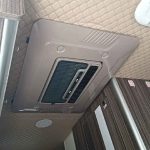 Small Air Conditioner for Camper
 Air Conditioning for Motorhomes Manufacturing Process
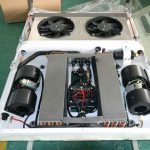 Air Conditioning Units for Campers Installation Process
 Similarities between RV Camper Air Conditioner and Minibus AC
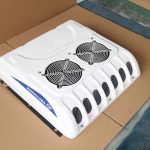 Ac For RV Camper Market Analysis Report
 Low Profile Rv Ac
 12 Volt Air Conditioner For Rv
 Motorhome Air Conditioning and Minibus Manufacturer Matching
 Ac For Camper and Mini Bus Ac Installation Steps
 Bus Air Conditioner is used for buses and medium-sized commercial vehicles
 Ac Unit For RV Camper: Air Conditioning System for Minibuses and Motorhomes
 RV Air Con is designed for West Asian countries